
About Salaries, Payroll Irregularities And Other Grievances, As New Academic Year Begins
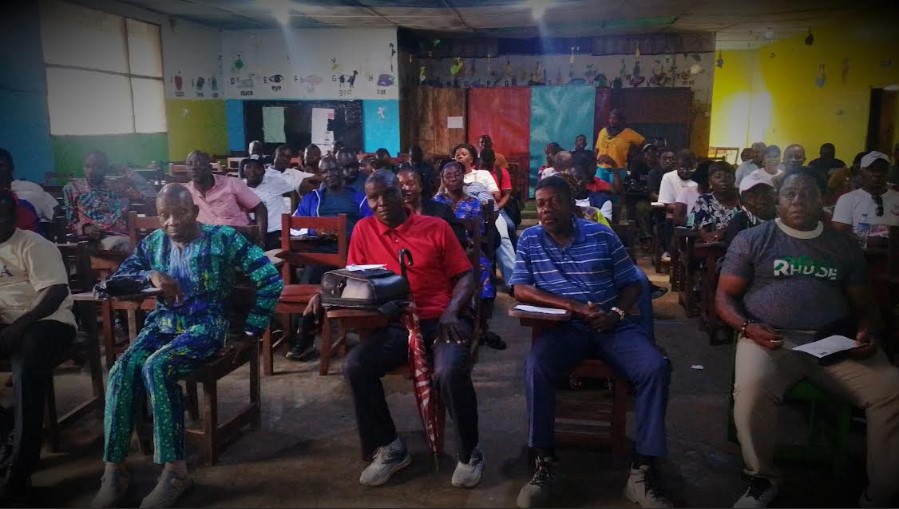
PHOTO: A cross-section of MCSS public schools’ teachers
Unless the outstanding issues are addressed through negotiations, the threatened boycott could become another major challenge for Liberia’s public education system
By Augustine Octavius, augustineoctavius@gmail.com
As the new academic year begins, members of the Monrovia Consolidated School System Teachers’ Association (MCSSTA) have voted to boycott classes during the 2026 academic year, raising fresh concerns about possible disruptions to learning across public schools in Monrovia.
Recently, faculty and staff of the state-owned University of Liberia (UL) began an indefinite strike outlining a number of grievances, including unpaid salaries, salary disparities, nonpayment of their NASSCORP social security benefits, among other things.
The latest dispute centers on what MCSS teachers described as ‘unresolved commitments’ made by the Liberian government concerning salaries, payroll regularization and other employment-related issues.
The teachers’ position comes amid growing tensions between the association and the leadership of the Monrovia Consolidated School System (MCSS), with teachers recently demanding the removal of MCSS Superintendent Dr. Augurie E. Stevens.
Speaking shortly after the vote was taken, the faculty representative council mandated the association’s President, Augustine Nyormui to ensure that no teacher attend the training workshop scheduled by the MCSS’ administration.
He said the teachers were dissatisfied with commitments that had not been fulfilled.
According to him, the issues reportedly date back to an agreement reached in March 2025 following an earlier teachers’ go-slow action and student protests.
Under the March 27, 2025 resolution, titled, “Resolving Educational Issues through Consultation, Collaboration and Dialogue,” the government was expected to address salary adjustments for employees who had upgraded their academic qualifications and place qualified volunteer workers on the government payroll.
The association’s latest position has therefore, raised fears that classrooms across the MCSS could once again be affected, if the government and teachers fail to reach an agreement before or during the new academic year.
This controversy has also been complicated by a disagreement over a statement attributed to the MCSS Teachers’ Association.
Background
On August 3, 2026, a statement was published alleging administrative and corruption-related problems within MCSS.
However, MCSS later said the statement was unsigned and did not represent the official position of the Teachers’ Association.
Superintendent Stevens said the institution was reviewing the matter and considering legal action against individuals associated with the publication if the allegations were determined to be false or defamatory.
This means that not every statement circulating in the public domain should automatically be regarded as an official position of the MCSSTA.
The dispute comes as MCSS leadership has announced a series of reforms intended to improve the school system, including efforts to regularize qualified volunteer teachers, provide professional development opportunities, improve school infrastructure and strengthen employee-management systems.
Dr. Stevens outlined the reforms during an August 2026 appearance at the Ministry of Information, describing teacher welfare and personnel management as key priorities for her administration.
“Unfulfilled promises”
However, teachers maintain that promises concerning their employment and financial welfare must be implemented rather than simply announced.
A prolonged boycott could have serious consequences for thousands of students enrolled in MCSS schools.
MCSS operates a large network of public schools serving students throughout Monrovia. Previous disputes between MCSS teachers and the government have resulted in classroom disruptions and, in some cases, student protests.
In March 2025, students took to the streets of Monrovia in response to a teachers’ strike linked to a salary dispute, demonstrating how quickly disagreements between educators and authorities can spill over into the wider community.
Parents and education stakeholders are therefore likely to be concerned that another prolonged teachers’ action could interfere with instructional time, examinations and students’ preparations for national examinations.
With the new academic year just getting underway, attention is now focused on whether the government and the MCSSTA leadership can resolve their differences through dialogue before the threatened boycott significantly affects students.
The teachers are demanding action on their outstanding concerns, while MCSS authorities have emphasized reforms and institutional stability.
For students and parents, however, the central concern remains the same: ensuring that disagreements over salaries, payroll and administration do not result in the loss of valuable classroom time.
Unless the outstanding issues are addressed through negotiations, the threatened boycott could become another major challenge for Liberia’s public education system and place additional pressure on authorities to find a lasting solution to teacher welfare concerns.