As Legislative Accountability Comes Under Serious Scrutiny
A research study done by the Naymote Partners for Democratic Development has found serious weakness in accountability by Liberian lawmakers to their constituents during their recent Legislative constituency break—from the third Friday of March and ends on the second Friday of May 2026 in the 15 counties.

“Overall, the findings demonstrate that while physical constituency engagement is moderately strong, formal systems for accountability, communication, and citizen reporting remain underdeveloped. This reflects a persistent gap between citizen expectations and legislative performance,” says the report just released by Naymote.
The following highlights of the report was released to the media by the Executive Director of Naymore, Eddie Jarwolo:
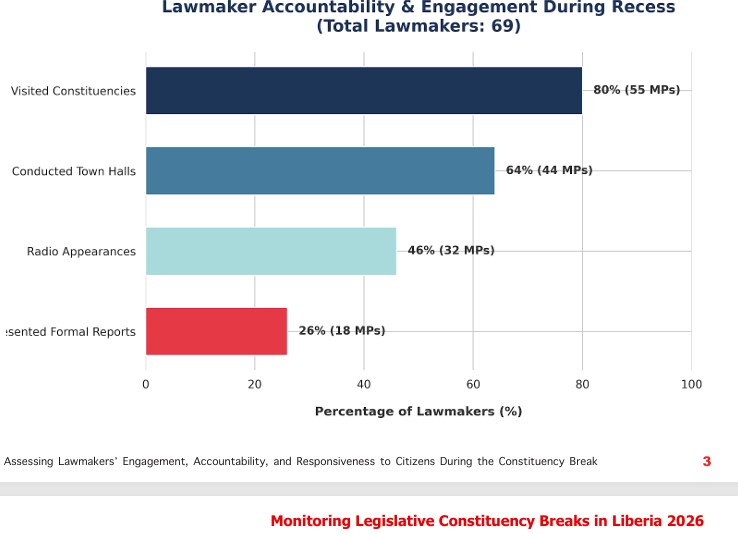
“Key findings show:
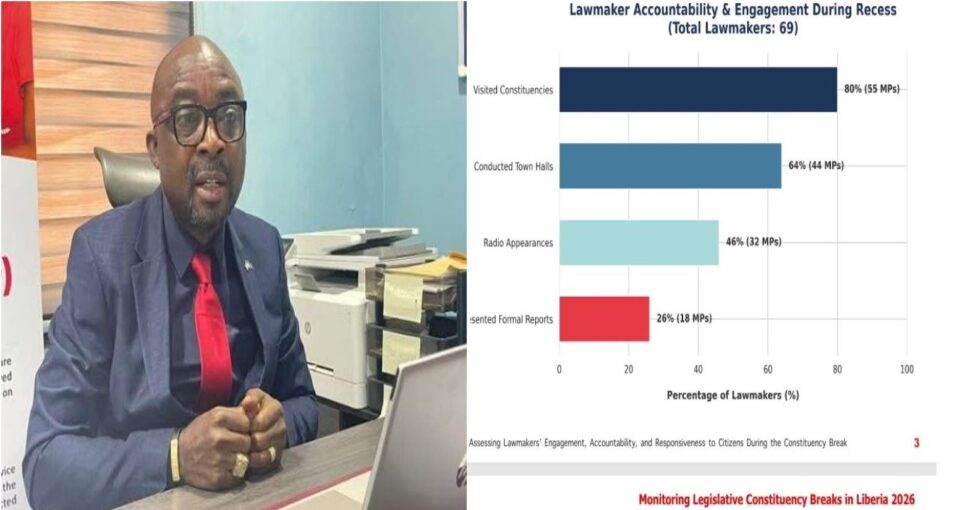
80% of lawmakers visited their constituencies
64% held town hall meetings
46% used local radio to engage citizens
Only 26% publicly reported on their legislative activities and budget decisions.”
Mr. Jarwolo said the report “highlights major gaps in accountability, transparency, and citizen engagement, calling for mandatory reporting standards and stronger constituency engagement frameworks. Citizens deserve more than visibility, they deserve accountability, transparency, and meaningful participation in governance.”
According to the report, data collection was carried out between March 19 and May 8, 2026, by 75 trained county monitors deployed nationwide.
In Liberia, members of the Legislature observe an official constituency break (legislative recess) intended to facilitate direct engagement with citizens in their respective districts and counties. Under the amended legislative calendar, the first constituency break begins on the third Friday of March and ends on the second Friday of May each year, the Naymote report says.
This is grounded in Article 32(b) of the 1986 Constitution is intended to strengthen representative democracy.
Naymote says data were gathered by 75 trained county monitors using a standardized monitoring framework. The findings reveal mixed levels of legislative engagement and accountability.
It add: “While a majority of lawmakers visited their constituencies and participated in some form of public interaction, structured accountability mechanisms remained weak and inconsistent.”
Meanwhile, in its report, Naymote has made a number of recommendations.
They include:
- Institutionalizing mandatory constituency reporting
- Strengthening public engagement mechanisms
- Expanding the use of community radio platforms
- and enhancing civic participation to improve democratic accountability and responsiveness in Liberia