
By Bedeskoe Nyumah Tumbay
There are moments in a nation’s history when a single family becomes so deeply intertwined with the country’s political, social and legal struggles that its name becomes part of the national memory.
Liberia’s Charles Taylor family may now be entering another such moment.
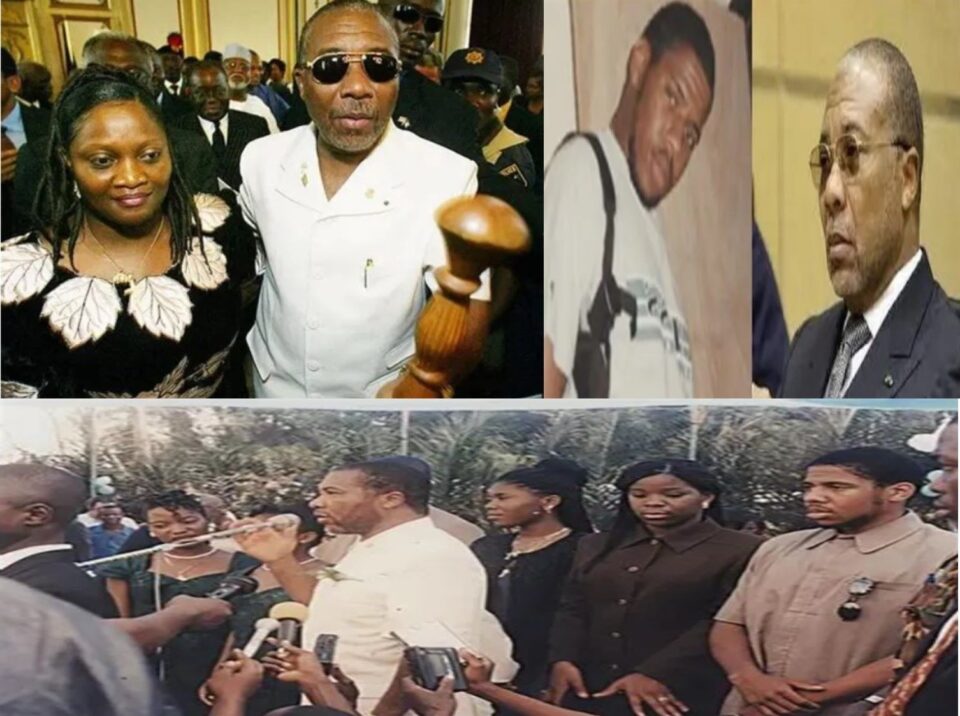
The latest development is extraordinary: Charles Taylor, Liberia’s former president and former warlord, is serving a 50-year sentence; his son Charles “Chuckie” Taylor Jr. is serving a 97-year sentence in the United States; and his former wife, Jewel Howard-Taylor, has now been charged in Liberia in connection with an alleged transnational narcotics network.
The charges against Jewel Howard-Taylor are new and serious, but they remain allegations. She has not been convicted, and the presumption of innocence must remain fundamental to any responsible discussion of the case. Reuters and the Associated Press report that she was arrested on August 19, 2026, after being stopped at Roberts International Airport, and that Liberian authorities subsequently charged her with drug trafficking, money laundering and other offenses.
Yet the coincidence is almost impossible for Liberians to ignore.
A husband imprisoned abroad.
A son imprisoned abroad.
And now a former wife facing criminal prosecution at home.
The story is not merely about one family.
It is about power, history, accountability, political identity, justice and the extraordinary shadow that Liberia’s past continues to cast over its present.
The Taylor name and Liberia’s painful history
To understand why the latest development has generated such intense public interest, one must first understand what the Taylor name represents in Liberia.
Charles Ghankay Taylor rose to prominence through Liberia’s first civil war, eventually becoming president in 1997.
His presidency remains inseparable from the violence that devastated Liberia and the wider West African region.
Taylor was ultimately prosecuted by the Special Court for Sierra Leone. In 2012, he was convicted of aiding and abetting crimes committed during Sierra Leone’s civil war and sentenced to 50 years in prison. His conviction was subsequently upheld on appeal.
His case was historically significant because he became the first former African head of state convicted by an international criminal tribunal since the post-World War II trials.
The Taylor name therefore became associated internationally with one of the most painful periods in West African history.
But the story did not end with Charles Taylor.
The son and the 97-year sentence
Charles Taylor’s son, Charles “Chuckie” Taylor Jr., created another extraordinary chapter.
Chuckie Taylor was prosecuted in the United States for torture-related crimes committed in Liberia. In 2008, he was convicted under U.S. law, and in January 2009 he received a 97-year federal prison sentence.
His case was particularly significant because it represented the first successful U.S. prosecution under the country’s extraterritorial torture statute for torture committed abroad.
The U.S. government’s indictment alleged that Taylor Jr. participated in brutal acts against victims in Liberia, including torture and other abuses.
Department of Justice
Therefore, the 97-year sentence is not simply a sensational statistic.
It represents another legal chapter in the international pursuit of accountability for atrocities associated with Liberia’s conflict.
Father and son consequently became connected to two different but historically important criminal justice proceedings.
And now Jewel Howard-Taylor
The newest chapter is fundamentally different.
Jewel Howard-Taylor is not being prosecuted for the crimes for which Charles Taylor was convicted, nor is she facing the torture charges that resulted in her son’s conviction.
According to current reporting, she has been charged in an investigation into an alleged transnational narcotics network.
Reuters reports that the charges include drug trafficking, money laundering, unlicensed importation of controlled substances, criminal solicitation and conspiracy. Authorities say the investigation is connected to a major cocaine seizure worth approximately $317 million.
The Associated Press likewise reports that Howard-Taylor was stopped at Roberts International Airport while attempting to leave Liberia and was subsequently taken into police custody.
This distinction is critically important.
Charles Taylor’s case, Chuckie Taylor’s case and Jewel Howard-Taylor’s current case are separate legal matters.
They involve different allegations, different jurisdictions and different legal processes.
The fact that the three people are connected through a family relationship does not establish that their alleged or proven conduct is connected.
That is precisely why the story should be analyzed carefully rather than simply turned into a sensational headline.
The extraordinary symbolism of three legal chapters
Nevertheless, the symbolism is powerful.
Charles Taylor’s life became intertwined with Liberia’s civil wars and international criminal justice.
His son became convicted of torture committed in Liberia.
Now his former wife and former vice president is facing allegations relating to organized narcotics activity.
Even though the cases are legally separate, the coincidence creates an extraordinary historical narrative.
It forces Liberians to confront an uncomfortable question:
How does a family so closely associated with Liberia’s political history repeatedly find itself at the center of major legal controversies?
There are several possible answers, and none should be treated as proven without evidence.
Political power creates visibility.
Historical prominence creates scrutiny.
Personal networks can survive changes in government.
And, perhaps most importantly, people connected to powerful political families often remain relevant long after their political era has ended.
Jewel Howard-Taylor herself is not simply “Charles Taylor’s wife.”
She was a senator and later served as Liberia’s vice president from 2018 to 2024 under President George Weah.
Her own political career therefore deserves to be examined independently of her former husband’s.
The danger of judging by association
This may be the most important principle in the entire story.
A family connection is not evidence of criminal guilt.
Charles Taylor’s conviction cannot be used as evidence that Jewel Howard-Taylor committed the offenses with which she is now charged.
Likewise, Chuckie Taylor’s conviction cannot be treated as proof against his mother.
Every defendant must be judged on the evidence relating to his or her own conduct.
This is especially important because the public is naturally drawn to dramatic narratives.
“Father imprisoned.”
“Son imprisoned.”
“Mother charged.”
That makes a powerful headline.
But justice does not operate through headlines.
It operates through evidence, investigation, due process and judicial determination.
The government may believe it has credible evidence. The accused person remains entitled to challenge that evidence.
Liberia must therefore resist the temptation to transform a criminal allegation into a conviction through public opinion.
Yet the public’s reaction is understandable
At the same time, it would be wrong to dismiss public fascination with the case as mere gossip.
Liberians have a deeply emotional relationship with the Taylor era.
The country’s civil wars destroyed communities, displaced families and left generations carrying memories of violence.
Charles Taylor’s political career is therefore not merely a historical subject.
For many Liberians, it is personal.
That explains why any new legal development involving someone from his immediate political and family circle can trigger an enormous public reaction.
People are not simply seeing another criminal case.
They are seeing another chapter in a story they thought they already knew.
The former vice president dimension
Jewel Howard-Taylor’s status as a former vice president makes the current situation even more consequential.
She was not a peripheral political figure.
She occupied one of the highest constitutional offices in Liberia for six years.
Consequently, the allegations raise questions that extend beyond the Taylor family.
They concern Liberia’s institutions.
Can the justice system investigate politically connected individuals without fear or favor?
Can investigators follow evidence wherever it leads?
Can prosecutors build a case strong enough to withstand judicial scrutiny?
Can the courts ensure a fair trial?
And can the government demonstrate that the prosecution is based on evidence rather than political revenge?
These questions are essential because Liberia’s democratic institutions are ultimately being tested alongside the individual defendant.
The cocaine investigation adds another dimension
The narcotics allegations arrive at a particularly significant moment for Liberia.
Authorities have been confronting major cocaine seizures and concerns about Liberia’s role in international drug trafficking networks.
Reuters reports that the investigation involving Howard-Taylor followed a seizure of roughly $317 million worth of cocaine allegedly destined for Europe.
That gives the case a dimension far beyond domestic politics.
If prosecutors can establish the allegations in court, the case could become an important test of Liberia’s ability to confront sophisticated transnational criminal networks.
But if the evidence fails to establish guilt, the justice system must be equally prepared to acknowledge that outcome.
That is the essence of rule of law.
The biggest mistake would be to turn history into inherited guilt
Liberia must also be careful about the language used to describe this case.
Calling it the “Taylor family criminal dynasty” may be emotionally compelling.
But it risks creating the impression that criminal responsibility passes from husband to wife or from father to son.
It does not.
Guilt is individual.
Responsibility is individual.
A person’s family name may explain why the public is interested, but it cannot determine the verdict.
This distinction becomes particularly important because Jewel Howard-Taylor built a political identity of her own.
She was elected to the Liberian Senate and eventually became vice president.
Her current legal case should therefore be examined as the case of a former vice president accused of serious crimes, rather than simply as the latest scandal involving Charles Taylor’s family.
But history cannot simply be ignored either.
The opposite extreme would also be problematic.
Pretending that the Taylor family connection is irrelevant would ignore an obvious historical reality.
The former marriage between Charles Taylor and Jewel Howard-Taylor places her within one of the most consequential political families in Liberia’s modern history.
The family’s history is already part of Liberia’s national political consciousness.
That history inevitably shapes public perception.
The challenge is to acknowledge that context without allowing it to replace evidence.
That is where responsible journalism and responsible citizenship become essential.
What this means for Liberia
The significance of this story ultimately extends beyond the courtroom.
Liberia is still wrestling with the consequences of its civil wars.
The country has spent decades attempting to move from conflict toward democratic stability.
Every major prosecution involving a powerful political figure therefore becomes a test of whether Liberia’s institutions are stronger than the individuals passing through them.
If Jewel Howard-Taylor is guilty, the justice system must be strong enough to convict her regardless of her political history.
If she is innocent, the justice system must be strong enough to protect her regardless of public anger.
Either way, the institution must prevail.
That is the real test.
A family saga—but also a national story
It is understandable to call this one of the most extraordinary family stories in Liberian history.
The combination is almost unprecedented:
A former president serving a 50-year international sentence.
A son serving a 97-year U.S. sentence.
A former vice president now facing serious criminal charges in Liberia.
But the deeper story is not simply that three people from the same family have encountered the law.
The deeper story is about Liberia’s unfinished relationship with its past and its evolving relationship with justice.
Charles Taylor represents the era of civil war and international criminal accountability.
Chuckie Taylor represents the prosecution of alleged wartime torture through foreign courts.
Jewel Howard-Taylor’s case represents a contemporary Liberian criminal investigation involving allegations entirely different from those cases.
Together, these episodes demonstrate how political history can continue to follow individuals long after governments change and wars end.
The victims must not disappear from the story
There is one final issue that must remain at the center.
The Taylor family’s legal saga should never become more important than the Liberians who suffered during the country’s wars or the communities affected by crime today.
Thousands of Liberians lived through violence, displacement, loss and trauma.
Those people deserve more than sensational headlines about powerful personalities.
They deserve truth.
They deserve justice.
They deserve institutions capable of protecting them.
And they deserve a country in which political status does not determine who is above the law.
Conclusion: History is watching
The latest development involving Jewel Howard-Taylor is undoubtedly significant.
But it is too early to write the final chapter.
She has been charged, not convicted.
The allegations must be tested in court.
The evidence must be examined.
And the legal process must be allowed to work.
At the same time, the historical significance of the moment cannot be ignored.
Charles Taylor’s 50-year sentence, Chuckie Taylor’s 97-year sentence and Jewel Howard-Taylor’s present legal troubles have created an extraordinary intersection between Liberia’s past and its present.
The story may become one of the most discussed political and legal sagas in Liberia’s modern history.
But Liberia should resist the temptation to remember it merely as the story of a troubled family.
The greater story is about a nation confronting the consequences of power.
It is about whether justice can operate independently of political status.
It is about whether institutions can withstand pressure.
And it is about whether Liberia can finally reach a point where the country’s history is remembered not only through the names of powerful people, but through the experiences of ordinary citizens who survived the consequences of their decisions.
The Taylor name may remain permanently written into Liberia’s history.
But the question facing Liberia now is bigger than the Taylor family:
Will this latest chapter strengthen the rule of law—or simply become another chapter in Liberia’s long struggle over power, politics and justice? Only the evidence, the courts and history will answer that question.