
Commits to Concrete Reforms And Expansion Of Access To Finance
MONROVIA- Liberia has reached broad national consensus that resolving the country’s non-performing loans (NPLs) is not merely a banking-sector concern, but a national development priority requiring coordinated action by Government, the Central Bank of Liberia (CBL), financial institutions, the Legislature, Judiciary, borrowers, lenders and development partners., a CBL press release said over the weekend
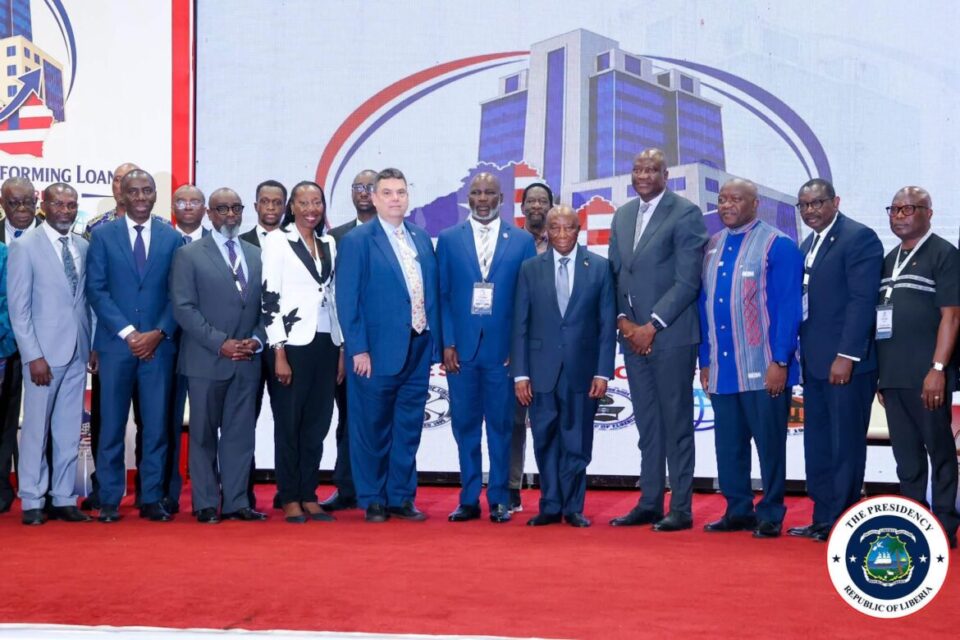
The consensus emerged at the conclusion of the National Non-Performing Loans Resolution Conference, which brought together senior government officials, financial-sector stakeholders, development partners, legal practitioners, the private sector and other key actors to examine the causes of NPLs and develop practical solutions to restore lending, strengthen financial-sector stability and expand access to finance.
Held under the theme: “Resolving Non-Performing Loans to Unlock Access to Finance for Private Sector Growth and Job Creation,” the conference highlighted the urgent need for coordinated reforms to improve credit discipline, strengthen financial infrastructure, enhance debt recovery mechanisms, and create a more enabling environment for private-sector development.
President Boakai: “It Is About the Liberian Farmer and Business”
In his keynote address, President Joseph Nyuma Boakai placed the NPL challenge squarely within the broader national development agenda, the ARREST Agenda for Inclusive Development (AAID).
He emphasized that the issue ultimately concerns Liberian farmers entrepreneurs, and businesses that need access to finance to expand their operations, create jobs, and contribute to inclusive economic growth.
The President acknowledged that too many loans remain unpaid and called for responsible behavior from both sides of the credit relationship.
The President stressed that banks must lend responsibly, borrowers must honor their obligations, contracts must be respected, and Government must support reforms that strengthen the credit ecosystem. He called for stronger credit reporting systems, collateral registries, and insolvency frameworks, while urging stakeholders to move beyond diagnosing problems toward implementing solutions.
“We have had many conferences and good reports. This Conference must implement the outcomes,” President Boakai emphasized.
He called for realistic timelines to address the identified problems and for stakeholders to remain focused on tangible results.
Vice President: “What Remains Is Implementation”
Vice President Jeremiah Kpan Koung noted that the Conference had generated broad consensus around the causes of NPLs, and reforms required to address them
He highlighted a central consensus emerging from the Conference: resolving NPLs is not simply about unlocking credit; it is about improving the performance of the Liberian economy.
The Vice President acknowledged the existence of legal and judicial bottlenecks but stressed that the Conference had demonstrated that Liberia possesses the expertise required to address the problem.
“What remains is implementation,” the Vice President stated.
He emphasized that no country can achieve broad-based prosperity without adequate access to finance for businesses and noted that the Government views the Conference as an important building block in rebuilding and strengthening the Liberian economy.
He pledged Government’s support for reforms that promote credit discipline, responsible lending and effective implementation.
The Vice President further emphasized the importance of a coordinated implementation mechanism and announced on behalf of the President, a National Non-Performing Loan Resolution Taskforce bringing together MFDP, the Ministry of Justice, financial institutions, among others, with responsibility for developing a coordinated framework, establishing timelines, monitoring progress and reporting on implementation.
He stressed that responsibility for implementation rests with every relevant government institution, the Legislature, Judiciary, financial institutions and borrowers.
CBL Executive Governor: NPL Resolution Must Translate into Credit, Repayment and Jobs
During his remarks, Executive Governor of the Central Bank of Liberia, Henry F. Saamoi, emphasized that the participation of stakeholders demonstrated a shared commitment to confronting one of the major constraints to private-sector development.
Executive Governor Saamoi noted that the ratio of non-performing loans declined from 19.1 percent in 2024 to 12.9 percent in 2025, noting that this decline has not translated into recovery.
He underscored the importance of resolving NPLs to unlock additional lending to farmers, businesses and entrepreneurs seeking financing to expand their operations.
“Resolving NPLs is not a banking issue alone. It is a development objective that supports growth, investment, and job creation,” Governor Saamoi stated.
He stressed that the Conference should be judged not by the quality of its discussions, but by the implementation of tangible reforms and outcomes.
Accordingly, he called for three concrete deliverables:
- A National NPL Resolution Communiqué;
- A time-bound Action Plan; and
- An Implementation Roadmap with clearly assigned institutional responsibilities, milestones, monitoring arrangements, and reporting mechanisms.
“The true measure of success will not be what we say at this Conference, but whether more Liberians gain access to credit, whether repayment improves, and whether businesses can grow and create jobs,” Governor Saamoi emphasized.
Finance Minister: “NPLs Are About Jobs”
Minister of Finance and Development Planning Augustine Kpehe Ngafuan reinforced the development dimension of the NPL challenge, stressing that NPLs are ultimately about whether farmers and businesses can obtain financing, expand and create employment.
“NPLs are not about banks. They are about jobs,” Minister Ngafuan stated.
He acknowledged that while the NPL ratio has declined, the absolute stock of NPLs remains alarming, representing financial resources that could otherwise be deployed for productive economic activity.
The Minister also highlighted the critical relationship between Government’s fiscal obligations and the health of the private and banking sector. He noted that when the Government fails to pay contractors on time, contractors may themselves be unable to service loans obtained from financial institutions.
Minister Ngafuan acknowledged Government’s responsibility to lead by example, noting that the Government has at times been among the largest sources of payment arrears.
He said the Government is working to restore credibility with vendors and partners and pledged that Government will honor its obligations.
The Minister pledged the full support of the Ministry of Finance and Development Planning to work with the CBL, Legislature and Judiciary to implement the Conference outcomes.
World Bank: NPL Resolution Is About Restoring the Capacity of Banks to Lend
World Bank Country Manager Georgia Wallen described the Conference as an opportunity for collective action to support prosperity and businesses across Liberia.
She emphasized that resolving NPLs goes beyond financial-sector stability because high levels of distressed loans reduce the capacity of banks to extend new credit to productive businesses.
She highlighted four broad priorities emerging from the discussions:
- Building trust in the financial system;
- Addressing both sides of the credit system—borrowers and lenders;
- Recognizing distressed loans early; and
- Resolving distressed loans efficiently so capital can return to productive use.
The World Bank expressed its readiness to continue supporting Liberia’s efforts to translate these priorities into practical reforms.
U.S. Embassy: Confidence, Credit Information and Enforceable Contracts Are Critical
Representing the United States Embassy, Chargé d’Affaires Joseph Zadrozny shared lessons from the U.S. experience in dealing with financial distress, emphasizing the importance of early recognition, resolution and returning capital to productive economic use.
He stressed that borrowers need confidence that financial rules are fair, transparent and consistently applied, while lenders need reliable information to assess credit risk.
He noted that unresolved debt on a borrower’s record can affect access to subsequent financing and therefore linked NPL resolution directly to expanding access to finance.
Among the critical reforms highlighted were stronger credit information, a national identification system and improved credit-reference infrastructure.
He also emphasized the importance of enforceable contracts and investor confidence, noting that investors want assurance that contracts will be respected and that financial institutions have the capacity to provide credit.
Justice Minister: NPL Resolution Is Also a Rule-of-Law Issue
Minister of Justice Oswald Tweh stressed that NPLs have the potential to cripple economic activity and should not be viewed solely as a banking problem.
“NPL is not only a bank issue; it is a rule-of-law issue, requiring efficient legal and judicial processes, stronger enforcement mechanisms, and greater confidence in contractual obligation,” Minister Tweh stated.
He committed the Ministry of Justice to examining the legal framework governing debt recovery, contracts and enforcement, including both the laws on the books and their practical application.
The Minister also pointed to the constitutional protection of contracts and the range of legal remedies available to creditors seeking recovery.
Legislature Pledges Support for Legal Reform
Speaker of the House of Representatives, Richard Nagbe Koon expressed the Legislature’s strong support for the Conference and emphasized that NPLs constitute a national development challenge.
He noted that bad loans represent capital that cannot be recovered and redeployed into productive economic activities, while persistent NPLs can also pose risks to financial-sector stability.
The Speaker pledged legislative support for strengthening the legal framework governing insolvency, collateral enforcement and debt recovery.
He stressed that the Legislature stands ready to work with the CBL, Senate, Judiciary and other stakeholders to create a financial system that expands access to finance, particularly for small businesses, women entrepreneurs and other underserved groups.
He further emphasized that the success of the Conference should ultimately be measured by implementation and increased financing to businesses, rather than by the production of another report.
Senate Pro Tempore Reaffirms Legislative Commitment
The Senate Pro Tempore, represented by the Chairman of the Senate Committee on Banking & Currency, Hon. Cllr. Joseph K. Jallah, similarly, reaffirmed the commitment of the Liberian Senate to support reforms necessary to strengthen the country’s credit environment and accelerate the resolution of non-performing loans.
He emphasized that sustainable economic growth requires a legal and policy framework that promotes responsible borrowing, responsible lending, efficient debt recovery, and investor confidence. He further pledged Senate support for reforms aimed at strengthening insolvency procedures, collateral enforcement, and access to finance, while stressing the importance of continued collaboration among the Legislature, Executive, Judiciary, Central Bank, and private sector.
A NATIONAL COMMITMENT TO ACTION
The Conference demonstrated an unprecedented convergence of views among the Executive, Legislature, Legal practitioners, Central Banks, financial institutions, private-sector actors, and development partners that NPL resolution must be treated as a national economic priority.
Participants agreed that restoring access to finance will require stronger national credit discipline, improved credit infrastructure, enhanced debt recovery mechanisms, modernized regulatory and supervisory frameworks, and expanded financing opportunities for productive sectors of the economy.
The outcomes of the Conference will be consolidated into a National NPL Resolution Communiqué, an Action Plan, and an Implementation Roadmap with assigned responsibilities, timelines, monitoring arrangements, and reporting mechanisms.
The Central Bank of Liberia, in collaboration with Government and all relevant stakeholders, will work to ensure that the momentum generated by the Conference translates into measurable improvements in lending, repayment performance, financial-sector stability, private-sector development, and job creation.
As President Boakai reminded participants, the challenge is no longer identifying the problem. The challenge is implementation. Liberia’s success will ultimately be measured by whether farmers obtain financing to expand production, entrepreneurs secure capital to grow businesses, borrowers repay responsibly, and increased credit contributes to stronger economic growth and employment opportunities for the Liberian people.
The national consensus is clear: Liberia cannot unlock broad-based prosperity without unlocking access to finance—and unlocking access to finance requires resolving non-performing loans.
APPRECIATION AND RECOGNITION
The Central Bank of Liberia extends its sincere appreciation to all participants whose insights and commitments enriched the National NPL Resolution Conference. The Bank particularly acknowledges the valuable contributions of delegates from sister central banks in the region, whose perspectives and experiences provided important comparative lessons and reinforced the spirit of regional cooperation. Their presence underscored the shared challenges and opportunities facing financial systems across Africa, and the CBL looks forward to continued collaboration in advancing credit discipline, financial stability, and inclusive growth.