
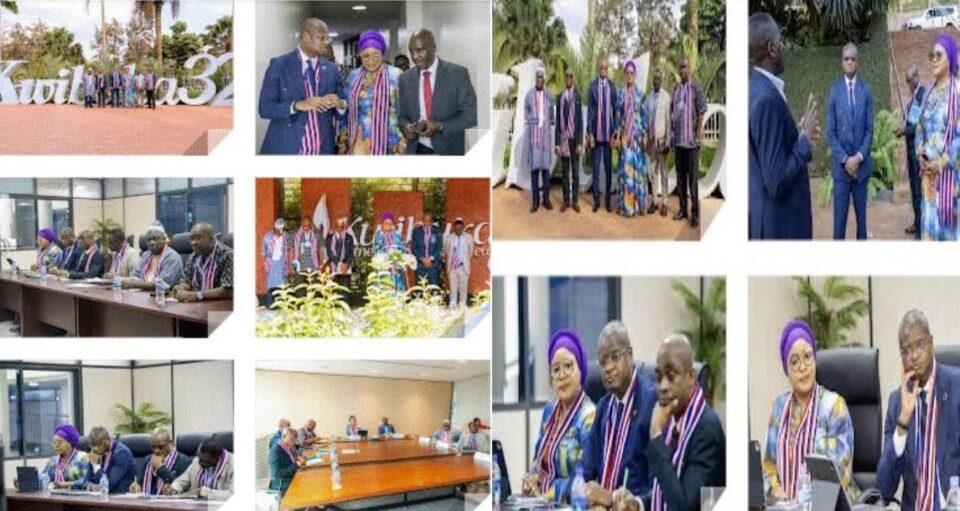
KIGALI, Rwanda – More than two decades after the guns fell silent, Liberia is taking a significant step toward preserving the memory of its civil wars and strengthening national reconciliation by laying the groundwork for a Peace, Reconciliation and Memorial Museum, a landmark institution envisioned to document the country’s painful past while educating future generations, the UNDP said in a press release today, Monday, August 31, 2026.
As part of that effort, a high-level Liberian delegation led by Minister of State without Portfolio Hadja Mamaka Bility has concluded a study mission to Rwanda, a country widely recognized for its efforts to preserve historical memory and promote healing following the 1994 Genocide against the Tutsi.
The mission, supported by the United Nations Development Programme (UNDP), examined how Rwanda has transformed sites of tragedy into institutions for remembrance, education and reconciliation.
The visit reflects President Joseph Nyuma Boakai’s commitment to advancing a national reconciliation agenda that moves beyond dialogue toward establishing enduring institutions capable of preserving Liberia’s collective experiences.
“This study tour is part of President Joseph Nyuma Boakai’s vision for national reconciliation, with the support of UNDP,” Bility said. “We want to move Liberia beyond simply talking about reconciliation to building strong institutions that can preserve our experiences, tell our story, and pass the lessons of our past on to future generations.”
The proposed museum comes at a critical moment in Liberia’s history. Although the country has enjoyed more than two decades of peace since the end of its civil conflicts in 2003, much of the documentary evidence and personal testimonies from the war years remain scattered across government institutions, private collections and archives both within and outside Liberia.
Photographs, official documents, films and survivor accounts that tell the story of the country’s turbulent past are at risk of being lost, damaged or forgotten.
Government officials say the museum will serve as a central repository to collect, authenticate, preserve and digitize these materials while also functioning as a hub for research, peace education and public engagement.
The initiative follows President Boakai’s historic apology in July 2025, when he formally apologized on behalf of the Liberian state to victims and families affected by the country’s years of conflict.
That gesture was widely viewed as a meaningful step toward acknowledging the suffering endured during two brutal civil wars that left thousands dead, displaced hundreds of thousands and deeply scarred communities across the nation.
During their time in Rwanda, the Liberian delegation explored some of the country’s most important institutions dedicated to historical preservation and reconciliation. Visits included the Gacaca Archives and Digitization Programme, the National Archives of Rwanda, the Campaign Against Genocide Museum, the University of Rwanda’s Centre for Conflict Management, the Rwanda Peace Academy, and the Mutobo Demobilization and Reintegration Centre.
The delegation examined the systems Rwanda has developed to collect, verify, digitize and preserve historical records, ensuring that critical evidence of past atrocities remains accessible for future generations. Officials also studied how Rwanda has integrated memorialization into broader efforts to promote peacebuilding, citizenship education and social cohesion.
For Liberia, these lessons are particularly relevant as the government seeks to establish a museum that is more than a storage facility for historical artifacts. Officials envision an institution where history can be studied, shared and discussed, creating opportunities for reflection and dialogue among citizens, especially young Liberians born after the conflicts.
UNDP Liberia Resident Representative Aliou Mamadou Dia said the mission forms part of the agency’s broader partnership with the Government of Liberia to support peacebuilding and reconciliation efforts.
“UNDP is working with the Government of Liberia to support the establishment of a Peace and Reconciliation Museum as part of the President’s broader reconciliation agenda,” Dia said.
“This study mission gives us an opportunity to learn from the experiences of other countries, document lessons that can be adapted to Liberia and engage partners who can support the Government in moving this vision forward.”
Dia emphasized that meaningful reconciliation requires confronting difficult chapters of history while ensuring that the stories of victims and survivors are preserved.
The visit also opened discussions on potential technical cooperation between Liberia and Rwanda in areas including museum development and management, archival digitization, peace education and professional exchanges.
The delegation further explored opportunities for collaboration with Aegis Trust Rwanda, an organization internationally recognized for its work in genocide education, memorialization and peacebuilding.
Despite the valuable lessons gained, Liberian officials stressed that the country does not intend to replicate the Rwandan model wholesale. Instead, the goal is to identify approaches that can be adapted to Liberia’s unique historical context and reconciliation needs.
As the delegation proceeds to South Africa for the next phase of the study tour, expectations are growing that the proposed Peace, Reconciliation and Memorial Museum could become one of Liberia’s most significant post-war institutions, helping to safeguard the nation’s historical record while promoting healing and national unity.
For many Liberians, the museum represents an opportunity to ensure that the stories of those who suffered, survived and rebuilt their lives are preserved, and that future generations understand the cost of conflict and the enduring value of peace.
In a country still navigating the legacy of its past, the planned institution could become a powerful symbol of remembrance, learning and reconciliation, transforming scattered fragments of history into a shared national narrative for generations to come.