
Hails President Boakai For The Policy
TODEE DISTRICT, Montserrado County—The Rubber Planters Association of Liberia (RPAL), the umbrella group representing thousands of rubber farmers and smallholder planters across the country, has commended President Joseph Nyuma Boakai for issuing Executive Order No. 166, imposing indefinite ban on the export of unprocessed natural rubber from Liberia, effective July 1, 2026.
According to to Executive Order No., issued on June 26, 2026, forms part of the Boakai Administration’s ARREST Agenda for Inclusive Development and is intended to stimulate domestic industrialization, create jobs, increase government revenue, and strengthen Liberia’s value-added manufacturing sector.
An Executive Mansion press release said the Executive Order is an extension of a ban on export of raw natural rubber has deprived Liberia of significant downstream manufacturing opportunities, industrial employment, expanded tax revenues, and improved foreign exchange earnings.
The Government of Liberia, through the Executive Order No.166, also noted that previous efforts to regulate the export of unprocessed rubber were undermined by widespread abuse, necessitating stronger executive action.
The RPAL, however, has welcomed the ban and pledged its support to the Ministry of Agriculture in implementing the policy.
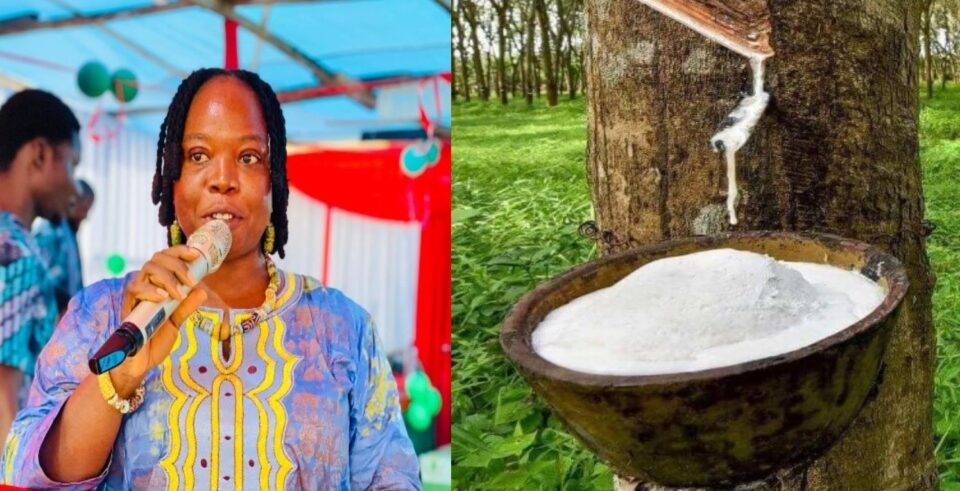
Speaking on behalf of the association on Tuesday, RPAL President Wilhelmina G. Mulbah Siaway described Executive Order No. 166 as a landmark policy that demonstrates President Boakai’s unwavering commitment to protecting the livelihoods of Liberian rubber farmers.
She said the President’s decision to prohibit the export of unprocessed raw rubber would promote industrial growth while ensuring that Liberia’s natural resources generate greater economic value for its people.
“For decades, Liberian rubber farmers have endured unfairly low farm-gate prices, exploitation by illegal middlemen, and the continuous export of raw rubber without any meaningful value addition to the national economy,” Madam Mulbah-Siaway said.
She added, “While other countries have benefited from processing Liberia’s raw rubber into finished and semi-finished products, rural Liberian farmers have remained trapped in poverty despite their hard work.”
She added that the President’s decisive action marks a turning point for Liberia’s rubber sector and sends a strong message that the country must begin to derive greater benefits from its own natural resources.
Madam Mulbah-Siaway expressed confidence that the new policy would deliver significant national benefits.
“This policy will protect farmers’ livelihoods by reducing exploitation at the farm gate and promoting more stable and competitive prices for raw rubber,” she said.
The RPAL executice further noted that the ban would encourage local value addition by promoting the processing of Ribbed Smoked Sheets (RSS) and other rubber products before export, thereby increasing the value of Liberia’s rubber exports.
According to her, Executive Order No. 166 will also create employment opportunities for Liberian youth, graduates, and skilled workers as local processing factories expand operations to meet increased demand.
Madam Mulbah-Siaway further stated that the ban would strengthen government revenue by ensuring that companies purchasing rubber from farmers are properly licensed and comply with withholding tax requirements and other statutory obligations.
She noted that the Executive Order would help curb the illegal smuggling of raw rubber, which she said has deprived the Government of Liberia of much-needed tax revenues while undermining legitimate businesses operating within the law.
“This ban will increase the supply of raw materials to domestic processing factories, enabling these companies to expand production, employ more Liberians, and retain a larger share of the rubber value chain within the national economy,” she said.
“As the recognized voice of Liberia’s rubber planters, RPAL considers this policy a direct investment in rural development, agricultural transformation, and national economic growth.”
Madam Mulbah-Siaway emphasized that encouraging local processing instead of exporting raw materials will enable Liberia to create more jobs, retain more foreign exchange, increase government revenues, and strengthen its industrial base.
She also commended the Ministry of Agriculture for its prompt implementation of the President’s directive and for engaging stakeholders to ensure the policy is effectively communicated and enforced.
The RPAL president pledged the association’s full cooperation and unwavering support to the Government of Liberia as it works to implement the policy successfully.
She said RPAL remains committed to collaborating with the Ministry of Agriculture, licensed rubber processors, development partners, and other stakeholders to strengthen local processing capacity, improve market opportunities for farmers, and build a more sustainable and competitive rubber industry.
“We are confident that, with effective implementation and continued stakeholder collaboration, this policy will usher in a new era of prosperity for Liberia’s rubber sector and improve the lives of thousands of farming families whose primary source of income is rubber production,” Madam Mulbah-Siaway said.
she expressed appreciation, on behalf of rubber farmers across Liberia, to President Joseph Nyuma Boakai Sr. for listening to the concerns of rural communities and taking what she described as bold action in the national interest.
She added that President Boakai’s leadership has renewed hope among Liberia’s rubber planters and reaffirmed the Government’s commitment to empowering local producers and building a stronger national economy.