
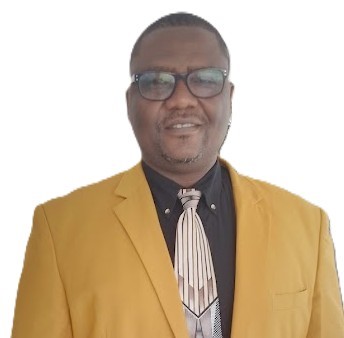
PHOTO: The Author
By George Stewart, a Development Media Practitioner
The media remains one of the most powerful forces shaping public opinion, national mood, and civic behavior. The free flow of ideas, tolerance of political authority, and the ability of citizens to speak to their government are all largely tested through the work of the press. This places the media in its rightful position as the indispensable mirror of society.
The press has long been recognized as the “Fourth Estate,” attributed to British statesman Edmund Burke, who, in the 1800s, while observing the British Parliament, declared:
There were three estates in Parliament (the Clergy, the Nobility, and the Common People), but in the reporters’ gallery yonder, there sat a Fourth Estate far more important than they all.
No matter the trials and temptations that confront the media community today, the press is set apart to influence government, shape public opinion, expose wrongdoing, and protect democratic life. The press existed before, exists now, and will exist in the future. It is the watchdog of society, entrusted with checking power and safeguarding the public interest. These critical functions can only thrive within the space of genuine independence and responsible journalism.
In the rightful pursuit of exposing wrongdoing, however, the burden of balanced reporting must remain central to journalistic practice. Today, a growing movement known as Solutions Journalism emphasizes that while problems must be reported, progress and solutions must also be highlighted. Society should not be fed a constant diet of negativity when positive developments and reforms are taking place. This is not public relations; it is RESPONSIBLE JOURNALISM.
When the media repeatedly presents society as a landscape of only failure and crisis, it unconsciously persuades the public that nothing good is happening. In doing so, the press risks using its influence, quietly and unintentionally, against the very society it serves.
Media scholar George Gerbner’s Cultivation Theory explains that what people see consistently in the media shapes how they perceive the world. When audiences are continuously exposed to corruption, crime, conflict, scandal, and failure, they are left believing that goodness, progress, and hope are absent from their society. This is not a call to ignore problems, but a reminder that many of the challenges reported are also being addressed. The overwhelming dominance of negative coverage creates a dangerous distortion of reality and contributes to what scholars describe as “Mean World Syndrome,” increasing fear, anxiety, and social distrust.
Similarly, the Agenda-Setting Theory of McCombs and Shaw teaches that the media does not tell people what to think but powerfully determines what they think about. When negative reporting becomes the primary focus under the belief that “bad news makes good news,” the public comes to view society almost exclusively through the lens of crisis and failure.
In conclusion, media institutions, especially in developing democracies like Liberia, must understand that what they choose to highlight today shapes the public mindset tomorrow. The health of our democracy, economy, and social cohesion depends on this. A stronger media culture does not undermine accountability; instead, it enhances society.