
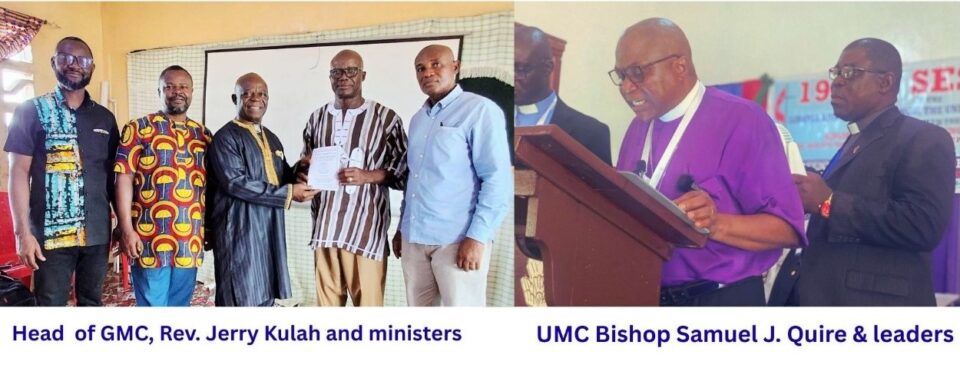
Why The United Methodist Church And The Global Methodist Church Must Rebuild Relations In Liberia
After war, there must be peace—not because it is convenient, but because it is Christian. We are called to be God’s hands and feet in a troubled world, not to compound the challenges it already faces.
By: George Sarwah Stewart
For nearly two intense years, the United Methodist Church (UMC) and its involuntary offspring, the Global Methodist Church, engaged in a painful religious struggle in Liberia. What should have remained a theological disagreement escalated into a public contest over property, authority, and legitimacy.
The outcome was predictable and damaging. Congregations were divided, pastors were pressured, and the Christian witness was weakened. Brothers excused brothers, and brotherliness was extinguished. In the congregation I belonged to, New Hope United Methodist Church, disputes degenerated into fistfights that sent members behind bars. In Liberia, a nation that has endured real war and labored painstakingly toward reconciliation, such conflict within the Church was especially troubling.
Not in isolation did the Global Methodist Church arrive in Liberia and perhaps the world over. It emerged from the United Methodist tradition, shaped by its theology, worship, and mission.
Separation, however painful, does not erase shared history or Christian responsibility. Even when institutions part ways, they do not stop being accountable to Christ.
Interestingly, both the United Methodist Church and the Global Methodist Church in Liberia publicly denounce same-sex marriage, the very theological disagreement that fueled the global split within the United Methodist Church. While the United Methodist Church in Liberia remains within the global connection and bears its name, Bishop Samuel Quire has clearly stated that the Liberia Annual Conference is not a “gay church.” By association, the Global Methodist Church believes the UMC in Liberia supports same-sex marriage in the church.
In 2024, the Church’s rulebook was amended, removing a provision that stated homosexuality was incompatible with Christian teaching, eliminating penalties for ministers who officiate same-sex weddings, and broadening the definition of marriage to include “any two consenting adults.”
Though the Liberia UMC has yet to have its own book of discipline, the law book of the denomination, leaders of the Liberian church have emphatically drawn the lines between the Liberian UMC and the Western UMC that upholds the marital doctrine of “any two consenting adults,” which could mean a male and another male or a female and another female exchanging marital vows in the church.
Peace does not mean reunification. It does not require agreement on doctrine or church governance. But it does demand restraint, respect, and recognition. It requires an end to hostile rhetoric, intimidation, and unnecessary litigation. Above all, it requires remembering that church buildings and resources exist for ministry, not rivalry.
To suggest that the United Methodist Church and the Global Methodist Church will reunite under one governing roof is to suggest that east will erase itself to become west. The two churches are distinct. Yet they can, and must coexist, just as other ecumenical bodies do.
Both churches must also acknowledge that leadership failures on all sides contributed to the escalation. When fear replaced faith and competition replaced charity, the Church forfeited moral ground. Liberia needs churches that heal social wounds, not reopen them.
The war is over. Continued hostility only prolongs the damage. The Gospel calls for a better witness—one marked by humility, dialogue, and peaceful coexistence. Coincidentally, the United Methodist Church is convening its 193rd session in Greenville, Sinoe County, as the Global Methodist Church prepares to meet in Ganta, Nimba County, just seven days apart.
After war, there must be peace—not because it is convenient, but because it is Christian. We are called to be God’s hands and feet in a troubled world, not to compound the challenges it already faces.