
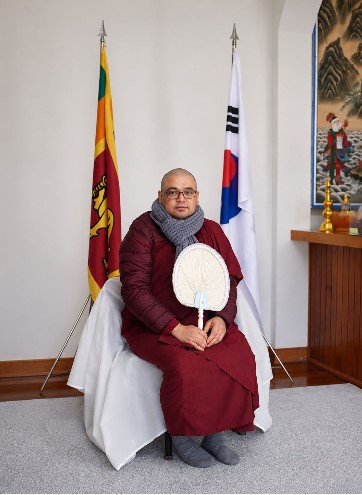
PHOTO: The Author
By Sangarathana Thero
I have lived in Korea for nearly two decades and met many migrant workers. Some postponed hospital treatment after being injured at work because they could not afford the medical costs. Others endured serious illnesses alone, unable to tell their families.
When I met them, the first things I asked were not their nationality or religion. I asked where they were hurting and what they needed.
Physical illness, however, was not their only source of pain. I also saw people deeply hurt by dismissive attitudes and harsh words simply because they were working in a foreign country or struggled with the language. Physical injuries may be visible and treated at a hospital, but wounds left by words can remain in the heart for a long time.
In Korean society today, when someone is accused of wrongdoing, public commentary often intensifies before the facts have been fully established. Buddhism identifies four forms of verbal misconduct: false speech, divisive speech, harsh speech, and idle chatter. Words can help people consider an issue, but they can also brand someone guilty before a court has reached its decision.
Chairman Lee Man-hee of the Shincheonji Church of Jesus now stands amid such public commentary. He is currently detained while standing trial and is awaiting the court’s decision on his application for bail.
The bail review is not about whether people approve of him or agree with his religious beliefs. It is a legal process for determining, on the basis of law and the court record, whether continued detention remains necessary for the trial and whether court-imposed conditions can ensure his appearance and the orderly conduct of proceedings.
Buddhism teaches equanimity—the practice of not dividing people into those we like and those we do not. The same principle should guide how Chairman Lee is viewed. His public reputation and personal attitudes toward his religion should be set aside. The relevant question is whether his continued detention is necessary.
The presumption of innocence, guaranteed by the Constitution of the Republic of Korea, means that no defendant should be treated as guilty before a conviction becomes final. This principle is not reserved for people we favor. It remains a principle only when it is upheld even for those facing widespread criticism.
I am not asking for special treatment for Chairman Lee. I am asking that public commentary about him be distinguished from the record before the court. If his appearance and the conduct of the trial can be secured through conditions imposed by the court, the option of allowing him to stand trial without detention should remain open.
Words spoken about a person do not quickly disappear. That is why we should be slower and more cautious in judging anyone before trial. In reviewing Chairman Lee’s application for bail, I hope the court record, rather than public commentary, will speak first.