
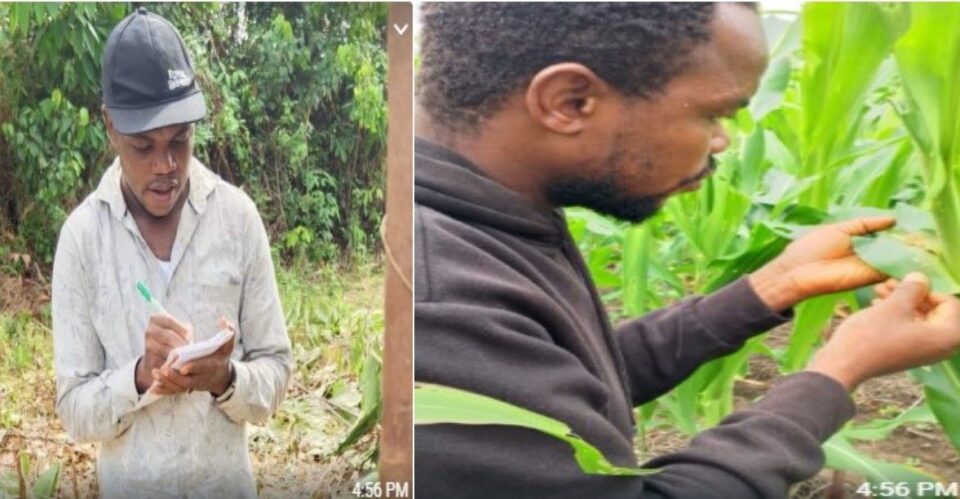
PHOTO: Rabasco Tugbe Chie, Liberian Agronomist and farmer
By Emmanuel Koffa
Liberia’s struggle with food imports is not simply a question of production, but also a question of knowledge, skills and investment in the country’s agricultural workforce, according to Agronomist and farmer Rabasco Tugbe Chie.
Chie is urging the Liberian government and young people to confront the structural challenges affecting agriculture, arguing that the country’s youthful population could play a critical role in reducing dependence on imported food.
“The knowledge gap has not been closed,” Chie said, stressing that many farmers continue to rely on traditional production methods without sufficient access to improved seeds, fertilizer, irrigation, pest management and modern farming technologies.
He argues that Liberia possesses the human resources and agricultural potential to produce more of its own food, but farmers need practical training and stronger institutional support to convert that potential into increased production.
Knowledge Before Production
According to Chie, agricultural development must begin with knowledge.
“Agriculture is not just about sowing seeds in the soil. It starts with the right knowledge of knowing what to plant, where to plant, how to manage pests and irrigation, how to harvest and store, and how to market what is harvested,” he explained.
He believes these skills are particularly important for young people entering the agricultural sector, warning against an approach where agricultural education is pursued merely to obtain certificates.
“Young people must engage in agriculture not for certificates but for a skill that changes everything,” Chie emphasized.
A Challenge to the Ministry of Agriculture
Chie is also calling for stronger agricultural extension services, particularly in rural communities where farmers often have limited access to modern agricultural information.
He says government and agricultural institutions must do more to ensure that farmers understand improved production techniques and can access the tools and inputs required to apply those techniques.
The agronomist argues that strengthening agricultural education in rural Liberia should be considered an investment in the country’s long-term food security.
Grand Kru’s Youthful Opportunity
For Grand Kru County, Chie sees an opportunity to place young people at the center of agricultural transformation.
He is encouraging young people to consider agricultural training at the Grand Kru Technical College (GKTC), Department of Agriculture, where they can acquire practical knowledge applicable to farming and agribusiness.
Rather than waiting for white-collar employment, Chie wants young people to consider agriculture as a sector where they can create employment for themselves and others.
“We are on this journey for a prosperous Liberia where food is available and affordable,” Chie said.
Chie says his next focus will examine agricultural data from Grand Kru County and highlight the opportunities available to young people willing to enter the sector.
His broader message is one of urgency: Liberia’s food security cannot depend indefinitely on imports. It must be built through knowledgeable farmers, skilled young people, stronger agricultural institutions and increased domestic production.