
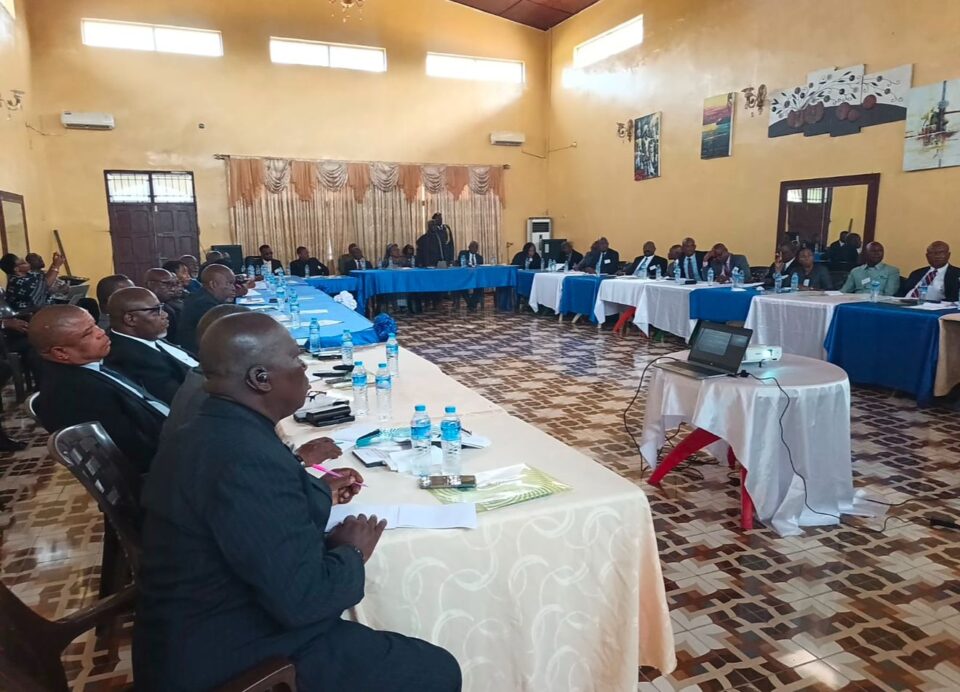
Buchanan, Grand Bassa County –In a quiet coastal city far from the bustle of Monrovia, Liberia’s judges gathered for something that had not happened in more than a decade: a week-long judicial training designed to strengthen competence, accountability, and access to justice, a UNDP press release said.
From January 27–30, thirty-five Circuit and Specialized Court Judges representing all sixteen judicial circuits convened in Buchanan for the Judges Peer-to-Peer Review and Accountability Training, an initiative organized by the James A. A. Pierre Judicial Training Institute.
The program, supported by the United Nations Development Programme (UNDP) and the International Development Law Organization (IDLO), marked a new chapter in Liberia’s ongoing judicial reform.
A Reform Agenda Rooted in Experience
Opening the training, Chief Justice Yamie Quiqui Gbeisay, Sr. reminded his colleagues of the weight their decisions carry. “As judges, the lives and properties of our citizens depend on the quality, fairness, and timeliness of our decisions,” he said, underscoring the importance of continuous education.
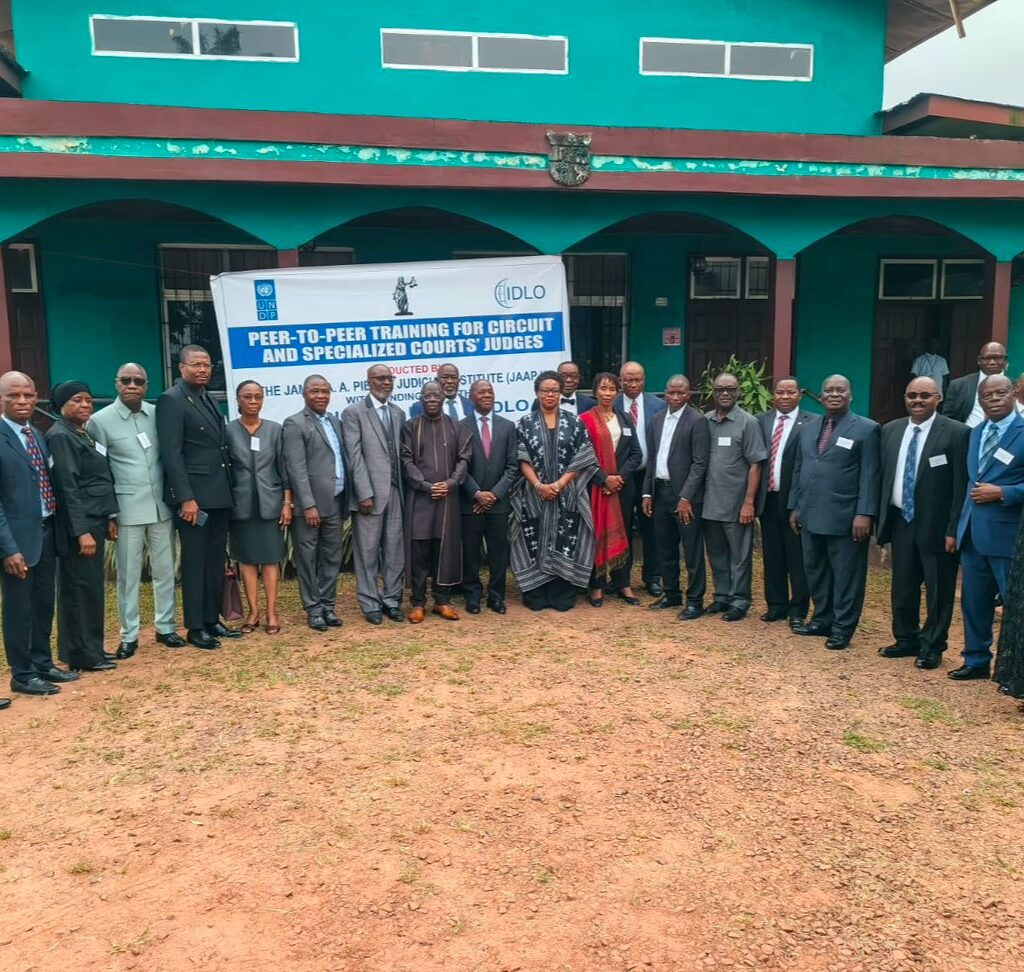
Drawing on his own seven years as a Circuit Court Judge, Chief Justice Gbeisay explained that the training was part of his broader reform agenda—one that seeks to improve judicial performance, inform future placements, and restore public trust in the courts.
Learning Beyond Monrovia
For UNDP, the choice of Buchanan as the venue was symbolic. Delivering remarks on behalf of the Resident Representative, Robert L. Nyahn, Coordination Analyst, highlighted that holding the training outside the capital sent a strong signal of decentralization and inclusiveness. “Judges are not only arbiters of the law, but custodians of experience, whose collective knowledge is one of the Judiciary’s greatest assets,” Nyahn said.
He commended the Chief Justice’s leadership in rebranding the Liberian Judiciary around transparency, accountability, and professionalism—values embedded in the Judiciary’s Strategic Development Plan (2025–2029).
Practical Lessons for Modern Challenges
The peer-to-peer model encouraged judges to share real courtroom experiences, mentor colleagues, and debate emerging legal challenges. Sessions covered criminal and civil law developments, case management, judicial ethics, trafficking in persons, cybercrime, drug-related offenses, jury management, and expanded magistrate court jurisdiction.
Integrity institutions such as the Liberia Anti-Corruption Commission and the Office of the Ombudsman also joined, reinforcing the message that judicial integrity is the foundation of public trust. “When citizens trust the courts, they trust the state,” Nyahn emphasized.
Partners in Reform
UNDP provided catalytic support through its Social Accountability and Rule of Law programming, while IDLO reaffirmed its commitment to advancing access to justice. “IDLO is pleased to support this initiative because it directly advances judicial accountability,” said Chinyelumugo Okoh, IDLO Country Manager. “We commend the Judiciary for prioritizing professional development and peer learning.”
Judges Reflect on Impact
At the closing ceremony, participants expressed gratitude for the revival of judicial education. Judge James E. Jones described the training as “timely and impactful,” while Judge Nancy Sammy urged colleagues to apply the lessons to improve fairness and professionalism in service delivery.
Representing the Chief Justice, Judge Peter Gbeneweleh reminded participants that the true measure of the training would be seen in courtrooms across Liberia. “The knowledge and skills acquired must be used to guarantee free, fair, and timely access to justice for all Liberians,” he said.
A Step Toward Sustained Reform
Though the training lasted only four days, its impact is expected to ripple across Liberia’s judicial system. Judges will carry new skills back to their circuits, share knowledge with peers, and contribute to reforms through the Judicial Training Institute.
For Liberia’s Judiciary, the Buchanan gathering was more than a workshop—it was a reaffirmation of commitment to integrity, accountability, and the rule of law, and a promise to the Liberian people that justice will be delivered with competence and fairness.