
Lack Of Punctuality, Inadequate Representation, Weak Oversight & Challenges In Lawmaking
By Frank Sainworla, Jr., fasinworla@yahoo.com/newspublictrust@gmail.com
It is a fact that no institution in the world can boast of being perfect, but when elements in institutions continue with a trend that generally erode public trust and confidence over a long period, then there is much reason for concerns. And one of such state institution is the first branch of the Liberian government—the Legislature.
Many years ago, this writer covered the Legislature for the state broadcaster, Liberia Broadcasting System (LBS) and keenly observed the unique work culture and perspectives of Lawmakers then to be largely driven from what is in the ultimate national interest. Rather, there seemed to be a kind of magnet that gravitates the vast number of “the people’s representatives” towards their personal interests and welfare—in financial allotments through the annual national fiscal budges, their own salaries and benefits, passing on Bills (including concession agreements), etc. In many of these scenarios, lack of patriotism emerged out of the filibustering.
Then Vs. Now
Years after leaving that Capitol Building beat of mine, I’ve made it my business to keep close watch on activities of this important branch of government through sharing notes with past and present colleagues who cover the Legislature. From the 53rd-the current 55th Legislature, it would seem some of the old bad culture seems to have largely been entrenched, rather than dissipated.
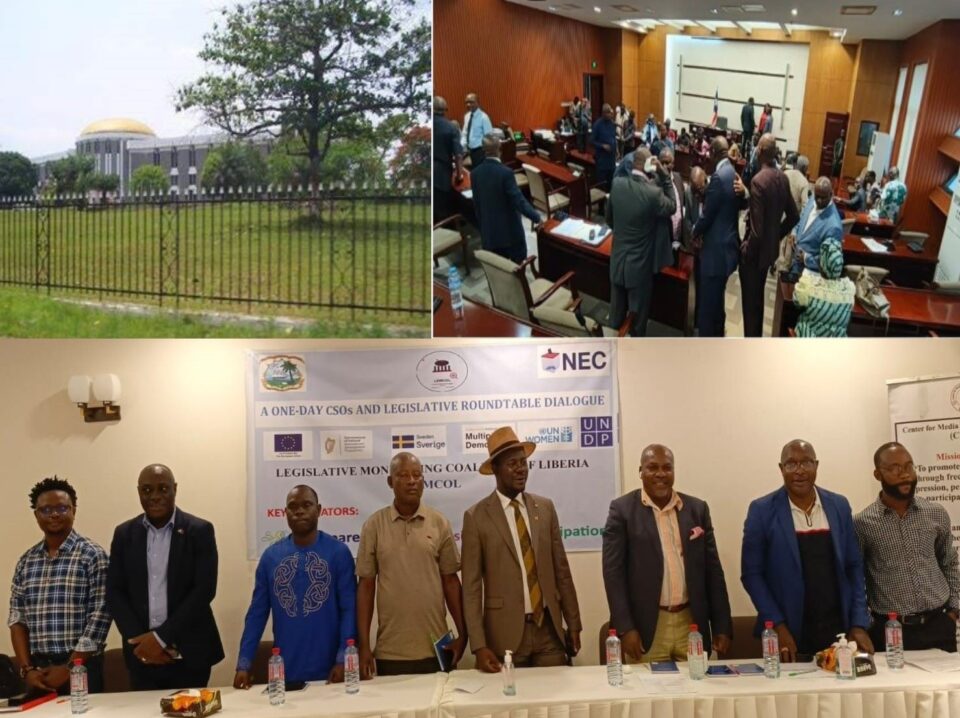
So, this was why keen Legislative watchers such as me were not really surprised when findings were released by Legislative Monitoring Coalition of Liberia (LEMCOL) on Monday, December 22, 2025 at the D’ Calabash in the Congo Town suburb of Monrovia– Lack of Punctuality, Inadequate Representation, Weak Oversight & Challenges in Lawmaking.
Officials of LEMCOL say it “is a coalition of sixteen (16) CSOs and media institutions working around three thematic issues of legislative transparency, participation, and inclusion at the Liberian National Legislature,” and their monitoring was from November 4-December 11, 2025.
“The findings reveal both strengths and weaknesses in legislative performance linked to three indicators: Inclusion, Transparency and Participation. On the positive side, the Legislature consistently maintained respect for democratic procedures during plenary sessions, with all nine (9) observed plenary sessions demonstrating adherence to principles such as speaking only when recognized and respecting differing opinions of their fellow lawmakers,” the report says.
The LEMCOL findings add:
“However, the monitoring also uncovered gaps that warrant immediate attention. Session punctuality emerged as a systemic problem, with none of the nine (9) observed sessions commencing at the official 10:00 AM start time. Gender disparities in legislative participation and initiative were also particularly stark. These findings collectively point to a Legislature that maintains procedural integrity in many respects but faces substantial challenges in timeliness, gender inclusion, transparency mechanisms, and effective communication with the citizenry it serves.”
Connecting the past Legislatures to the current 55th, the findings is like Déjà vu, something that some of the participants at the December 22 Media-CSOs Legislative Roundtable raised in their questions and comments. One of the LEMCOL findings that immediately struck a chord to me this day and age is this:
“Website: The only website available for the Liberian Legislature is that of the Senate but is currently unavailable online and lacks real-time information and is not regularly updated with session reports, bills, or deliberations.” There are fond memories of how much USAID and other international partner partnered and invested into the Legislature Informative Information System section—building both human resource capacities and logistics.
For the weaknesses, quiet a lot of things come to mind including the fact that during the first Unity Party government, a major international audit report from Moore Stephens firm revealed that out of 68 concession agreements ratified by the then Legislature, only two were legally in the supreme interest of the Liberian people.
Earlier, citizens saw the passage of the first concession agreement by the iron ore giant Mittal Steel, when Lawmakers were reportedly induced with a twin-cabin luxury pickups accompanied with some big cash. In all, the lawmakers both from the House and Senate are 103 in number, with one notable member of the Senate then from central Liberia rejecting the booty.
Some of those deals are still haunting this West African state today and some of the lawmakers in the now burnt out Joint Chambers at the Capitol Building are still there today. It can be recalled how some of them put on the posture to make their constituents think they were remorseful during the debate about some flaws highlighted in one of the concession agreement—APM Terminal at the Freeport of Monrovia. Some time ago, a number of them said in plenary that “if we had known,” they would not have signed that deal, admitting publicly to flaws raised by experts and others many years earlier, something they ignored to satisfy selfish interests.
Fast forward to pass the 2016 national budge, the current 55th Legislators recently sat in session late into the night and passed the over US$1.2 billion budget, which does not include increment in civil servants’ salaries but a rise in the budgets of both the budget of the Lawmakers and the Presidency, budget which lines doesn’t only include salaries but allowances and benefits to include entertainment, scratch cards and petroleum monthly. The average Liberian civil servant makes a mere US150 or so monthly.
It is well known in Liberia that top political posts in the Legislative and Executive branches of government, which consume the lion’s share of this country’s national fiscal budget, continue to whet the appetite of a growing number of citizens. Their numbers are growing rapidly, reflecting on what renowned Liberian international academic, Dr. Rubtel Pailey described as “political entrepreneurship” on the local OK FM radio some time ago.
According to reports, while Liberian Lawmakers make up to US$10K a month, their counterparts in countries like Ghana and Sierra Leone make US$2,600 and US$1,000 respectively. Nearly 20% Of Liberia’s Previous Legislature Trying To Make A Comeback In Oct. 10 Polls – News Public Trust
Lawmakers reactions to the Legislative Monitoring findings
In the D’ Calabash Media-CSOs Legislative roundtable on December 22, 2025, several lawmakers present were generally defensive, but one or two others sort of tried to take it in their stride. A good number of them said that LEMCOL should have shared the report with them for their input prior to releasing it at the forum.
Those in attendance at the roundtable were Senator Edwin Melvin Snowe of Bomi County; Senator Jonathan Boye-Charles Sogbie of River Gee County; Representatives Foday Fahnbulleh of Bong County; Kortor Kwagrue and Nyan Flomo of Nimba County; and Elijah Varney of Bomi County.
“I challenge the findings that votes at the Legislature are not recorded or counted. I strongly debunk that,” River Gee Senator Sogbie said. He defended the Legislature handling of audit Reports from the General Auditing Commission (GAC), dismissing criticisms in some quarters that lawmakers fail to do due diligence to GAC reports.
Responding to the report’s findings on “gender disparity”, Sen. Sogbie was quick to point out that “most of the female lawmakers don’t vote for themselves” (fellow female lawmakers), none of whom was present at the recent roundtable.
The River Gee County Senator wondered about the degree of consultation the monitors had during their survey concerning the low level of participation “they talked about”.
Sen. Sogbie said the performance of the lawmakers are in the national interest and that of their constituents, not selfish interest. “We did not pass the TotalEnergies and Oranto Petroleum oil agreement, because they give us (lawmakers) money or were promised money.”
He however, welcomed the legislative monitoring initiative by LEMCOL, adding that the media and civil society coalition could have done better in their report.
For Nimba County Rep. Nyan Flomo, he broadly welcomed the monitoring report and findings, speaking of the need for the Legislature to get “honest feedback” from CSOs and the Liberian public on their performance.
“information sharing is the beginning of accountable governance,’ the broadcast Journalist-turned politician told the gathering.
Rep. Flomo agreed with some of the issues observed in the report, he questioned the monitors’ “mechanisms” used in their activities lawmakers’ activities in their constituencies. He expressed reservation over what he said were the monitors’ failure to share their report with lawmakers prior to the forum.
Another lawmaker to take the stand was Bomi County Senator, Edwin Melvin Snowe, who generally welcomed the LEMCOL report, but was quick to defend the current 55th Legislature by saying he believe that “there are more positives than negatives about this Legislature”.
“The work of the Legislature should not always be limited to corruption…Audit is not a tabu for the Legislature” and supported calls for audit of the Legislature, while declaring, “I also have some of my own contradictions”.
Sen. Snowe admitted that lawmakers (Senate) have from time to time broken some of their own rule on voting on record in plenary.
While supporting the need for the public to “keep our (Legislators) feet to the fire”, Sen. Snowe however, said: “There are lots of positive things happening in the Legislature. It is becoming more transparent and opened.”
Finally, Rep. Foday Fahnbulleh of Bong County began his response by justifying the US$45K vehicles given each of Liberia’s 103 lawmakers every three years. He said that if they were getting a hundred US dollars a day as was calculated in past years, the government would be spending triple of what it’s spending today on lawmakers’ vehicles.
Rep. Fahnbulleh called on legislative monitors, especially Journalists objective, detailed, concise, accurate, and factual reporting on the Legislature.
He criticized the FEMCOL report for what he called focusing on legislative activities only in the capital, Monrovia, saying that it did not adequately capture progress being made by lawmakers in their respective counties.
Well, whatever personal and collective reservations lawmakers have on the findings reached by the Legislative Monitoring Coalition of Liberia, in order for the Legislature to make this first branch of government work for the millions of voters, they need to be more transparent and accountable.
And to pick up on two key recommendations made in the latest legislative monitoring report:
“The legislature improves its oversight function by demanding that the Executive submits budget performance reports prior to the submission of the national budget” and
“The Legislature prioritizes the activation of its website so that the public can access real-time information on legislative proceedings, voting records, information, bills, and laws. “
Anything short of these will continue to erode public trust in this important branch of government which citizens expect to at all times project their interest and the national interest rather than their selfish interest. It is only by putting patriotism to the forefront of their legislative activities will a mark difference be seen in the months and years ahead.