

As Consumers To Feel More Pinch, When Value Added Tax (VAT) Takes Root
By Frank Sainworla, Jr., fsainworla@yaoo.com/newwpublictrust@gmail.com
Frantic efforts by the Liberian government to boost revenue collection, in order to increase the national fiscal budget to over one billion US dollars coincide with the phasing out of the GST (Goods and Services Tax) with the VAT (Value Added Tax) regime.
In this vein, some business people and ordinary taxpayers have over the years complained of the progressively high tax regime here in Liberia, with the current GST rate up to 12%. Experts in the sector, including authorities of the Liberia Revenue Authority (LRA) themselves admitted back in October this year at a media engagement in Harbel, outside Monrovia, when VAT comes into full force by 2027, the percentage will go up to 16%. By the way, even before the GST moved up to 12%, it was down to 10% in earlier year(s).
Officials say VAT is a multi-stage tax on goods (both local and foreign). It’s understood that when it takes root with its “cascading effect”, consumers may ultimately bear the brunt of the burden given how the capitalist market system operates, especially in the case of Liberia where price control and regulation can be elusive.
Critique of VAT
The emerging VAT regime has its downside with effects both on “revenue and inequality”, experts say.
Results of an international study done some time ago of some countries’ VAT systems as an instrument, “results reveal – in contrast to earlier work – that the revenue consequences of the VAT have not been positive. The results indicate that income-based inequality has increased due to the VAT adoption, whereas consumption inequality has remained unaffected.” Full article: The Effects of the Value-Added Tax on Revenue and Inequality
On the other hand, some experts speak of some positive side of VAT, “because consumption is a more stable revenue base than other tax bases, VAT is less distorting and hence more likely to encourage investment, savings, optimum labor supply decisions, and growth.”
However, in the same vein, it carries with it some big challenges, which Liberian tax authorities will have to be able to get around in a society where everything in the public sector is heavily politicized.
“VAT is not without criticism however, and faces its own specific technical and policy challenges.” Virtues and Fallacies of VAT: An Evaluation after 50 Years – Google Books
Liberian political leaders insensitive to constraints on consumers & heavy tax burden?
Now, the real ramifications of the process moving from the GST into the VAT interspersed with the government’s quest to step up the revenue envelop to one billion US dollar-plus remains the politico-socio and economic realities.
Following local radio talk shows and Social Media debates, a key concern of citizens is: Reconciling LRA’s public information promotion of the one billion target vis-à-vis ultimate deliverance of essential public services by the administration. Citizens’ apprehension over where the bulk of the country’s tax dollars end up?
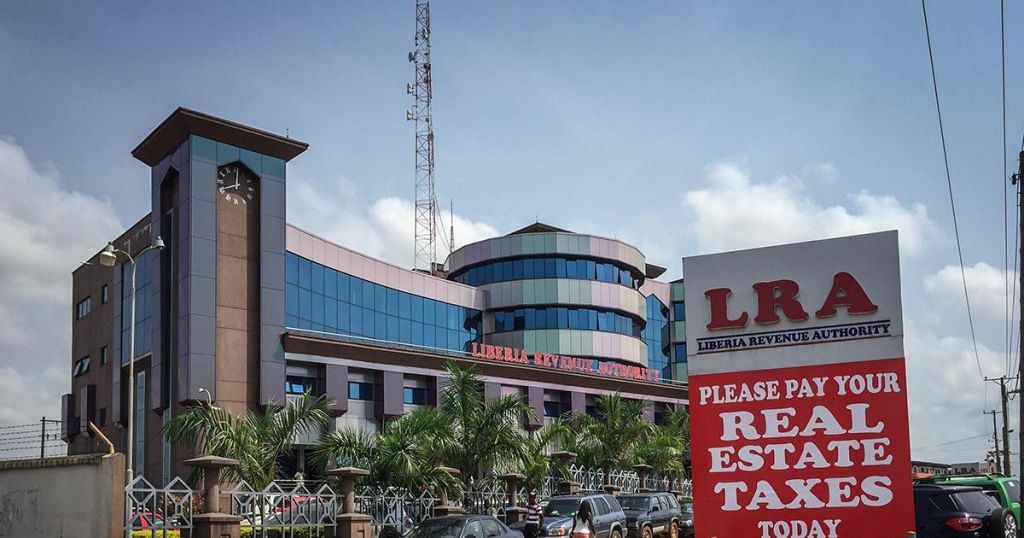
Well, it seems there are more questions than answers: Why prices remain high all the time, despite drop in the money exchange rate? Are Liberian political leaders sensitive to this fact—the constraints on consumers and the relatively heavy tax burden?
Liberia Revenue Authority (LRA), which is statutorily in charge of collecting the over one billion to service the budget, sees itself as a “starved cow” that is being over-milked and thinks it’s time for the current Unity Party government to increase its budgetary allotment. If the one billion-plus target is to be realized in 2026 and beyond, the milking cow should not continue to be starved, LRA authorities told the media recently.
Will the progressively increasing tax rate (VAT to come) seen by politicians as the only pathway to government boosting its budget?
It may well seem that it could probably be a double-edged sword. Some cynics are raising eyebrows in the wake of the recent unveiling of the US$1.2 billion draft national budget currently before the Legislature sent there by the Executive Mansion, both of whom consume the lion’s share of this “national cake”.
Both branches of government have in this budget enormous salaries and benefits including lavish sums for entertainment, while the average civil servants continue to made the barest minimum monthly wages—US$150.
Internally, the government has its own serious shortcomings in generating taxes from several of its money-generating public enterprises that supposed to be funding the one billion-plus budget, instead of taking away from it, something the LRA Commissioner General, James Dorbor Jallah has repeatedly referred to as “leakages”.
Therefore, the politicians must not see the progressively higher tax rates alone as the pathway to meeting the one billion US dollars-plus revenue target.