
An Analysis From The University Of Liberia’s One-Day Strategic Media Management Seminar
By George Stewart
It speaks to the urgent need to make media institutions viable, resilient, and relevant.
Media practitioners themselves continue to describe a grim reality. Poor or unpaid salaries. Unsafe and demoralizing work environments. Most troubling is an increasingly fragile ethical foundation.
The weak economic state of the Liberian media, frequently cited by stakeholders and development partners, remains a major barrier to quality Journalism and sustainability. The country continues to pay the price of an impoverished press. Political patronage has deepened. It has expanded into direct ownership, content control, and censorship by influence.
As foreign donor support for media development declines, the burden shifts inward. National institutions must now lead the effort to strengthen management systems and rethink fundraising beyond traditional revenue streams.
The Author, George Stewart
In this context, the Department of Communication and Media Studies at the state-owned UL, formerly the Department of Mass Communication, has assumed a leadership role.
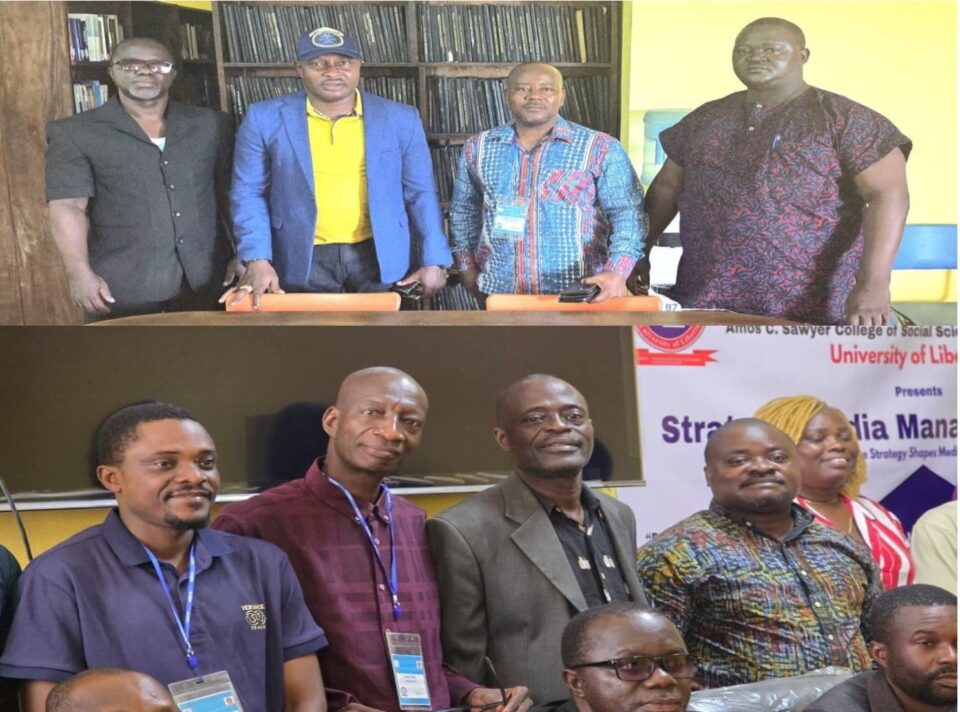
As the largest public institution training journalists and media professionals, it stepped forward. On January 30, 2026, the Department convened more than 20 media managers and key stakeholders for a Strategic Media Management Seminar at the University’s Capitol Hill Campus in Monrovia.
The seminar brought together leaders from the media, civil society, and academia. It created space for honest reflection and forward-looking dialogue.
Summarizing the core threats to Liberia’s media sector, the Communication Department Chairman identified three interlinked challenges: political influence, economic survival, and digital disruption. Political influence now extends beyond pressure to ownership and content control.
Economic vulnerability and digital disruption reinforce each other. Over the past decade, digital transformation has steadily eroded traditional advertising, once the lifeblood of media institutions. Revenues are dwindling by the day and have nearly collapsed. Survival now demands innovation.
The seminar focused on three core areas of strategic media management. Jefferson Massah, former Senior Media Advisor at Internews Liberia, presented Pillars of Strategic Media Management, emphasizing the importance of clear institutional mission and vision, strategic planning, and financial forecasting.
This writer, George Stewart delivered a session on Resource Mobilization for Media Sustainability, underscoring event management, networking, and service provision as practical pathways to revenue diversification amid declining traditional media income.
Drawing on over many years of professional experience, Mr. Frank Sainworla, a UL Journalism Lecturer and Managing Editor of the Public Trust Media Group (PTMG)- www.newspublictrust.com,
addressed the tension between Media Ethics and Business Ethics, amid the advent of the internet and the rise of the Social Meida. He illustrated his point with a real-life case in which business interests compromised editorial independence.
No alternative
There is no alternative. Media institutions must transition and adapt to the digital reality. For developing countries like Liberia, the pace may be slow, but the destination is unavoidable.
The just-ended University of Liberia Strategic Media Management Seminar served as a pilot, an entry point into broader conversations, skills development, and mindset change. Its goal is clear: to help build stronger institutions capable of supporting good journalism and a financially viable media sector.
The UL Department of Communication and Media Studies through its Chairman, Euriahs M. Togar reaffirms its openness to collaboration with local media houses and umbrella institutions.
The moment demands action. Stronger institutions are the only path to sustaining journalism as the enduring mirror of Liberia’s democracy.