
Monrovia, Liberia; September 22, 2026: For many Liberians living outside Monrovia, accessing basic government services can mean traveling long distances, navigating complex administrative processes, and waiting weeks or even months for decisions that affect their daily lives, the United Nations Development Programme (UNDP) says.
Whether obtaining official documents, accessing public services, or participating in local development decisions, the reality of a highly centralized governance system has long posed challenges for citizens across the country’s 15 counties.
Now, the Government of Liberia, with support from the United Nations Development Programme (UNDP) and development partners, is taking decisive steps to change that.
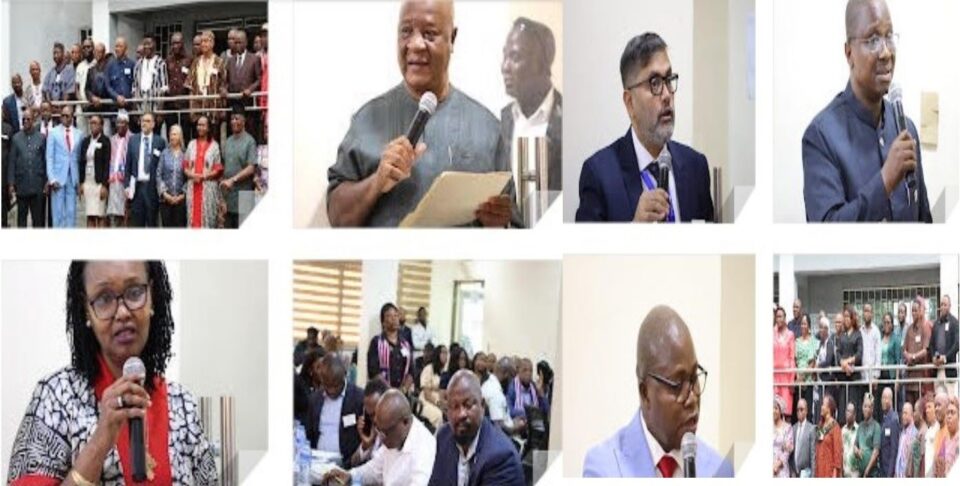
At a two-day High-Level Dialogue on Decentralization and Local Governance held in Monrovia between September 16-17, 2026, senior government officials, county leaders, development partners and governance experts came together to chart a practical path toward devolving political, fiscal and administrative authority including services from Monrovia to local and sub-local governments.
The dialogue, convened at the JNB Decentralization Hall of the Ministry of Local Government, focused on advancing implementation of the Local Government Act of 2018, the landmark legislation that established the legal framework for devolving political, fiscal and administrative authority to local governments.
Participants examined a critical question: how can government functions concentrated in Monrovia be effectively transferred to counties and local institutions so that citizens can access services more efficiently and participate more meaningfully in governance?
Opening the discussions, Ms. Christine N. Umutoni, United Nations Resident Coordinator in Liberia, emphasized that decentralization is about far more than administrative restructuring.
“Decentralization cannot be overemphasized in Liberia’s development journey. It is not merely an administrative reform or the transfer of functions from national to sub-national levels; it is a pathway to bringing governance closer to citizens, strengthening participation and accountability, and ensuring that public resources and services respond more effectively to local needs and priorities.”
Umutoni noted that decentralization is closely aligned with the United Nations Sustainable Development Cooperation Framework for Liberia 2026-2030, which promotes effective institutions, inclusive governance, accountability and equitable access to opportunities and services.
Devolution Must Be Matched by Resources
Representing UNDP, Louis Kuukpeen, Deputy Resident Representative, underscored a key principle that resonated throughout the dialogue.
“Devolution is therefore most effective when authority, responsibility, resources, capacity, and accountability move together.”
Kuukpen highlighted UNDP’s longstanding support to Liberia’s decentralization journey, including support to the enactment of the Local Government Act of 2018, the Revenue Sharing Law of 2022, revisions to public financial management frameworks, and the strengthening of County Service Centers, County Councils, and County Development Planning Units, among others
He stressed that the focus must now shift from discussing whether decentralization is necessary to determining precisely which functions should be devolved, what barriers exist, what resources are required, and how progress will be measured.
Moving Beyond Structures to Results
While Liberia has made significant progress in establishing the legal and institutional foundations for decentralization, leaders at the dialogue acknowledged that implementation must accelerate.
The Minister of Local Government, Hon. F. Sakila Nyumalin Sr., noted that the country has established key structures, including County Councils, County Service Centers and supporting legal frameworks. However, he stressed that institutions alone are not enough.
Hon. Nyumalin further emphasized that, meaningful decentralization requires counties to have not only responsibilities but also adequate financial resources and decision-making authority to deliver services effectively.
He highlighted that although County Councils have mandates spanning education, health, roads and water services, they continue to operate with limited fiscal resources. Without financing, he argued, decentralization risks becoming an administrative exercise rather than a transformative development reform.
Why Decentralization Matters
At the heart of Liberia’s decentralization agenda is a simple but transformative idea: decisions affecting citizens should be made as close to them as possible.
In a presentation on Liberia’s decentralization framework, Deputy Minister of Decentralization and Local Government, Hon. Edward F. Mulbah described the country’s longstanding governance structure as highly centralized, with political, fiscal and administrative systems historically concentrated in Monrovia.
Hon. Mulbah highlighted that this concentration has contributed to unequal access to services and development opportunities across the country.
The decentralization process seeks to reverse that trend by empowering counties and local institutions with greater responsibility and authority over development planning, public service delivery and local decision-making.
For citizens, the goal is straightforward: making government more accessible, responsive and accountable.
Imagine a future where residents can obtain official services in their counties rather than traveling to Monrovia, where communities have a stronger voice in determining local priorities, and where development resources are managed closer to the people, they are intended to serve.
hat is the vision driving Liberia’s decentralization reforms, a vision that requires strong accountability, strengthened local capacity, and sustainable and equitable resource allocation.
A New Mechanism for Action
One of the most significant outcomes of the two-day gathering was the establishment of the Inter-Ministerial Committee on Local Governance and Decentralization signaling a renewed push to translate long-standing policy commitments into tangible improvements in citizens’ lives.
Launched by the Acting Defense Minister Counselor N. Oswald Tweh, on behalf of the Minister of State and Acting Head of Cabinet, Hon. Samuel A. Stevquoah, the committee is expected to coordinate implementation across government institutions, monitor progress, and help resolve bottlenecks that have slowed the decentralization process.
Counselor Tweh described decentralization not only as a governance reform but also as a national stability issue.
He argued that when citizens can access services, participate in decision-making and feel connected to government institutions, communities become more resilient and trust in public institutions grows stronger.
The committee will also oversee development of a time-bound devolution matrix identifying which functions should be transferred, the institutions responsible, implementation timelines, and the resources required for success.
What Success Will Look Like
Ultimately, the success of decentralization will not be measured by laws, committees or policy documents. It will be measured by citizens lived experiences.
Will community members be able to access essential services more quickly? Will local governments have the capacity and resources to respond to community needs? Will women, youth and vulnerable groups have greater opportunities to influence decisions affecting their development?
These are the questions driving Liberia’s next phase of reform.
Through the Local Empowerment for Accelerated Decentralization (LEAD) Programme, UNDP reaffirmed its commitment to supporting stronger local governance systems, digital innovation, citizen participation, fiscal decentralization and improved service delivery.
As Liberia advances toward full implementation of its decentralization agenda, the message emerging from the dialogue was clear: decentralization must move beyond policy commitments and become a practical reality in every county and community.
For millions of Liberians, success will mean a government that is not distant, but present; not centralized, but accessible; and not merely administered from the capital but felt in the everyday lives of citizens across the nation.