
By Garmah Never Lomo, garmahlomo@gmail.com
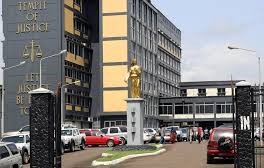
TEMPLE OF JUSTICE, Monrovia – After more than four weeks of direct and cross-examination by both the prosecution and the defense, jurors on have explored more questioned to state’s first witness, Investigator Refael Wilson.
The Juror on Monday, December 22, 2025 focusing sharply on the quality, source, and credibility, validity of evidence presented in the ongoing Capitol Building fire trial.
The arson might be similar to the sable Mining and the 16 missing billion, US100 million drug cases where the defendants liberties were restored at the end of those trials due to lack of sufficient evidence.
At the end of cross-examination by the defense, the court opened the floor to juror questions. Most of the inquiries centered on whether audio recordings, video footage, and photographs constituted the primary evidence against the defendants. In response, Wilson told the court that the prosecution also relied on voluntary statements, call logs, and other investigative materials.
However, during cross-examination, defense counsel challenged the credibility of many of the alleged voluntary statements, arguing that some were obtained through torture and coercion and that several were unsigned by the defendants. The defense maintained that such statements should not be relied upon by the court.
Jurors repeatedly asked what evidence the state intended to use to support its case beyond electronic recordings and images. Wilson reiterated that investigators collected statements and call records in addition to audio and video materials.
One juror questioned whether security personnel who were on duty at the Capitol on the day of the incident were questioned during the investigation and what the outcome was. Wilson testified that security officers were indeed questioned and that investigators discovered several irregularities. According to him, some officers who were scheduled for duty were never informed of their deployment, while others failed to report to work. Some officers claimed illness, while others admitted they did not report for duty but denied any involvement in the alleged arson.
Another juror referenced a PowerPoint presentation shown earlier in the trial, asked the witness that he said in his testimony there was no CCTV camera on the compound of the Capitol building how did the investigation obtained those footages ? Wilson explained that investigators obtained several photographs during the investigation, including images showing the exterior of the Capitol Building, the Joint Chambers after the incident, and photos retrieved from the mobile phone of defendant Thomas Etheridge.
In addition to juror questioning, the defense renewed strong objections to several documents submitted by the prosecution, challenging their authenticity and admissibility. Defense counsel questioned the absence of original copies of letters dated December 24, 2024, and January 3, 2025, noting that only photocopies were presented to the court.
The defense further argued that the documents were not obtained directly from the alleged author but instead came from a brother-in-law whose identity the prosecution witness could not clearly recall, raising doubts about the documents’ origin and reliability.
Counsel also objected to two alleged voluntary statements, pointing out inconsistencies in content and signatures. According to the defense, the December 24 letter was addressed to a different recipient and bore a different signature, while the January 3, 2025 letters were unsigned.
The defense questioned the basis upon which the prosecution attributed the documents to the alleged author.
Medical evidence was also scrutinized. A report presented in court indicated that the alleged victim suffered broken and missing teeth, back pain, and blindness in one eye. However, defense counsel noted that the medical opinion stated the findings were “highly consistent” with allegations of torture, further undermining the prosecution’s claims.
At another point, defense counsel accused investigators of coercion, alleging that certain statements were written by investigators rather than the accused and signed in the absence of the defendants, with the intent of implicating other individuals. The defense emphasized that cross-examination is a constitutional right and urged the court to uphold its previous rulings allowing witnesses to respond fully to questions.
The trial continues as the court considers arguments over the admissibility and weight of the contested evidence.