As CEMESP Holds Day-Long Legislative Forum In Monrovia
Press release CEMESP on Legislative Forum and Below:
CEMESP Holds One-Day Media–CSOs-Legislative Roundtable on Findings of Legislative Monitoring Report
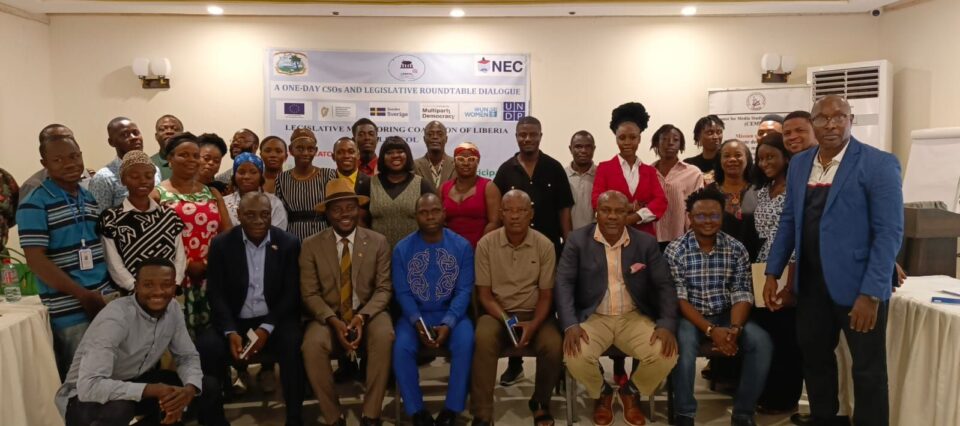
Monrovia, Liberia | Monday, December 23, 2025 – The Center for Media Studies and Peace-building (CEMESP), with funding support from the Netherlands Institute for Multiparty Democracy (NIMD), has successfully convened a one-day high level Media–Civil Society and legislative roundtable discussion on the findings of the Legislative Monitoring Report.
The event brought together lawmakers, media practitioners, civil society actors, donor partners, and government officials to reflect on legislative performance and strengthen democratic accountability in Liberia.
Held at the D’ Calabash Conference Hall in Monrovia, the roundtable focused on the findings of the Legislative Monitoring Report covering the period November 1 to December 14 2025. CEMESP, a member of the Legislative Monitoring Coalition of Liberia (LEMCOL), participated in monitoring the Legislature across three cardinal areas: inclusion, transparency, and participation.
The discussion featured perspectives and feedback from members of the Liberian Legislature, including Senator Edwin Melvin Snowe of Bomi County, Senator Jonathan Boye-Charles Sogbie of River Gee County, and Representatives Foday Fahnbulleh of Bong County, Kortor Kwagrue and Nyan Flomo of Nimba County, and Elijah Varney of Bomi County.
Providing the overview and objectives of the report, Malcolm W. Joseph, Executive Director of CEMESP, emphasized that the findings reflect the realities observed during the monitoring exercise.
He noted that issues such as lack of punctuality, inadequate representation, weak oversight, and challenges in lawmaking were prominently highlighted during the assessment.
According to Mr. Joseph, the report not only identifies gaps but also evaluates the strengths and weaknesses of the Legislature, creating a pathway for improvement through constructive engagement.
“The monitoring report is intended to serve as a learning and improvement tool,” Mr. Joseph stated. “It provides evidence-based findings that can help strengthen legislative performance and deepen democratic governance.”
The interactive engagement allowed for open feedback between lawmakers and participants, fostering dialogue on the findings and recent legislative updates. Lawmakers, in response, called for broader collaboration, cooperation, and support, particularly in the provision of timely and accurate information to enhance the effectiveness of legislative monitoring.
Contributing to the discussion, Representative Elijah Varney of Bomi County highlighted his efforts to promote accountability at the constituency level, noting that he regularly organizes talk shows, provides legislative briefings, and keeps citizens informed about his legislative work.
Representative Foday Fahnbulleh of Bong County urged legislative monitors especially journalists covering the Legislature to ensure their reporting remains objective, detailed, concise, accurate, and factual. He observed that while the report focused on legislative activities in Monrovia, it did not sufficiently capture progress being made by lawmakers in their respective counties.
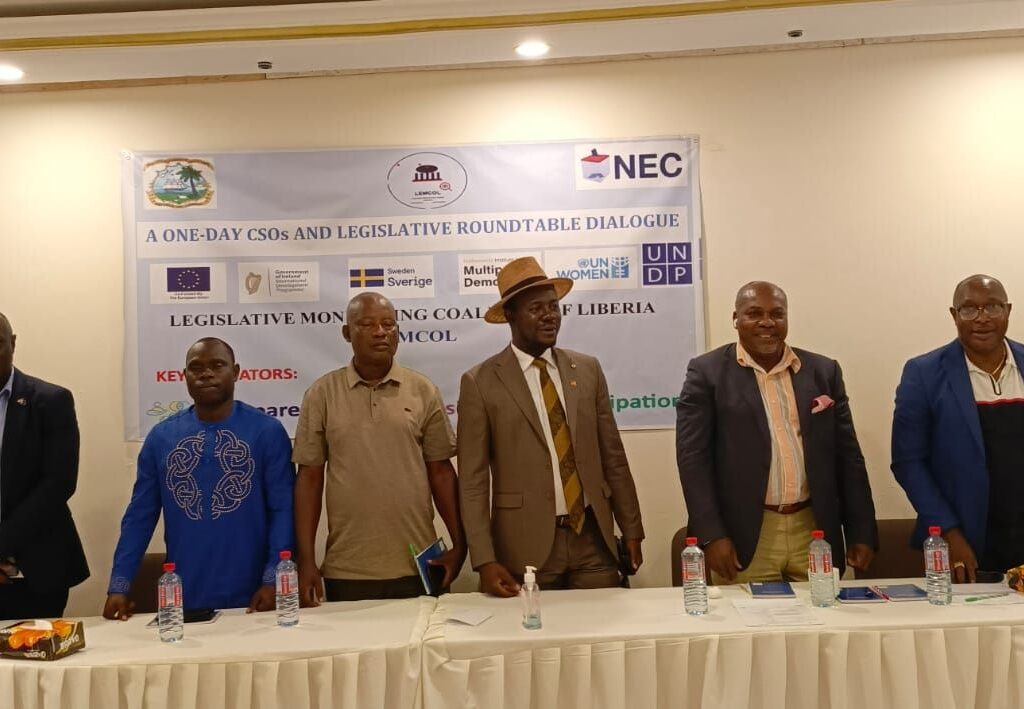
For his part, Representative Nyan Flomo of Nimba County expressed appreciation for the report and provided candid feedback, describing legislative monitoring as cardinal to the work of the Legislature and essential to strengthening democratic governance in Liberia.
Senator Edwin Melvin Snowe of Bomi County remarked that the Legislative Monitoring Report should serve as a guide and conduit for improving lawmakers’ performance. A key point of discussion during the roundtable was the call for an audit of the Legislature, with several lawmakers acknowledging that persistent negative public perceptions of corruption underscore the need for greater transparency and accountability.
The event concluded with a shared commitment among participants to deepen engagement between the Legislature, media, and civil society in order to enhance public trust and promote good governance.
The Legislative Monitoring Coalition of Liberia (LEMCOL) is a consortium of leading civil society organizations and media institutions working collaboratively to promote good governance and effective legislative oversight. Its members include the Center for Media Studies and Peacebuilding (CEMESP), Institute for Democratic Action and Development (IDAD), InfoQuest Liberia, Women NGO Secretariat of Liberia (WONGOSOL), Center for Transparency and Accountability in Liberia (CENTAL), Accountability Lab Liberia, and key media institutions across the country.
BELOW IS SUMMARY OF THE LEGISLATIVE MONITORING FINDINGS:
Disclaimer: The contents of this report are solely the views of the coalition and do not reflect the views of the donors or NIMD.
EXECUTIVE SUMMARY
This press conference presents findings from legislative monitoring conducted by the Legislative Monitoring Coalition of Liberia (LEMCOL), from November 4-December 11, 2025 of the National Legislature. The initiative, co-funded by the European Union and the Embassy of Sweden under the Liberia Electoral Support Project Plus (LESP+), is managed by UNDP and jointly implemented by the Netherlands Instituted for Multi-party Democracy (NIMD) and UN Women. NIMD provided sub-grants and technical support to the coalition to undertake this task. The monitoring focused on evaluating the performance of the Legislature, using structured checklists across three indicators: Inclusion, Transparency, and Participation linked to its three cardinal functions (Oversight, Representation and Lawmaking).
Using a standardized checklist, LEMCOL observed a total of 9 plenary sessions across both chambers of the National Legislature.
KEY FINDINGS
The findings reveal both strengths and weaknesses in legislative performance linked to three indicators: Inclusion, Transparency and Participation. On the positive side, the Legislature consistently maintained respect for democratic procedures during plenary sessions, with all nine (9) observed plenary sessions demonstrating adherence to principles such as speaking only when recognized and respecting differing opinions of their fellow lawmakers.
The reading of daily journals occurred in every session, and the seconding and debating of motions was observed in majority of the sessions monitored. Legislative discussions focused heavily on critical national priorities, including finance and public sector governance, with substantial attention given to infrastructural development, education, and youth development.
However, the monitoring also uncovered gaps that warrant immediate attention. Session punctuality emerged as a systemic problem, with none of the nine (9) observed sessions commencing at the official 10:00 AM start time. Gender disparities in legislative participation and initiative were also particularly stark. These findings collectively point to a Legislature that maintains procedural integrity in many respects but faces substantial challenges in timeliness, gender inclusion, transparency mechanisms, and effective communication with the citizenry it serves.
TRANSPARENCY INDICATOR
Public Access: All plenary sessions were open to civil society observers and media, and were live-streamed on social media platforms by media monitors and the Press and Public Affairs Department of the Legislature, demonstrating a commitment to public accountability.
Time Management: On the other hand, time management was flagged as a significant issue with none of the observed session starting on time; House sessions began between 10:30 and 11:00 AM, and Senate sessions between 12:00 and 2:00 PM.
Legislative Priorities: Discussions focused on critical national issues. Finance and public sector governance dominated legislative agendas, accounting for 25% of the deliberations. Infrastructural development and local governance each received 21% of attention, while education and youth development represented 12% of all discussions held.
Transparency Gaps
Voting Records: There are no voting records available because lawmakers prefer their votes to remain secret, undermining transparency. The House of Representatives did not record individual votes, only totals, making it difficult to hold legislators accountable for their voting decisions. A bill tracking system exists, but information is not publicly available.
Website: The only website available for the Liberian Legislature is that of the Senate but is currently unavailable online and lacks real-time information and is not regularly updated with session reports, bills, or deliberations.
Weak Oversight Function: The Legislature’s oversight functions revealed significant deficiencies. Only one instance of executive action review was noted, government agencies failed to submit budget performance reports and no follow-up on previous resolutions or audits, indicating a potential breakdown in the accountability cycle. Only 3 of the 9 sessions produced recommendations from oversight activities.
Secret Sessions & Reports: Critical agenda items of public interest are frequently taken to closed “executive sessions,” creating significant information gaps that undermine transparency. Additionally, Representatives and Senators who have attended ECOWAS and other parliamentary sessions have not submitted written reports to plenary on their representations.
Closed Hearings: Unlike the expenditure component of the budget hearing that was opened to the public, the revenue component was closed to the public casting doubt on the level of transparency in the formulation and passage of the national budget.
Closed Committee Meetings: Legislative committee meetings remain closed to the public, except for occasional public hearings. This limits oversight and accountability of the detailed work that shapes legislation before it reaches the plenary floor.
Legislative Archiving: Legislative documents are most commonly found on civil society or development partner websites and social media, rather than official legislative channels. Three critical document types—bills, committee reports, and budget performance reports—were not accessible at all. Some documents appeared on ministry or agency websites, indicating a fragmented information dissemination system.
INCLUSION INDICATOR
Gender Disparities: Gender disparities in legislative participation and initiative were particularly stark. Even though women were present in plenary sessions, their active participation in discussions remained limited at both the Senate and the House of Representatives. Despite women senators achieving 100% attendance, female participation in legislative activities was limited. Women contributed to discussions in only 3 of 9 sessions, with 5 sessions recording zero female participation whatsoever.
Legislative Bills: In terms of legislative initiative, male legislators exclusively sponsored bills in 5 of 9 sessions. Only 2 bills were independently sponsored by female lawmakers during the entire monitoring period. Just 1 bill resulted from collaboration between male and female legislators, representing the sole example of gender-inclusive legislative development.
Women and Youth Priorities: Nine bills were introduced over 9 sessions, averaging approximately one per session. Only 1 bill specifically targeted women and minority groups, and only 1 bill addressed youth and social protection. Six of the 9 bills fell into an ambiguous “others” category, making substantive analysis difficult and suggesting that the majority of legislative initiatives fell outside specific tracked policy domains.
PARTICIPATION INDICATOR
Attendance: For all observed plenary sessions, both the House of Representatives and Senate achieved a quorum before deliberations. On average, at 37 Representatives and 17 Senators were present during plenary. Male lawmakers constituted approximately 86.7% of total attendance, while female lawmakers made up 13.3%. Female senators attended all sessions, while female representatives had significantly lower attendance.
Limited Citizen Engagement: Engagement with citizens showed mixed results. All sessions were open to observers and live-streamed, but citizen input was largely absent. Citizens’ concerns or petitions were under-discussed in all sessions. Lawmakers never referenced public consultations or constituency feedback during debates. Only two petitions were presented by citizens during the entire period: one from the National Association of Kpelle Speaking People regarding the Sande society, and one from women’s groups led by WONGOSOL calling for passage of the Women and Girls Protection Act.
Constituency reporting by lawmakers also proved inadequate, with only one session noting that some lawmakers provided constituency reports, while the other sessions recorded no reports at all.
NOTABLE LEGISLATIVE ACTIONS
Three notable legislative actions occurred during the period monitored:
- Infrastructure: The Legislature passed the National Budget of FY 2026 valued at $1.25 billion and advanced the Women and Girls Protection Act. Major infrastructure agreements were approved, including petroleum production sharing contracts with Total Energies and Oranto Petroleum.
- Education: An education financing agreement totaling $88.7 million was also discussed, what was the outcome? aimed at transforming primary education and expanding access.
- Legislative Threshold: The House of Representatives passed on a Bill to establish fourteen (14) seats in addition to the existing 73 electoral seats at the House of Representatives. Following public concerns and debate regarding the bill, a motion of reconsideration was filed by Representative Momo Siafa Kpoto of Lofa County Electoral District #3.
RECOMMENDATIONS TO THE LEGISLATURE
LEMCOL proposes the following recommendations to improve Legislative oversight, lawmaking and accountability to the Liberian citizenry:
Transparency:
- That the Legislature commissions the General Auditing Commission to conduct a system audit of the Legislature to increase transparency and accountability in financial management of public funds.
- That CSOs and the media are allowed to observe committees’ meetings or hearings.
- That the legislature improves its oversight function by demanding that the Executive submits budget performance reports prior to the submission of the national budget.
- That the Legislature prioritizes the activation of its website so that the public can access real-time information on legislative proceedings, voting records, information, bills, and laws.
Inclusion:
- Mentor women in legislative deliberations to enable regular participation and inclusion of minority issues in legislative agendas.
Participation:
- That lawmakers engage their constituencies to solicit their views on bills that are placed on the floor for enactment into law.
ABOUT LEMCOL
The Legislative Monitoring Coalition of Liberia (LEMCOL), is a coalition of sixteen (16) CSOs and media institutions working around three thematic issues of legislative transparency, participation, and inclusion at the Liberian National Legislature. This intervention is part of the broader effort to promote democratic engagement and strengthen systems, advancing effective citizens’ participation and inclusion in key decision-making processes. The coalition activity is part of broader democratic engagements under the Electoral Support Project Plus (LESP+) in a consortium with UNDP, UN Women, and the Netherlands Institute for Multiparty Democracy, with funding from the European Union and the Embassy of Sweden.
Annex: LEMCOL Members
Legislative Monitoring Coalition of Liberia-LEMCOL
CSOs, Media Institutions and Women-led CSOs
Total: 16: CSOs: 9 Media Institutions: 7 Women-led Orgs: 3
Indicators: Transparency Participation Inclusion
| Indicator | Cluster Orgs. | Sector | Official Representative |
| Transparency | Institute for Democratic Action & Development (IDAD) | CSO | Joseph Cheayan |
| Center for Transparency and Accountability in Liberia (CENTAL) | CSO | Anderson D. Miamen | |
| IREDD | CSO | ||
| Integrity Watch-Liberia | CSO | Harold M. Aidoo | |
| Inclusion | WONGOSOL | Women-led | Esther S. D. Yango |
| FLY | Women-led | Banica S. Elliott | |
| InfoQuest | CSO | Matthias M. Yeanay | |
| YOUNETPO | CSO | Leo E. Tiah | |
| UMovement | CSO | Urias Brooks | |
| Participation | Center for Media Studies and Peacebuilding (CEMESP) | Media | Malcolm W. Joseph |
| Front Page Africa | Media | Rodney D. Sieh | |
| LEGISPOOL | Media | Emmanuel T. Kollie | |
| OK-FM | Media | Clarence Jackson | |
| ELBC/LBS | Media | Eugene L. Fahngon | |
| Daily Observer | Media | Bai B. S. G. Best | |
| Women Voices | Media | Shallon S. Gonlor |