
By Garmah Never Lomo, garmahlomo@gmail.com
TEMPLE OF JUSTICE, Monrovia- Alleged Artificial Intelligence (AI) audio recording has momentarily disrupted proceedings at Criminal Court “A” in the ongoing Capitol Building Arson trial.
As the defense counsel began displaying the alleged Artificial Intelligence (AI)–generated audio recording of United States President Donald Trump, the courtroom went quiet, prompting an immediate objection from state prosecutors.
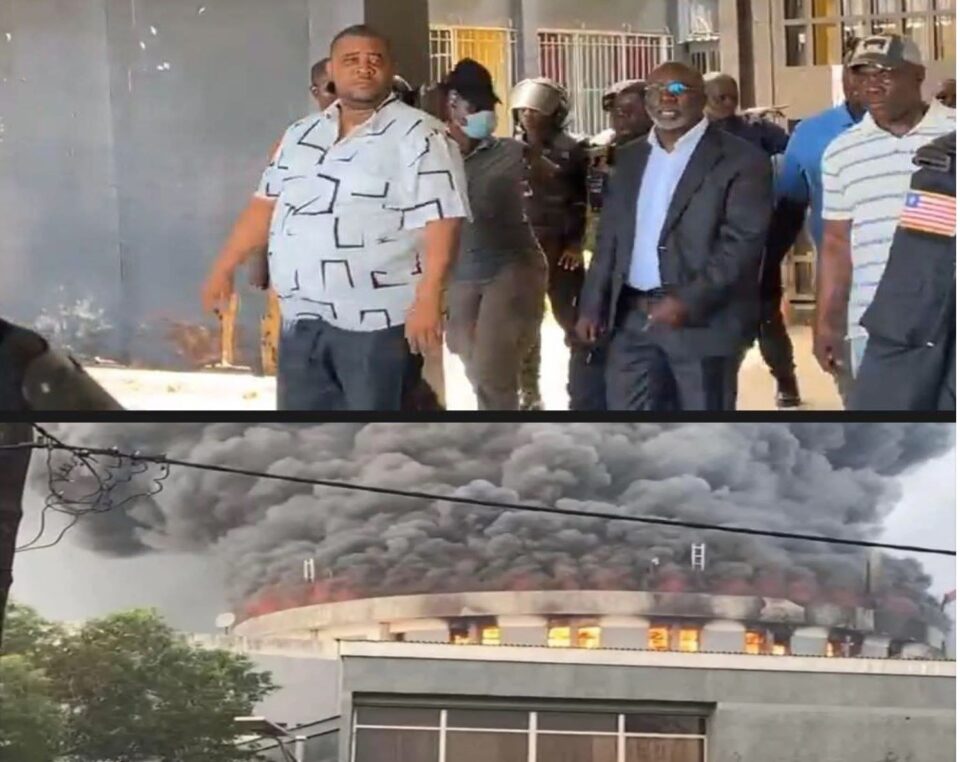
The government of Liberia through the Justice Ministry indicted former Speaker Jonathan Fonati Kofa Koffa and his fellow colleagues including Thomas Etheridge, Eric Susay, Kivi Bah, Stephen Broh, John Nyanti and Jerry Pokah among others. The grand jury brought out their true bill against the lawmakers and others on June 16, 2025. Former Speaker Koffa, Others Capitol Arson Full Trial Set To Start This Thursday – News Public Trust
Last week, the defense, led by Cllr. Arthur T. Johnson, played the audio for a few minutes in an attempt to what they said was to demonstrate how artificial intelligence can be used to fabricate or manipulate voice recordings—an argument central to the defense’s challenge against audio evidence presented by the prosecution.
But prosecutors swiftly objected, on several grounds ,Judge Roosevelt Z. Willie sustained the objection and ruled that any audio evidence must be formally disclosed before court.
Defense Challenges Authenticity of Prosecution Evidence
This development followed testimony given a day earlier, Thursday, December 18, 2025, by prosecution witness Reafeal Wilson, who told the court that during the investigation, defendants informed investigators that the audio recordings attributed to them were generated using AI technology.
Mr. Wilson further testified that defendant Abu Kamara claimed that even his child could produce similar audio recordings using artificial intelligence tools.
Cllr. Johnson argued that the prosecution’s audio evidence lacked forensic authentication and could not be relied upon in a criminal proceeding. Responding to questions from Judge Willie on how AI-generated voices differ from regular voice, the defense counsel explained that AI systems can replicate human voices by training on existing audio samples.
On Friday, December 19, 2025, the defense attempted to reinforce its argument by introducing the alleged AI-generated recording of President Trump. The audio reportedly stated:
“Good morning, Liberia. This is your favorite president. I want you to know that Etheridge is completely innocent. The man has not seen a box of matches in his life. To the Justice Department, stop embarrassing the man.”
Despite visible reaction in the courtroom, Judge Willie ruled and said the defense lawyer should have informed the court before.
legal mind maintained that the attempted demonstration underscored the risk of relying on unverified audio evidence, warning that such material could “sink the prosecution’s case” if admitted without proper forensic validation.
Court Sustains Objections on Political Line of Questioning
In a separate exchange, the defense questioned Wilson about the conduct of the Liberia National Police (LNP) during the recent House of Representatives leadership impasse. Cllr. Johnson asked whether police actions during the removal of the Speaker’s chair were lawful, referencing a Supreme Court ruling involving former Speaker J. Fonati Koffa and his rival Speaker Richard Koon.
The prosecution objected, and the court sustained the objection.
The defense further accused the LNP of taking sides during the legislative crisis, alleging that officers assaulted lawmakers aligned with former Speaker Koffa.
Johnson claimed that Wilson, acting in his official capacity, supported what the defense described as an “illegal majority bloc” and participated in actions against minority lawmakers.
Dispute Over Source of Audio Recordings
When questioned about the origin of the disputed audio recordings, Wilson testified that the material was obtained from open sources and media platforms. The defense countered that evidence sourced from social media is inadmissible in criminal proceedings unless corroborated by independent investigation and forensic analysis, particularly in an era of rapidly advancing AI technology.
The case continues, as the court grapples with emerging challenges surrounding digital evidence, artificial intelligence, and evidentiary standards.