
Monrovia, Liberia —With nearly 75 percent of the population under the age of 34, the pressures confronting young Liberians have shifted from social concerns to an urgent political priority, the United Nations Development Programme said in a press release today, Wednesday, February 25, 2026.
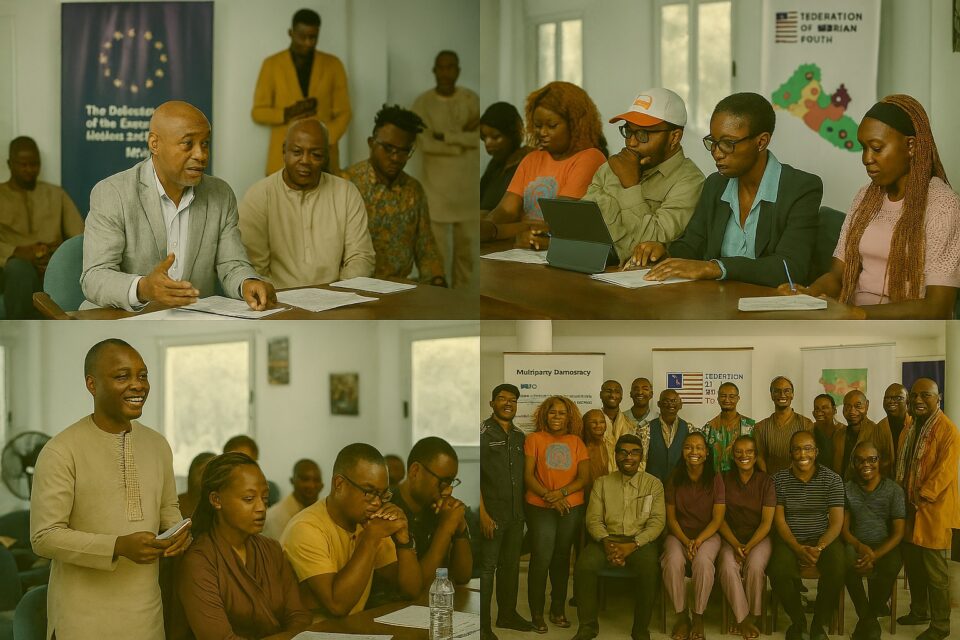
In a landmark show of unity and democratic renewal, youth leaders from across Liberia’s political spectrum convened for a one-day Inter‑Party Youth Wing Dialogue, signaling a fresh chapter of collaboration, trust‑building, and inclusive political participation.
Organized by the Netherlands Institute for Multiparty Democracy (NIMD) in partnership with the Federation of Liberian Youth (FLY), the dialogue brought together 22 youth leaders from more than 10 political parties currently seated in the national Legislature.
The event forms part of the Liberia Electoral Support Project (LESP), managed by UNDP and jointly implemented with NIMD and UN Women, with support from the European Union, Irish Aid, and the Embassy of Sweden in Liberia.
Youth Issues Highlighted as a National Priority
Central to the discussion were sobering realities identified through NIMD’s nationwide political economy analysis and youth consultations across all 15 counties which include persistent unemployment, lack of market‑relevant education and TVET training, and rising teenage pregnancy.
These issues, participants agreed, continue to weaken youth participation and civic engagement.
Delivering a powerful opening statement, Cllr. Oscar Bloh, NIMD Country Director, warned that while young people make up 74 percent of Liberia’s population, they remain largely absent from political decision‑making structures.
Opening the event, Cllr. Oscar Bloh, NIMD Country Director, urged young political leaders to move beyond traditional youth wing functions and embrace their role as strategic democratic actors.
“Liberia needs young leaders who do not only mobilize votes, but who also shape policy and drive inclusive governance,” he emphasized.
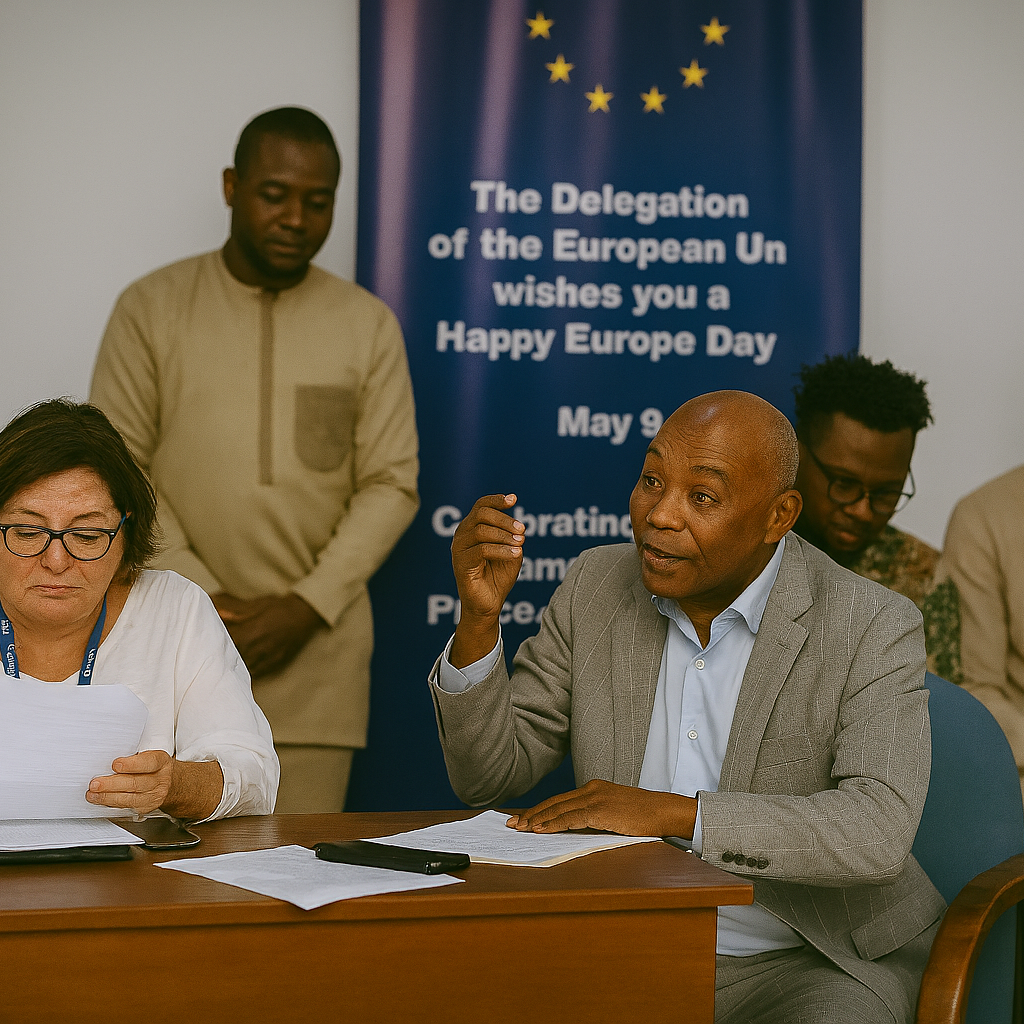
He continued “It’s an irony that you will have the population, but then you are underrepresented and, in most instances, comfortable with that. And we will say to you: it is not acceptable.”
Bloh stressed that unless structural challenges facing youth are addressed, Liberia risks deepening political disengagement.
“The issues you face when you go to look for a job, when you are sick, when you lack TVET skills — they don’t ask you which party you are from. You go there as a young person,” he added.
A Renewed Call for Democratic Maturity and Collaboration
Representing the European Union, Marie‑Paule Neuville praised the diversity and dynamism in the room.
“You come from different political institutions, cultures, and counties; yet you belong to the same generation. If you work collectively, you will achieve more,” she remarked.
She encouraged participants to consult the Global Youth Participation Index, noting that youth underrepresentation is global — but in Liberia, the demographic weight of young people presents a unique opportunity for change.
“If Europe can cooperate across nations, surely you can cooperate across political parties,” she emphasized. “You share the same generation. You share the same problems. You can share the same solutions.”
NEC and UNDP Underscore Structural Barriers
Mr. Prince N. Dunbar, Political Affairs Director at the National Elections Commission (NEC), highlighted the need for youth to push for stronger representation within formal political structures, particularly the Inter-Party Consultative Committee (IPCC).
“Whenever we call political meetings,” Dunbar noted, “we see only executives and leaders of political parties. It is hard to see the youth that I see across here.”
Dunbar highlighted the need for openness to diverse perspectives and sustained cross-party dialogue.
He also encouraged youth leaders to pursue full representation within the Inter-Party Consultative Committee (IPCC) and to institutionalize mechanisms for regular engagement.
He also emphasized the need for a clear national definition of “youth,” pointing humorously yet pointedly to individuals who have “served for 45 or 50 years as youth.”
Speaking on behalf of UNDP, Mr. Roosevelt Zayzay, LESP Programme Officer, stressed that the behavior and collaboration of young politicians today will shape the credibility of the 2029 elections.
“Young people are not just participants in Liberia’s democracy—they are architects of its future,” he said.
Youth Leaders Demand Institutional Reform — and Speak Out
Throughout the dialogue, youth leaders voiced a shared determination to reshape Liberia’s political culture.
“We cannot build a strong democracy when our political institutions revolve more around personalities than policies,” said one youth representative. “Young people must help reshape political culture so that institutions—not individuals—lead the way.”
Another participant underscored the need for trust. “Too often, we meet each other only during elections, and at that time, every issue becomes politicized.
This dialogue reminded us that we have more in common than what divides us.”
A female youth leader emphasized inclusion. “Young women in political parties face even more barriers. By uniting across party lines, we can challenge those barriers together.”
While a A youth chairperson stressed consistency. “Our commitment must go beyond today. If we do not sustain this engagement, we risk repeating the same challenges during the next election cycle.
Concrete Commitments for Change
The dialogue concluded with firm commitments to reactivate Inter‑Party Youth Councils, establish a formal Inter‑Party Youth Council platform, identify bipartisan youth issues and jointly advocate for solutions, leverage the numerical strength of young people for sustained accountability and reform.
Their shared pledge aims to transform cross-party youth collaboration into a structured, lasting platform for democratic renewal.
About the Liberia Electoral Support Project (LESP)
LESP strengthens inclusive, transparent, and accountable democratic governance in Liberia. It supports national institutions and promotes meaningful citizen participation.
The project is managed by UNDP and implemented in collaboration with UN Women and NIMD, with funding from the European Union, Ireland, and Sweden.