
PUBLIC JUSTIFICATION BRIEF: Proposed Amendment To Article 30 Of Liberian Constitution
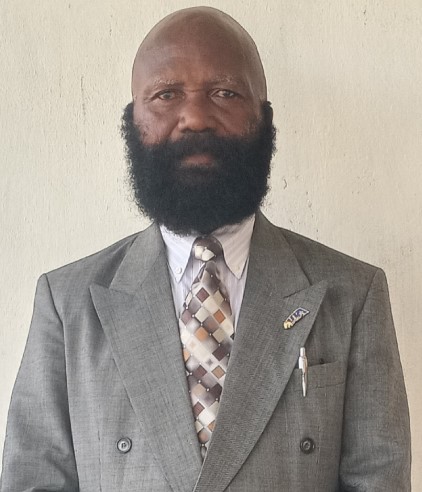
PHOTO: The Author
Pero M. K. Kerkula
Instructor of Public Administration
College of Business and Public Administration, University of Liberia
Tel.: 0778 729 349
PUBLIC JUSTIFICATION BRIEF: Proposed Amendment To Article 30: Bachelor’s Degree Requirement for Members of the Legislature
Submitted in the Public Interest to Strengthen Liberia’s Democracy
As the Governance Commission concludes its two-day discussion to review the 1986 Constitution, we submit the following proposal for consideration as an amendment.
*1. Preamble*
Article 27 of the Constitution of Liberia vests legislative power in representatives “elected by the registered voters and citizens of the Republic.” Article 6(d) mandates that the Republic “shall direct its policy toward ensuring… equal access to educational opportunities and facilities for all citizens.” This amendment aligns those two principles: equal opportunity to serve and equal expectation of capacity to serve.
*2. Problem Statement*
Modern governance is complex. The 55th Legislature will debate national budgets greater than $700 million, ECOWAS trade protocols, climate finance, digital security, human rights, justice, and public health laws. Lawmakers must read, analyze, and draft legislation that affects 5.4 million Liberians.
The current constitutional qualifications focus on age, residency, and tax status, but do not address analytical or policy capacity. As a result, the Legislature often relies heavily on external consultants, which slows lawmaking and reduces institutional independence.
*3. Proposed Solution*
Add a single, equally applied qualification: a bachelor’s degree or certified equivalent. This is not about creating an “elite class.” It is about setting a baseline standard that matches the technical demands of the job, just as we require medical degrees for doctors and law degrees for judges.
*4. Why This Is Not Discriminatory*
- *Equal to all*: Every Liberian citizen, from Lofa to Maryland, Grand Kru to Grand Cape Mount, faces the same standard. No county, tribe, gender, or political party is exempt or targeted.
- *State duty triggered*: By setting this standard, the State is constitutionally compelled under Article 6(d) to expand access to higher education, scholarships, and adult learning so that no citizen is blocked by lack of opportunity.
- *“Equivalent” included*: Professional degrees in agriculture, business, education, engineering, law, medicine, etc., all qualify. The standard is rigor, not the name of the degree.
- *Future-focused*: With a transition clause, no current lawmaker is affected. The requirement will apply only to persons seeking nomination in elections held after the next general elections following ratification.
*5. Expected Benefits for the Liberian People*
- *Better laws, faster*: Members with research and analytical training can draft and scrutinize bills with less dependence on outside help.
- *Stronger oversight*: Budget analysis, concession agreements, treaty review, and public hearings require skills taught at the tertiary level. This improves checks on the Executive.
- *Public trust*: When citizens observe informed debate in the Capitol, confidence in democracy increases.
- *Youth incentive*: This sets a national signal that education is the path to leadership, supporting Liberia’s human capital development goals.
*6. Conclusion*
This amendment does not remove rights. It establishes a qualification that serves every Liberian by improving the quality of representation. Coupled with the State’s duty to expand access to education, it fulfills the Constitution’s promise of both participation and good governance.
Let the standard be high, and let the opportunity be equal for all.
We respectfully request that this proposed amendment be included in the Governance Commission’s Constitutional Review Report.