
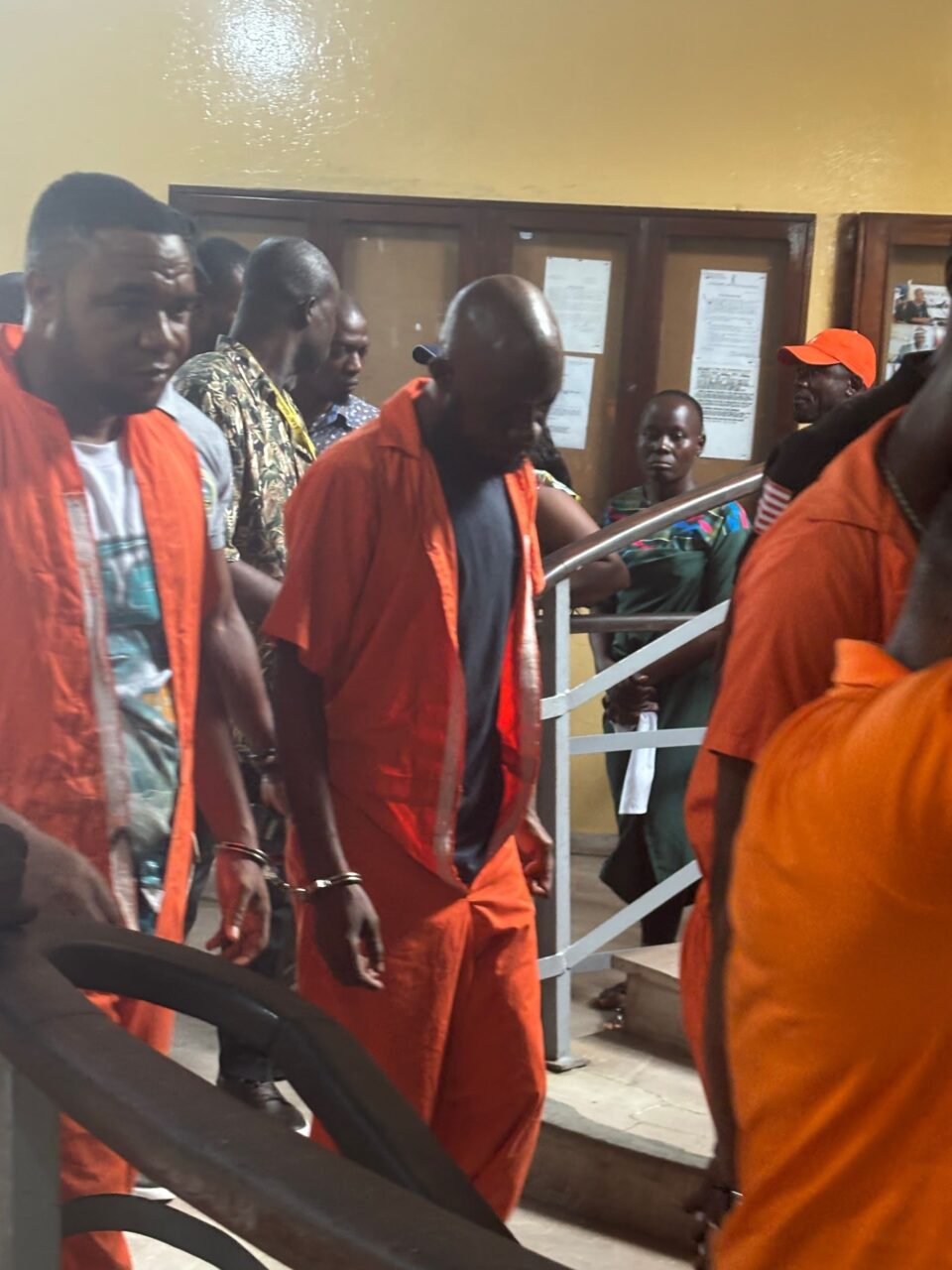
From The Crime Scene, No Fingerprint Was Taken On Key Evidence Retrieved
By Garmah Never Lomo, garmahlomo@gmail.com
TEMPLE OF JUSTICE, Monrovia– The State’s effort to link the defendants to the Capitol Building Arson case suffered a major setback on Wednesday, December 10, 2025.
Prosecution first witness admitted under cross-examination that no forensic fingerprint analysis was conducted on key evidence retrieved from the crime scene.
Testifying before Criminal Court “A,” prosecution witness Rafael Wilson, a criminal investigator with the Liberia National Police (LNP), told the court that investigators did not conduct a scientific fingerprint examination on the Clorox bottle and matchbox allegedly used to ignite the fire.
No Fingerprints Taken on Key Evidence
Responding to defense questions, Wilson said forensic technicians informed investigators that the Clorox container was made of rubber, making fingerprint extraction “impossible.”
“The Clorox bottle and matchbox have raw surfaces. We could not conduct fingerprint testing. The forensic technician told us it was impossible to extract prints from that type of material,” Wilson testified.
Based on this admission, defense lawyers pressed the witness, questioning how the government could legally link the defendants to the crime when their fingerprints were never taken from the recovered items.
The defense argued that any object handled by a suspect would naturally retain fingerprints, making it mandatory for investigators to collect such materials with gloves and forward them for scientific analysis.
Judge Overrules Defense Inquiry
However, Judge Roosevelt Z. Willie overruled the defense’s question, noting that the witness had already stated the existence of other documentary and oral evidence that formed the basis for the defendants’ indictment.
Dispute Over New Evidence
Before cross-examination began, prosecutors moved to introduce the LNP charge sheet and investigation report into evidence. The defense objected, arguing that the documents were “strange” because they were never disclosed during discovery—an act they described as a violation of procedural rules.
Despite the objection, Judge Willie granted the prosecution’s request but ordered that the defense be given printed copies for review before proceeding with further questioning.
Heated Exchange Over Audio Recordings
Tensions rose earlier in the day when the prosecution sought to have certain audio recordings marked and admitted into evidence. The defense objected, claiming the recordings lacked an established chain of custody, including the date, time, place, and source of the audio.
Judge Willie again overruled the defense, citing legal precedent allowing the admission of evidence even when its authenticity will ultimately be determined by the jury.
“The fact that evidence is admitted does not mean it is true. It is the jury that determines its credibility,” Judge Willie told the court.
Defense Accuses Judge of Arguing for Prosecution
The ruling drew a strong reaction from Defense Counsel Cllr. Arthur Johnson, who accused the judge of going beyond his role.
“Your Honor, your ruling sounds as though you are arguing for the prosecution,” Johnson said. “When we make objections, your role is simply to rule. You are arguing the case before the jury, which the rules of court prohibit.”
The defense also asked the court to strike the witness’s testimony about the audio, arguing that:
1. the jurors had already listened to the recording,
2. the witness was not qualified as an expert to interpret audio evidence, and
3. admitting the recording would amount to hearsay.
Court Overrules Hearsay Objection
Witness Wilson explained that the recordings were produced during an investigation conducted at LNP headquarters with the support of the National Security Agency (NSA). On that basis, the court again overruled the defense’s hearsay objection.
The trial continues.