
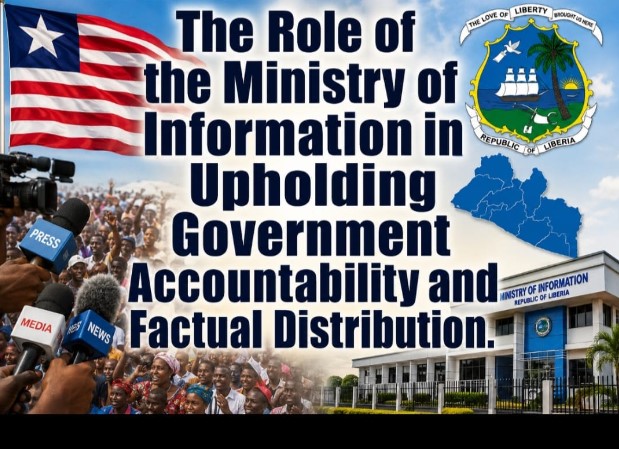
By Austin S. Fallah – A True Son of the Planet Earth Soil: fallahas@yahoo.com
President Joseph Nyuma Boakai:
“Under my leadership, Liberia will have no political prisoners and no press suppression. Criticism is not a threat to democracy; it is the essence. We will not shy away from your questions; instead, we will listen. We will not stifle dissenting voices; we will engage with them.” Remarks at the First Annual Presidential Media Dinner, held on April 10, 2025, at the Ellen Johnson Sirleaf Ministerial Complex, Monrovia. Published by Liberia’s Ministry of Information, Cultural Affairs and Tourism (MICAT).
“I want to commend you, the Liberian media community, for all that you have done to nurture the growth of our democracy… your resilience, vigilance, and commitment to truth. Yours is not an easy calling. It demands courage, sacrifice, and, above all, integrity.” First Annual Presidential Media Dinner, April 10, 2025. Published by MICAT.
“We are continuously enhancing the enforcement of the Freedom of Information Act, ensuring that public entities share knowledge rather than withhold it from the citizens they serve. Access to information is not just a privilege; it is a fundamental right, and this administration is committed to upholding that right.” First Annual Presidential Media Dinner, April 10, 2025. Published by MICAT.
Information Minister Jerolinmek Matthew Piah: “While we are opening the space and expect you to do your work without hindrance, we are getting a bit concerned about the conduct of some media entities as it relates to how they send out information of national security to the public without any level of consciousness.”
Source: Minister Piah speaking during a MICAT regular press briefing on media responsibility and national security. Published by the Ministry of Information, Cultural Affairs and Tourism (MICAT).
“I think you are aware that our governance accountability program, which is an initiative of the Boakai administration, just got US$30 million approved by the World Bank. The Government of Liberia has begun to gain the trust of international partners.” MICAT regular press briefing, reported by the Liberia News Agency (LINA) and published by MICAT.
“Individuals operating in the public space are expected to uphold the highest standards of professionalism and ethical conduct.” Minister Piah’s press conference announcing an investigation into the premature leak of President Boakai’s State of the Nation Address (SONA), held at MICAT.”
In any democratic society, the dissemination of accurate information is a cornerstone of governance.
The Ministry of Information, Cultural Affairs, and Tourism (MICAT) of Liberia, established through various legislative acts, has been pivotal in shaping the nation’s narrative regarding governmental policies.
Despite its transformations over the years, culminating in its current status under the Ministry of Information, the core duty of MICAT remains unchanged: it is a factual distributor of the government’s policies, particularly those of the executive branch.
The Minister’s assertion that he must defend government policies at all costs underscores a critical role in fostering accountability and public trust.
I argue in this korero that the ministry’s functions are crucial to ensuring an informed citizenry, reinforcing democratic values, and maintaining stability during politically tumultuous times.
Historical Context of MICAT:
The roots of MICAT can be traced back to the 1965 Act, which established the Department of Information and Cultural Affairs (DICA).
The DICA was mandated to develop and disseminate factual information about the Government of Liberia, both domestically and internationally.
The establishment of a dedicated government body for information dissemination was a significant advancement in Liberia’s governance structure.
It was an acknowledgment of the necessity of transparent communication, particularly in a nation emerging from the shadows of one-party rule and conflict.
The renaming of DICA to MICAT in 1972 expanded its responsibilities to include oversight of the nation’s cultural and tourism sectors.
This change not only elevated the importance of culture and tourism in national development but also reinforced the role of information as a bridge connecting the government with the people it serves.
The subsequent amendments, such as the PRC Decree #46 in 1981 and the 2025 law signed by President Joseph Boakai, have all served to maintain the ministry’s objectives while adapting to the changing political landscape.
However, the ministry’s fundamental purpose remains to be an ambassador of government policy and to ensure that factual information is available to all citizens.
The Importance of Factual Information in Governance:
The dissemination of factual information by a governmental body such as MICAT is essential to promoting transparency and accountability.
In any democracy, the government must communicate its policies clearly and effectively so that citizens can understand and engage with them.
According to Thomas Jefferson, “An informed citizenry is at the heart of a dynamic democracy.”
MICAT’s role as the distributor of government policy underscores the need for accurate communication, helping counter misinformation arising from competing narratives.
Furthermore, when a government articulates its policies through official channels, it allows citizens to respond, critique, and participate in the democratic process.
This participatory engagement is crucial, as informed citizens are better equipped to hold their leaders accountable.
In Liberia’s historical context, where political instability and conflict have often clouded the truth, MICAT serves as a beacon of clarity amidst chaos.
The ministry, despite its challenges, becomes a repository of institutional memory, articulating government priorities and reinforcing the rule of law.
The Role of the Minister in Defending Government Policy:
The assertion that the Minister of Information should defend government policies at all costs is not merely about unquestioning loyalty; rather, it reflects a commitment to the democratic principle of accountability.
The minister’s role is to articulate the rationale behind government actions and policies, standing firm against misinterpretations or attacks that may arise.
This defense is crucial in fostering trust between the government and its citizens.
Through effective communication, the minister can help demystify governmental actions, enabling citizens to comprehend the complexities of policies aimed at societal development.
For instance, in times of economic hardship or public discontent, a proactive Minister can engage with the public to explain the steps being taken to alleviate such issues, thereby mitigating potential unrest.
This engagement is particularly essential in a post-conflict society like Liberia, where mistrust of governmental institutions remains a challenge.
The minister’s defense of policies reassures the public that the government is working in the public interest.
Challenges in Communication and Misinformation:
Despite MICAT’s critical role, communication challenges persist.
The rapid spread of misinformation, particularly on social media, complicates the ministry’s efforts to ensure factual information reaches the public.
In this digital age, information can be manipulated and disseminated with alarming speed, often overshadowing transparent governmental communication.
Consequently, MICAT must not only focus on relaying government policies but also combat misinformation vigorously.
This responsibility includes providing timely responses to misrepresentations and enhancing the public’s media literacy to discern credible information from propaganda.
MICAT’s capacity to function effectively hinges on its ability to navigate these challenges.
By encouraging critical engagement with media sources and fostering dialogue among citizens, the ministry can help counter the adverse effects of misinformation.
The Minister, as the face of the ministry, plays an essential role in this endeavor, leading campaigns to educate the populace on discerning factual information and emphasizing the importance of supporting credible sources.
Reinforcing Democratic Values through Cultural Promotion:
Beyond the distribution of government policies lies the ministry’s vital role in promoting cultural heritage and values (even though this role has been passed on to a 2025 act that created the Liberia National Authority, it still plays a role in the Culture and Tourism Industry, as the name MICAT still functions). Tourism is intrinsic to Liberia’s national identity.
This aspect of MICAT’s mandate cannot be overstated, as it fosters social cohesion, contributes to collective memory, and is an integral component of a cohesive society.
By promoting cultural initiatives, the ministry can work with the newly created LNTA to help citizens find common ground amid diverse backgrounds, particularly in a country with a history of ethnic tensions.
Working with the LNTA to formulate cultural diplomacy can extend the ministry’s influence beyond national borders, allowing Liberia to present a unified narrative on the global stage.
The minister’s role and that of the LNTA Director General extend to advocating cultural understanding and respect, thereby strengthening diplomatic ties with other nations.
Such initiatives enhance Liberia’s image abroad, serving as a backdrop against which government policies can be better understood and appreciated by foreign audiences.
The Future of MICAT: A Call for Modernization:
As Liberia continues to evolve politically, the Ministry of Information must also adapt to remain effective.
The advancements in technology offer both opportunities and challenges for the ministry.
Embracing digital platforms for the disseminationtion of information can increase the reach and accessibility of government communications.
A modernized approach, utilizing social media, working with other media institutions, electronics and print and other digital tools, can enhance public engagement and transparency, reinforcing trust in government institutions.
Furthermore, as new issues arise, such as climate change, drugs drugs cartels, and economic challenges, the ministry must be equipped to communicate these matters effectively.
Ensuring that citizens are informed about government strategies in addressing contemporary issues not only fosters trust but also empowers them to contribute actively to societal solutions.
The role of the Ministry of Information in Liberia is indispensable.
As the primary distributor of government policies and a defender of executive action, it serves as a vital conduit between the state and its citizens. The minister’s commitment to defending government policies underscores the need for transparency and civic engagement in a democracy.
While facing challenges such as misinformation and the need for modernization, MICAT’s core mission remains unwavering: to promote an informed society, uphold democratic values, and enhance national cohesion through government policies, information promotion and dissemination.
As Liberia navigates its path toward sustainable development, fostering a well-informed citizenry through accurate information dissemination will be critical in shaping a prosperous future.
Thus, the Ministry of Information is not merely a facilitator of government messages but a fundamental pillar in the burning quest for democracy and accountability in Liberia.