
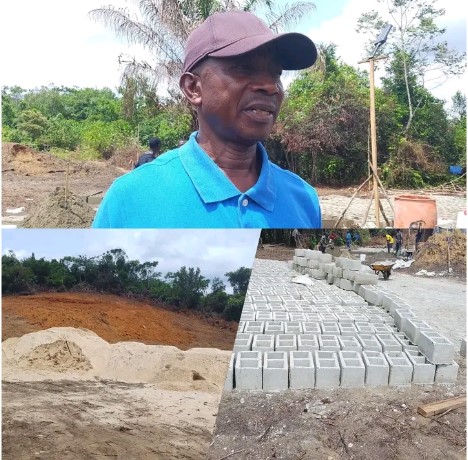
By Emmanuel Koffa
BARCLAYVILLE, Liberia— The long-awaited construction of a standard prison facility in the southeastern Grand Kru County is gradually becoming a reality, the Liberian government announced this recently.
People in Grand Kru County are welcoming the historic correction of a 40-year institutional gap, but it is also raising critical questions about execution, sustainability, and long-term commitment to justice sector reform.
For a county that has operated since 1984 without a standard prison, the move under President Joseph Boakai is being presented as part of broader efforts to decentralize state infrastructure and strengthen the rule of law outside Monrovia. Yet observers caution that Grand Kru has seen similar announcements in the past that never progressed beyond planning stages.
At the center of the current effort is a 15-acre land allocation in Barclayville designated for the facility. While the land acquisition is being described as a major breakthrough, governance analysts argue that land availability has never been the core problem — implementation, financing continuity, and institutional follow-through have been.
County Prison Superintendent Mose Alison has repeatedly highlighted the operational crisis on the ground, including makeshift detention arrangements, inmate transfers to neighboring counties, and chronic staffing shortages. With only seven correctional officers assigned countywide, the system has effectively operated on emergency management for decades rather than structured correctional standards.
Despite these concerns, skepticism persists over whether the new project will move beyond groundwork. Infrastructure projects in remote counties have historically suffered from delayed contractor mobilization, inconsistent budget disbursement, and weak oversight mechanisms once political attention shifts away from the initial announcement phase.
There are also unanswered questions about post-construction capacity: whether the state will adequately recruit, train, and retain correctional officers; how inmate rehabilitation programs will be structured; and whether the facility will be integrated into a broader justice reform strategy or remain an isolated infrastructure project.
For residents of Grand Kru, the prison project symbolizes both relief and caution — relief that the county may finally align with national correctional standards, and caution rooted in decades of unmet promises.
As construction plans move forward, the real measure of success will not be the groundbreaking ceremony, but whether Grand Kru finally transitions from a symbolic announcement to a functioning correctional system that can sustain justice administration beyond political cycles.