
Port State Measures Implementation, Transparency and Inter-Agency Coordination
The National Fisheries and Aquaculture Authority (NaFAA) has concluded a three-day technical workshop in Monrovia aimed at strengthening Liberia’s inter-agency coordination and operational readiness to improve Monitoring, Control and Surveillance (MCS).
A NaFAA press release says the workshop is part of efforts to implement effective Port State Measures, and reinforce cooperation with regional mechanisms to combat Illegal, Unreported and Unregulated (IUU) fishing and related fisheries offenses.
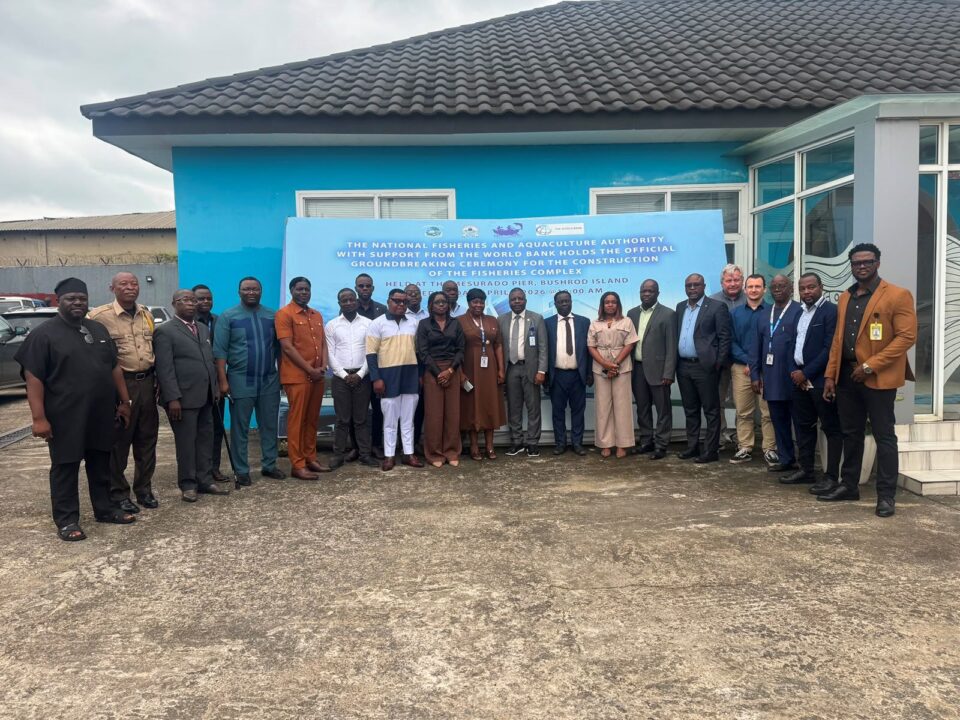
The workshop, which was held between July 20 and 22, 2026 at the headquarters of NaFAA on Bushrod Island, brought together facilitators and members from the Fisheries Committee for the West Central Gulf of Guinea (FCWC), and key ministries and agencies including the Ministries of Justice and National Defence, Liberia Immigration Service (LIS), National Port Authority (NPA), Liberia Revenue Authority (LRA), and the Liberia Maritime Authority, (LiMA) who are members of the Inter-Agency National Working Group (NWG). The FCWC is a regional fisheries organisation with a membership of six West African countries: Benin, Cote d’Ivoire, Ghana, Liberia, Nigeria and Togo. It was established in 2007 to facilitate cooperation in fisheries management among the member countries.
Addressing participants at the opening session, NaFAA Director General J. Cyrus Saygbe, Sr. said the meeting of minds was a timely and strategic move towards safeguarding Liberia’s fisheries resources and strengthening collective response to IUU fishing. “Liberia has demonstrated its readiness to take the first step toward greater transparency and accountability in fisheries governance by subscribing to major international transparency initiatives, including the Fisheries Transparency Initiative (FiTI), the ratification of the BBNJ Agreement, and the Global Charter for Fisheries Transparency. These initiatives are being undertaken because we genuinely believe they are the right thing to do for our fisheries sector, for our people, and for future generations”, he said.
He disclosed that Liberia is taking significant steps to upgrade its Fisheries Monitoring Center (FMC) through the introduction of Artificial Intelligence. “These advanced systems will help Liberia achieve real-time visibility across maritime activities, including both Automatic Identification System (AIS) and non-AIS vessels; detect high-risk and previously invisible vessel activity using satellite intelligence and artificial intelligence; prioritize enforcement actions through risk-based decision support; operationalize intelligence through integrated enforcement workflows and case management; and strengthen regulatory control, improve revenue protection, and recover millions of dollars in annual losses” he added.
For his part, the Secretary General of FCWC Dr. Antoine Gaston Djihinto said the meeting was important to provide an overview of fishing activities within the waters of FCWC Member States, and present the progress made in developing the Regional Record of Authorized Fishing Vessels (RRAFV), which serves as a strategic tool for information sharing among national administrations and enhance transparency in regional fishing operations. “Our deliberations will address the respective roles and responsibilities of the various institutions involved in inspections at sea and in port. Particular attention will be given to identifying the information requirements needed to improve the quality of inspections, facilitate intelligence sharing, and enhance the effectiveness of joint operations” he said.
He listed stronger institutional capacities, enhanced cooperation mechanisms, modern information-sharing tools, and increased trust among the administrations of Member States as some of the achievements of activities that have been championed by the regional block. “It is now incumbent upon us to build on these achievements and continue developing a more integrated, responsive, and effective regional fisheries governance system that contributes to the conservation of fisheries resources and the food security of our populations” he added.
At the close of the meeting, an updated MCS capacity assessment reflecting current institutional, operational, and technical needs were carried out, and relevant agencies were updated on recent developments relating to the FCWC Regional MCS Center, providing full understanding of its relevance to Liberia’s national MCS system.
The role of the RMCSC and stronger coordination arrangements between the FMC and the RMCSC were established, while awareness among participating agencies were enhanced.
Further progress was made on the Standard Operational Procedure (SOP) of the Port State Measures (PSMA) on vessel inspection, including agreed areas requiring refinement and follow-up.
In Liberia, recent inter-agency engagement on PSMA implementation has included the validation of an inter-agency Memorandum of Understanding (MoU) to strengthen cooperation among relevant authorities, as well as a technical visits that focused on the development of SOPs on Advanced Request for Entry to Port (AREP) analysis and vessel inspection procedures for foreign fishing vessels calling at Freeport (Monrovia). The meeting aimed at taking several next steps.
West Africa is endowed with abundant marine resources. However, Illegal, Unreported and Unregulated (IUU) fishing and associated crimes continue to pose a serious threat to the sustainable governance of marine resources in the region. The impacts of IUU fishing are particularly acute in West Africa, which has long been identified as a hot-spot for illegal operators, with consequences for food security, livelihoods, public revenues, and marine ecosystem health.
Since 2015, the project Fisheries Intelligence and MCS Support in West Africa, supported by Norway and implemented by TMT and Stop Illegal Fishing (SIF), has provided assistance to member states of the FCWC to tackle IUU fishing. Since 2021, additional targeted support has been provided to strengthen the technical and operational implementation of the PSMA through the programme Supporting PSMA Implementation in Africa: Intelligence-led Fisheries Port Controls, implemented by TMT in collaboration with Global Fishing Watch (GFW).
Further, the FCWC has established the Regional Monitoring, Control and Surveillance Centre (RMCSC) to support operational cooperation, improve communication, enhance transparency, and build regional capacity to combat illegal fishing. The RMCSC supports vessel monitoring, regional information-sharing, regional and joint operations, and the development of a Regional Record of Authorized Fishing Vessels as a tool to improve oversight, transparency and accountability and a shared action plan for follow-up support, technical assistance, and next steps were developed at the end of the workshop, said a NAFAA press release signed by its Director of Communications, Lewis E.B. Konoe.