
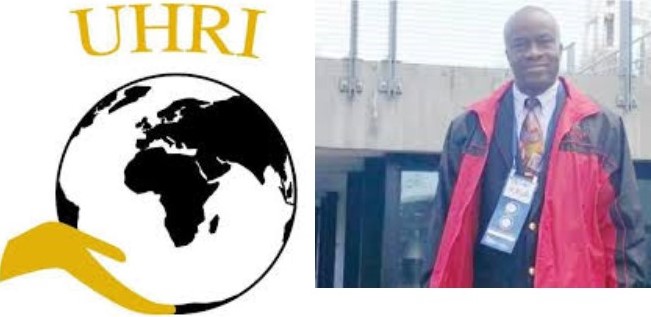
PHOTO: The Author
By Rev. Torli H. Krua
Recent reports by FrontPage Africa celebrating Liberia’s exclusion from the Trump administration’s travel ban are being framed by politicians as evidence of diplomatic progress and growing confidence. It is nothing of the sort. It is a distraction. It is theater. And it carefully avoids every issue that actually matters to ordinary Liberians.
The United States has never done Liberia a favor and is not doing Liberia a favor.
The U.S. government is doing nothing about free and fair elections and the flawed electoral system to empower only the wealthy in a government designed to enrich and empower politicians.
The Liberian government is doing nothing about the millions of dollars the U.S. Embassy extracts annually from poor Liberians in non-refundable visa fees.
Nothing about the 79.39 percent U.S. visa rejection rate, one of the highest in the world.
Nothing about the grotesque contradiction that nearly all top ruling-party and opposition politicians travel freely on U.S. passports while ordinary citizens are treated as security threats.
Nothing about our true history.
Nothing about accountability.
Nothing about reparations.
The article praises “warming relations” while refusing to confront the power imbalance that defines the relationship. It applauds longer visa validity while ignoring that the overwhelming majority of Liberians never receive a visa at all. It speaks of “confidence” while remaining silent on a racialized visa regime that punishes the poor and protects the politically connected.
Most critically, it repeats—yet again—the fake colonial history written by white slave masters: the lie that Liberia was founded as a “Land of Liberty.” That phrase was slave masters’ propaganda then, and it is propaganda now for political beneficiaries of what U.S> AMbassador McCarthy called Liberia’s “over 200 years old corrupt system”.
The deception isn’t new. In 1641, slavery in America was deceptively branded the “Bodies of Liberties.” Liberia followed the same logic. It was designed as a trap, not a refuge—marketed as liberty while serving bondage. The architects of Liberia never intended freedom. They intended removal: removal of Black U.S. citizens whose equality threatened slavery at home. The country was created to keep enslavers comfortable, not to make Africans free.
This truth was protested from the beginning. On December 5,1823, Monrovia settlers issued a remonstrance warning they had been deceived, stripped of rights, and abandoned under false promises. In 1830, another remonstrance led by Joseph Shephard from Monrovia condemned the American Colonization Society for racial subjugation, broken promises, and governing without consent. Colonization was rejected by those forced to live under it.
As Frederick Douglass stated plainly:
“The Colonization Society is in fact a slaveholding, slave-trading, and slave-driving society. Its pretensions to philanthropy are a fraud.”
And as Jomo Kenyatta later warned:
“When the missionaries arrived, the Africans had the land and the missionaries had the Bible… When we opened our eyes, they had the land and we had the Bible.”
With places of worship everywhere, Liberia fits this pattern exactly—moral language masking dispossession, crushing poverty and people told to wait and go to Heaven to enjoy.
It is therefore especially shameful that Liberia continues to honor men who embodied this fraud. President James Monroe, a lifelong slave master, is memorialized in the capital-Monrovia. Over 200 years ago, Bushrod Washington, president of the ACS, whose island is similarly honored, sold 54 enslaved people who sought freedom through settlement in Liberia.
This is not history to celebrate.
It is national ignorance of history to confess. Where are our historians? Why are we still teaching lies to our children 200 years later?
Yet in the article polityicians ask Liberians to celebrate access, minerals, concessions, and phone calls between presidents—while ignoring that the foundations of the state remain colonial, exclusionary, and corrupt by design. It praises concessions that extract minerals, control infrastructure, and deepen dependency, while ordinary citizens grow poorer.
And Liberia’s political class? Silent. Comfortable. Complicit.
Liberian politicians earn more than most American lawmakers. The average U.S. state legislator earns under $50,000 a year, often part-time, with no government cars or drivers. In New Hampshire, the lowest-paid lawmakers earn $100 a year. Yet Liberia’s officials enjoy inflated salaries, convoys, and privileges in one of the poorest countries on earth.
This is why people are no longer waiting.
The inaction of politicians—both in Monrovia and Washington—has empowered ordinary citizens to act on first principles:
All power is inherent in the people.
After waiting 200 years, we do not need permission from public servants to organize a Sovereign Citizens Convention. Democratic constitutions are not written by political parties or lawmakers or president because the People are the masters! Public servants work for the people—not the other way around. When institutions fail, the people retain the original authority to re-found them.
We are organizing to remove the fuel that sustains corruption:
- a constitution written under the logic of white slave masters,
- a militarized political order inherited from colonial rule,
- and a system that rewards office-holders while punishing citizens.
We are drafting a new constitution, to be adopted by the people, that will:
- set strict limits on salaries and benefits,
- eliminate luxury governance,
- establish participatory budgeting,
- and return sovereignty to citizens—not elites.
We have already submitted a bill to the U.S. Congress demanding U.S. birthright citizenship for all persons born in Liberia, because history, law, and equity require it. Liberia was not a foreign experiment—it was an American colonial project. America cannot abandon a population it purchased, governed, and controlled, then pretend the relationship never existed.
Beginning now, citizens will assemble monthly, on the last Monday of every month, at the U.S. Embassy, to demand:
- reciprocity—Americans settled Liberia for generations without visas; J.J. Roberts was a U.S. citizen, not a freed slave,
- recognition of historical harm,
- restoration of U.S. birthright citizenship,
- and reparations for two centuries of enforced poverty, exclusion, and deception.
This is not hostility. It is accountability.
The article measures progress by Washington’s mood. We measure it by dignity. It praises access while ignoring justice. It celebrates diplomacy while avoiding truth. It tells Liberians to be grateful—without asking what they are owed.