
By Austin S Fallah – A True Son of the Planet Earth Soil: fallahas@yahoo.com
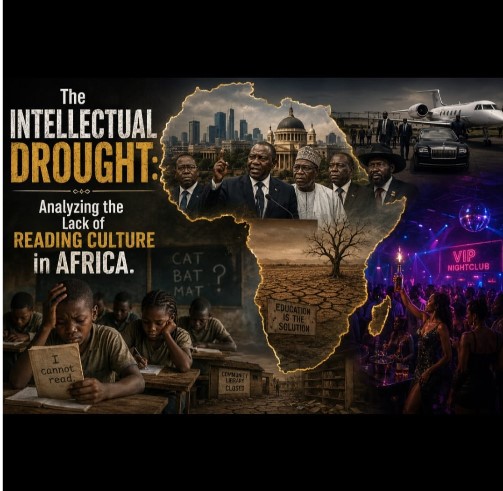
Exploring the intellectual drought in Africa requires examining the absence of a reading culture.
This topic is frequently discussed by African educators, novelists, and politicians.
Joseph Boakai (President of Liberia): “True leaders leave legacies, not excuses. History remembers actions, not words.” Speaking to the value of educational equity and the application of knowledge, he has consistently emphasized nation-building and national healing over partisanship.
Ellen Johnson Sirleaf (Former President of Liberia): “When we teach children to read, we expand their life-long potential, helping them grow into productive, empowered, and informed citizens.” She actively supported the Global Partnership for Education and launched initiatives to build a reading culture in Liberia.
Brenda Moore (Liberian Educator & Founder of KEEP Liberia): “Reading is fundamental to our everyday existence. Many of our kids find it hard to read and struggle to recognize and pronounce words.”
Nelson Mandela (Former South African President): “One of the sad realities today is that very few people, especially young people, read books. Unless we can find imaginative ways of addressing this reality, future generations are in danger of losing their history.”
Chinua Achebe (Nigerian Novelist): Speaking on the silence that greets literary figures and the broader societal disengagement, he noted: “It bespeaks a lack of reading culture in Nigeria; pure and simple. People do not generally cultivate the zeal to read novels.”
Ben Okri (Nigerian Poet): “To poison a nation, poison its stories. A demoralized nation tells demoralized stories to itself. Beware of the storytellers who are not fully conscious of the importance of their gifts.”
Ngũgĩ wa Thiong’o (Kenyan Novelist): “How did we arrive at this, that the best leader is the one that knows how to beg for a share of what he has already given away at the price of a broken tool?”
Ordinary Africans & Bloggers: The popular yet deeply indicting adage often cited across African social media and discourse says: “If you want to hide anything from an African, put it in a book.” This highlights the societal consensus that verbal communication and television hold far more sway than written literature, resulting in a deficit of written research and knowledge retention.
As the world advances rapidly in the 21st century, striving toward innovation, critical thinking, and a better quality of life for humanity, there exist critical gaps that need urgent attention.
Among these, one prominent issue is the alarming lack of reading and research habits prevalent in many African societies, particularly evident in Liberia.
This concern is notably voiced by an illustrious son of Africa, Hon. John Morlu, a distinguished figure in accounting, auditing, leadership, and socio-economic justice.
Hon. Morlu’s leadership at the General Auditing Commission of Liberia showcased his commitment to improving the nation.
Yet, his observations extend beyond Liberia’s borders, touching on a continental crisis.
He raises poignant questions about the intellectual landscape of Africa: despite the multitude of churches, bars, and mobile phones, how many bookstores can one find?
This staggering contrast serves as a backdrop to a broader discourse about the essential role reading plays in fostering intellectualism, critical dialogue, and development.
The Dearth of Bookstores Versus the Universality of Bars and Churches:
To understand the implications of Morlu’s questions, one must first analyze the cultural and social fabric of contemporary African society.
Throughout many cities and towns on the continent, vibrant nightlife is characterized by an abundance of bars, nightclubs, and betting shops.
These places are buzzing with activity, serving as social arenas where people gather to drink and socialize. On the flip side, the finding of a bookstore requires a more concerted effort.
This discrepancy is not merely a matter of convenience; it speaks volumes about society’s values and priorities.
The prevalence of churches, bars, and mobile phones reflects diverse societal needs—spiritual solace, social interaction, and connectivity.
However, the scarcity of bookstores illustrates a troubling reality: a diminishing space for intellectual engagement and the dissemination of knowledge.
The youth-young people, often seen as the hope for a brighter future for Africa, find themselves living in a predominantly entertainment, driven world devoid of a substantial reading culture.
This lack of emphasis on literature and intellectual discourse is detrimental, not only to individual growth but also to the socio-economic development of the continent as a whole.
The Importance of Reading and Intellectualism:
Reading is a cornerstone for developing critical thinking and effective communication skills, which are essential in navigating the complexities of the modern world.
The ability to analyze, critique, and engage with texts allows individuals to cultivate an informed perspective on pressing national and continental issues.
Without this foundation, the populace may struggle to engage in meaningful discussions, thus hindering progress and development.
In an age characterized by the rapid spread of information, the importance of a reading culture cannot be overstated.
Books open doors to new ideas, philosophies, and worldviews, fostering empathy and understanding among diverse groups.
Moreover, a rich reading culture encourages innovation and creativity; it nurtures leaders who can think outside the box and bring about positive change in their communities.
Hon. John Morlu’s emphasis on intellectualism reflects a broader need for active participation and engagement in societal issues.
Engaging with literature and critical texts equips individuals with the tools necessary to question the status quo, hold leaders accountable, and advocate for necessary changes.
The absence of bookstores signifies a missed opportunity for intellectual growth, civic engagement, and an empowered citizenry capable of driving Africa toward a prosperous future.
Barriers to a Reading Culture in Africa:
Several factors contribute to the ongoing struggle for a robust reading culture in Africa. Economic barriers, socio-political climates, and educational systems all play significant roles in determining access to literature and encouraging intellectual pursuits.
Economic Barriers:
Many African nations face significant economic challenges that limit individuals’ ability to purchase books.
High levels of poverty, coupled with the prioritization of basic needs such as food and shelter, often push reading materials to the bottom of the list.
Despite this reality, it is essential to recognize that investments in education and literacy can yield long-term benefits, not only for individuals but for nations as a whole.
A society that values reading and learning is better equipped to foster innovation and compete in a globalized economy.
Socio-Political Climates:
Political instability, corruption, and conflict have historically crippled several African nations, further exacerbating the problem.
When people are preoccupied with survival and security, there is little room for intellectual pursuits.
Additionally, in some instances, authoritarian regimes have sought to suppress dissenting voices and limit access to diverse sources of information, stifling open discussion and intellectual exploration.
Educational Systems:
Educational frameworks across Africa often fail to prioritize critical thinking and cultivate a love for reading.
Curricula that focus predominantly on rote memorization stifle creativity and discourage independent thought.
Until educational institutions embrace a more holistic approach that encourages inquiry, exploration, and a love for literature, the cycle of intellectual neglect may continue.
Solutions and Strategies for Promoting a Reading Culture:
While the hurdles to a flourishing reading culture in Africa may seem daunting, various strategies can help encourage literacy and intellectualism among the populace.
- Establishing Community Bookstores and Libraries:
One of the most pressing needs is the establishment and promotion of community bookstores and libraries throughout African towns and cities.
Such spaces can cultivate a reading culture, providing access to a diverse array of literature and creating a conducive environment for discussion and intellectual interaction.
Initiatives that encourage local authors and promote African literature can also play a crucial role in engaging the community.
- Leveraging Technology for Access to Literature:
With the rise of mobile technology in Africa, there is a unique opportunity to promote reading through e-books and mobile reading applications.
By making literature and educational materials accessible on devices that many people already own, it is possible to reach a broader audience, particularly the youth.
Collaboration between governments, NGOs, and tech companies could lead to initiatives that offer free or affordable access to digital libraries.
- Encouraging Reading Programs and Initiatives in Schools:
To foster a love of reading from an early age, schools must prioritize reading programs that extend beyond the curriculum.
Initiatives that emphasize literature appreciation, storytelling contests, and reading clubs can engage students and instill a passion for reading.
Moreover, training teachers to promote critical thinking and intellectual engagement can create a ripple effect, inspiring future generations to value knowledge and learning.
- Promoting Author Visits and Literary Festivals:
Creating opportunities for local authors to share their works can enhance the visibility of literature in the community and inspire budding writers and readers.
Literary festivals and author visits can lead to vibrant discussions, workshops, and a renewed interest in literary pursuits.
A Call to Action:
Hon. John Morlu’s reflections highlight a critical issue that requires collective action if the continent of Africa is to thrive in the 21st century.
The lack of bookstores and reading culture poses a significant threat to the growth of intellectualism and civil discourse.
Governments, educational institutions, communities, and individuals must unite to address this intellectual drought.
By prioritizing reading and nurturing a culture that values knowledge and inquiry, Africa can empower its youth and create a society that is critical, innovative, and ready to tackle the pressing challenges of our time.
The path forward demands commitment, creativity, and collaboration, but the potential rewards are immeasurable, a vibrant, progressive Africa where knowledge flourishes and voices are heard.