Monrovia, Liberia— At a time when citizens are demanding greater transparency, accountability, and improved public services, government leaders, integrity institutions, civil society organizations, development partners, and local governance actors came together in Monrovia to chart a path toward stronger anti-corruption and accountability systems in Liberia.
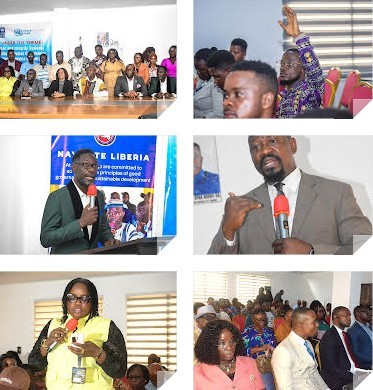
The one-day National Dialogue on Strengthening Integrity and Accountability Systems in Liberia, held at the Governance Commission, brought together nearly 60 stakeholders under the theme: “Strengthening Anti-Corruption and Integrity Systems to Advance Social Accountability, Inclusive Governance, Public Participation, and Improved Service Delivery.”
The dialogue was organized by Naymote Partners for Democratic Development in collaboration with the Governance Commission as part of the United Nations Development Programme (UNDP) and United Nations Peacebuilding Fund (PBF)-supported project, “Empowering Citizens and Communities for Social Accountability, Transparent Governance, and Improved Public Service Delivery.”
The gathering served as a platform for frank discussions on Liberia’s governance challenges and opportunities, while reaffirming a shared commitment to building institutions that are transparent, responsive, and accountable to citizens.
Renewing the Fight Against Corruption
Opening the dialogue, stakeholders emphasized that corruption remains one of the most significant obstacles to development, public trust, and effective service delivery in Liberia.
Delivering remarks on behalf of the UNDP Resident Representative, Mr. Aliou Mamadou Dia, Inclusive Governance Pillar Head Stanley Kamara reiterated UNDP’s commitment to strengthening governance institutions and expanding opportunities for citizens to actively participate in public decision-making.
“Corruption erodes public trust, weakens institutions, and undermines development. By strengthening integrity systems and promoting accountability, we empower citizens to actively participate in governance and contribute to sustainable development,” Mr. Kamara said.
He noted that accountable governance cannot be achieved through institutions alone. Strong integrity mechanisms must be supported by meaningful citizen engagement, inclusive participation, and public confidence in governance processes.
Mr. Kamara further emphasized that women, young people, persons with disabilities, and other marginalized groups must have equal opportunities to participate in governance and influence decisions that affect their lives.
Representing both the United Nations Resident Coordinator and the UNDP Resident Representative, UN Women Country Representative Mr. Abul Hasnat Monjurul Kabir highlighted the human impact of corruption and governance failures.
He stressed that corruption disproportionately affects women, persons living in poverty, persons with disabilities, and other vulnerable groups who often face greater barriers in accessing public services.
“We must ensure that governance systems are inclusive and responsive to the needs of all citizens,” Mr. Kabir said, urging stakeholders to transform dialogue into concrete actions that improve people’s lives.
He called for stronger citizen participation to complement institutional anti-corruption efforts and emphasized the need for practical reforms that deliver measurable results.
Taking Stock of Progress
Throughout the day, participants examined Liberia’s progress in strengthening accountability and integrity systems.
The first panel discussion focused on the role of national integrity institutions in advancing transparency, accountability, and good governance.
Representatives from the General Auditing Commission (GAC), Liberia Anti-Corruption Commission (LACC), and Liberia Extractive Industries Transparency Initiative (LEITI) outlined achievements made in auditing public institutions, investigating corruption, improving transparency in the management of natural resources, and promoting compliance with accountability standards.
Participants acknowledged notable progress, including the expansion of audit coverage, the publication of hundreds of audit reports, increased anti-corruption investigations, and enhanced transparency measures within Liberia’s extractive sector.
However, they also identified persistent challenges.
Weak enforcement of audit recommendations, delays in prosecuting corruption cases, limited institutional resources, and inadequate coordination among oversight bodies continue to undermine accountability efforts and public confidence.
The Accountability Gap
Speaking on behalf of LEITI and in his capacity as Chairperson of the National Integrity Forum (NIF), Mr. Jeffrey Nukata Yates, Head of Secretariat, emphasized that producing reports alone is not enough.
According to Mr. Yates, accountability must move beyond documentation to enforcement.
He noted that oversight institutions continue to generate credible audit and investigative reports, but implementation of recommendations remains inconsistent. As a result, citizens often see evidence of misconduct without corresponding corrective action.
“Greater efforts are needed to enforce accountability, prosecute corruption cases where evidence exists, and ensure that public resources are protected through effective implementation of existing laws and recommendations,” he stated.
Discussions further revealed concerns regarding revenue leakages in the extractive sector. While LEITI has strengthened transparency through annual reconciliation reports, publication of concession agreements, and beneficial ownership disclosures, significant gaps remain between extractive export values and government revenues.
Participants stressed the need for stronger monitoring systems, stricter compliance mechanisms, and greater public understanding of concession agreements and natural resource governance.
Citizens at the Center of Accountability
The second panel highlighted the growing role of civil society organizations in advancing social accountability and citizen participation.
Civil society representatives shared experiences from community monitoring initiatives, advocacy campaigns, public dialogues, and citizen engagement programs implemented across Liberia.
Participants noted the important contributions of Social Accountability Monitors (SAMs) and County Accountability and Advocacy Teams (CAATs) in tracking county development projects, monitoring public spending, and promoting citizen oversight.
These initiatives have increased community participation and encouraged citizens to demand greater transparency from public institutions.
Despite these gains, stakeholders observed that public awareness of county budgets, procurement processes, development plans, and accountability mechanisms remains limited.
The dialogue highlighted the need for greater civic education, stronger access to information, and expanded opportunities for citizens to engage in planning, budgeting, and monitoring processes at both national and local levels.
Technology and Decentralization as Catalysts for Reform
Participants also explored how digital innovation can strengthen accountability.
Examples included technology-based auditing systems, automated compliance monitoring, online corruption reporting platforms, and real-time data collection tools such as CommCare, which has improved county-level accountability monitoring under Naymote’s programs.
Stakeholders agreed that expanding digital governance tools could significantly improve transparency, enhance oversight, and make it easier for citizens to report concerns safely and efficiently.
At the local level, discussions emphasized the opportunities presented by Liberia’s ongoing decentralization process under the Local Government Act. County Councils are playing a growing role in approving development plans and budgets, yet delays in approving county development agendas continue to affect project implementation.
Participants stressed the need to strengthen County Councils, improve oversight capacity, and institutionalize public consultations before the approval of county development plans and budgets.
A Roadmap for Action
The dialogue concluded with a comprehensive set of recommendations aimed at strengthening Liberia’s integrity and accountability systems.
Key recommendations included accelerating the establishment of a specialized anti-corruption court, strengthening whistleblower protections, improving enforcement of audit findings, expanding digital accountability systems, enhancing transparency in the extractive sector, increasing access to public information, and strengthening collaboration among government institutions, civil society organizations, development partners, and Legislature.
Participants also called for increased representation of women, youth, and persons with disabilities in governance and oversight structures, recognizing that inclusive governance is essential to sustainable development.
Looking Ahead
As Liberia continues its democratic governance journey, stakeholders agreed that strengthening integrity systems requires both robust institutions and active citizens.
Through the Peacebuilding Fund-supported initiative, UNDP and its partners remain committed to supporting reforms that strengthen accountability, improve public service delivery, and empower citizens to participate meaningfully in governance.
The National Dialogue demonstrated a growing consensus that accountable governance is not solely the responsibility of government institutions but a collective effort that depends on collaboration, transparency, citizen engagement, and a shared commitment to integrity.
For Liberia, the message from the dialogue was clear: building public trust and delivering better services will require turning recommendations into action and ensuring that accountability becomes a reality experienced by citizens across the country.