
Author: Chen Ziqi, reporter from CGTN
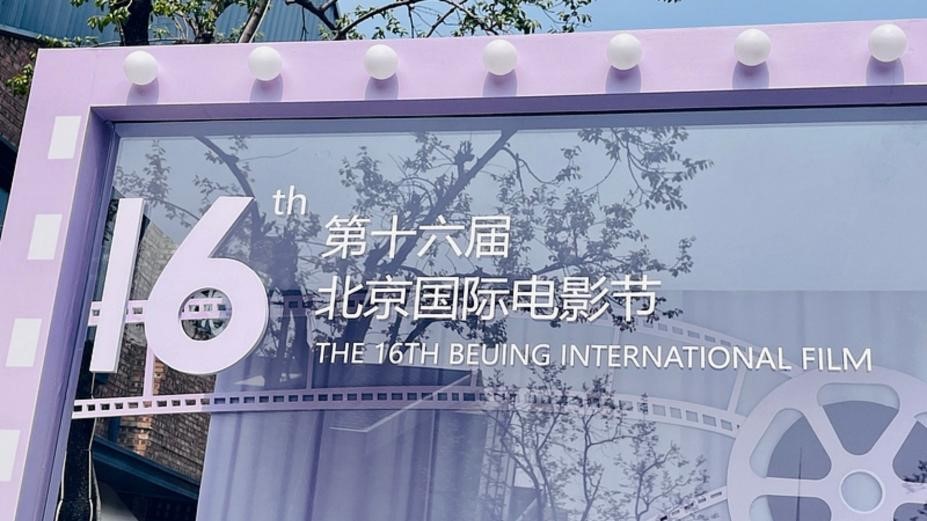
Photo: CGTN: The Beijing International Film Festival takes place from April 16 to 26. [Photo: CGTN]
Two young Batwa performers in Uganda step onto the stage, not for fame, but for survival. Singing and dancing for international tourists offers a chance at a more stable life, until they are dismissed after demanding fairer pay, pushing them back into poverty. With families depending on them, how can they stay afloat?
The film, Small Gods, draws directly from the lived experiences of the lead actors, Florence Mariserena and Bizimana Hussain, blurring the line between performance and reality.
Now, that story is travelling far beyond Uganda. Selected for the Forward Future Award at the Beijing International Film Festival (BJIFF), Small Gods is being screened for Chinese audiences during the festival in a section dedicated to showcasing emerging filmmakers and bold new cinematic voices. Being screened from April 16 to 26, it offers a glimpse into lives and struggles that are still rarely seen on Chinese screens.
It is not the only African voice at the festival. Egyptian film Happy Birthday and Sudanese feature Goodbye Julia are also part of the lineup, within a wider selection of about 260 films from around the world, currently screening across the Beijing–Tianjin–Hebei region.
For African filmmakers, BJIFF serves as a significant gateway to Chinese audiences. African cinema has reached China in waves since the 1950s, yet it has rarely secured a stable place in mainstream distribution. Film festivals like BJIFF help bridge that gap, expanding visibility, opening opportunities for co-production, and connecting African stories with local filmgoers.
Reaching Chinese audiences is not only an economic opportunity, but also a cultural one. As an artistic form that transcends borders, film and TV offer a window into African societies, allowing viewers to engage with their everyday lives, social realities, and experiences that remain relatively distant.
Kenyan filmmaker Vallentine Chelluget, co-director of Nawi: Dear Future Me, is optimistic about the role film can play in China–Africa cultural exchange. His film was shortlisted for the Tiantan Award and received a Special Jury Honor at the 2025 BJIFF, reflecting a growing recognition of African storytelling on Chinese screens. “We’re not just telling stories for entertainment,” he said. “We’re building bridges of understanding, empathy, and dialogue.”
This exchange is not one-directional. In recent decades, Chinese film and TV productions have also found growing audiences across Africa, supported by local language dubbing and expanding access to digital broadcasting.
One early example came in 2011, when the Kiswahili-dubbed version of the Chinese TV drama titled Doudou and Her Mother-in-Law aired in several East African countries, including Tanzania, Uganda and Kenya. It became one of the first Chinese screen productions to gain popularity among African audiences in recent decades.
The series follows a young woman navigating family relationships and work pressures, while living through tensions between her mother-in-law and stepmother-in-law, set in an everyday domestic setting. Many African viewers, particularly women, responded to its depiction of intergenerational family dynamics and emotional negotiations within households.
At a time when much of the Chinese content available in Africa was still dominated by kung fu films and action-heavy narratives, it also offered a glimpse of everyday life in contemporary China, grounded and relatable.
According to Tanzanian broadcaster Joe Lugalabamu, “people kept calling and sending messages to say how much they liked it.”

Poster of Ne Zhe 2 [Photo: VCG]
In the years that followed, more Chinese films and TV dramas found audiences across African broadcasters. The 2025 animated adventure film Ne Zha 2 has gained traction in several countries, including South Africa, Nigeria, and Kenya. Luc Bendza, a representative of the African Film Association in China, said the film’s spirit of taking control of one’s own destiny has resonated strongly with local audiences.
This cultural exchange is further strengthened by improvements in broadcasting infrastructure. In many rural areas across Africa, limited connectivity restricted television access in the past.

Under a program to expand satellite TV access in rural Africa, a satellite dish is installed on a rooftop in Buvuma Island, Uganda, February 16, 2026. [VCG]
Since 2017, however, expanded broadcasting and digital infrastructure, supported in part through the framework of the Forum on China-Africa Cooperation, has increased access to television services in more than 20 African countries, widening access to global content. By 2024, TV services had reached 10,112 villages across Africa, benefiting over 190,000 households, according to reports.
For Ugandan filmmaker Isaac Nabwana, this influence is deeply personal. Raised in Wakaliga, a poor neighbourhood in Kampala, he grew up with limited access to digital television. His early impression of Chinese kung fu films came not from watching them, but from stories he heard from his family.
Undeterred, he taught himself basic editing and filming skills and began making low-budget productions in his village, using everyday materials to recreate action effects. His breakout film Who Killed Captain Alex gained international attention online, blending local storytelling with action aesthetics inspired by the Chinese kung fu films that first sparked his passion.
Today, with improved access to television, Nabwana says he and his team can watch a wider range of Chinese films and TV dramas at home, continuing to draw inspiration from them as they develop their own voice.
From the screens of the Beijing International Film Festival to living rooms across Africa, stories continue to move back and forth between the two regions. For filmmakers and audiences alike, these exchanges are not just about visibility, but about how stories are seen, understood, and interpreted across different cultural contexts.