
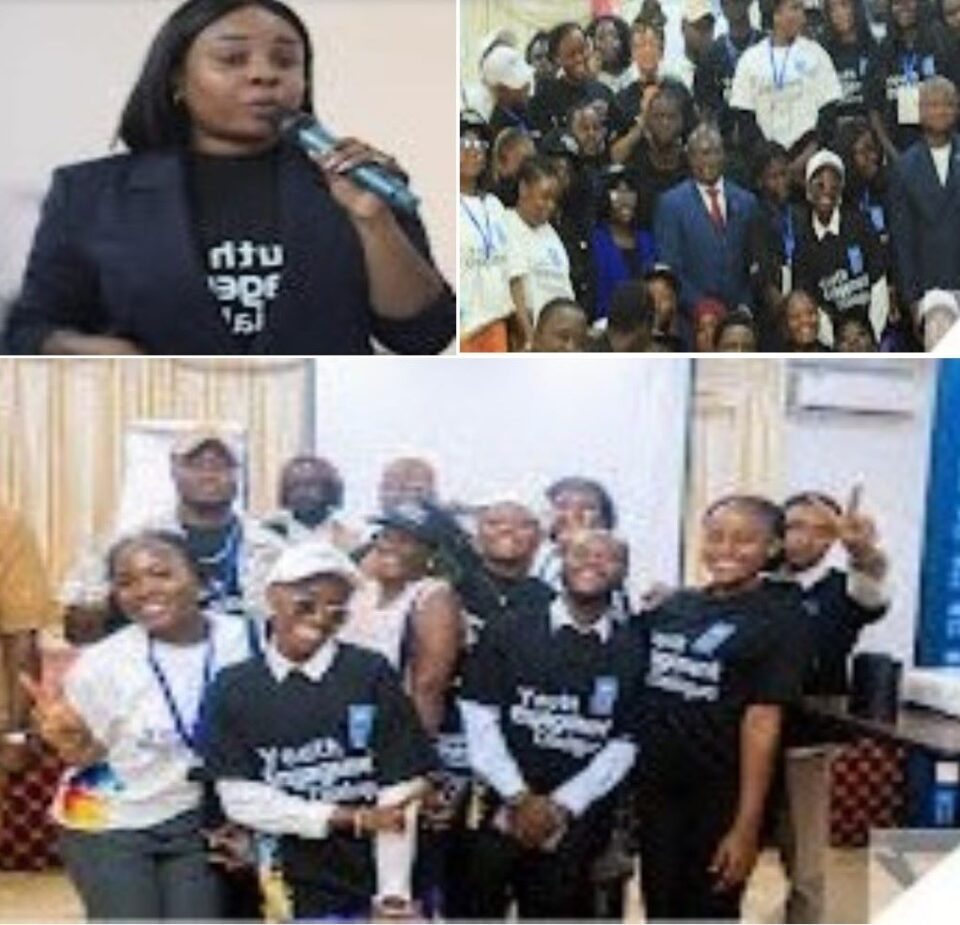
Monrovia, Liberia: April 26, 2026: On a warm Wednesday morning in Monrovia, the halls of Sinkor Palace came alive with the sound of youthful determination. Laughter mixed with serious conversation as over fifty young people from different corners of Liberia gathered.
Artists and athletes, farmers and students, entrepreneurs and climate activists all drawn together by a single purpose to be heard.
What became clear early in the day was youth voices are not waiting for the future. They are shaping it, right now.
At the UNDP Liberia Youth Dialogue on April 22, 2026, young leaders showed up with bold ideas, lived experiences, and a clear message: development works best when youth are at the center not pushed to the sidelines.
The United Nations Development Programme (UNDP) convened the one‑day dialogue to create a space where those voices could take the lead, joining mentors, facilitators, government officials and development partners in open, unfiltered conversation.
From innovation and inclusion to climate action, jobs, and governance, the discussions reinforced a shared understanding that young people are not just beneficiaries of development. They are partners, problem‑solvers, and leaders of sustainable change.
Standing before the room, UNDP Resident Representative Mamadou Aliou Dia spoke with conviction rather than formality. He reminded participants that development cannot succeed without the full engagement of young people.
“Young people are full of ideas,” he said. “But too often, they do not have the opportunity to bring those ideas to institutions like UNDP.”
For many in the room, this reality felt deeply familiar. Mr. Dia acknowledged past frustrations, reflecting on youth employment and empowerment programs that failed to deliver meaningful outcomes.
“If young people do not feel the benefits of our work,” he said, “then we must ask ourselves whether we are truly making an impact.”
But the dialogue was forward‑looking. Mr. Dia spoke of UNDP’s deliberate shift toward youth‑centered programming initiatives that place trust and resources directly in the hands of young people.
Through funding facilities that support youth‑led ideas, innovation is rising, donor confidence is strengthening, and youth are driving solutions rather than waiting for them.
As the conversation deepened, Stanley N. Karama, UNDP’s Pillar Lead for Governance, emphasized the importance of listening—truly listening.
The room reflected the full spectrum of youth voices from creatives and athletes to entrepreneurs, development practitioners, and climate justice advocates.
The energy was palpable. The commitment was real. In that moment, the future was being built.
Mr. Karama explained that youth input is actively shaping UNDP’s country programming in areas such as digital transformation, governance, and economic development.
He highlighted the untapped potential of sectors like the creative economy and tourism, stressing that many young innovators remain under‑supported despite their transformative ideas.
The conversations were honest, urgent, and necessary. And the same questions kept surfacing:
Where do young people get stuck?
Which support systems are missing—or failing entirely?
What policies or practices are holding young people back?
Which sectors hold promise but remain overlooked?
These were not abstract debates. These are the real challenges young people navigate every day. And this space was doing something powerful. It allowed those truths to be heard clearly, directly, and without filters.
Government voices added to the dialogue. Representing the Ministry of Youth and Sports, Deputy Minister for Technical and Vocational Education and Training, Laraamand Shenkin Nyonton reaffirmed the government’s commitment to youth inclusion.
He noted that President Joseph Boakai has established a Youth Advisory Council to ensure that youth voices inform national decision‑making.
But his message was also a call to action.
“Speak up about unemployment. Speak up about skills gaps. Speak up about teenage pregnancy,” he urged. “Your voices matter.”
Deputy Minister Nyonton stressed the need to expand skills development opportunities across counties, encouraging young people to pursue productivity, self‑reliance, and ownership of their futures.
Cllr. Medina A. Wesseh of the United Methodist University praised UNDP for creating a platform where youth could engage constructively and confidently. She encouraged participants to remain focused, intentional, and committed to transforming opportunity into impact.
For participants, the dialogue was personal.
Stephine Coleman Mulbah, CEO of Coleman Special Inc., said the experience allowed her to share her vision, learn from fellow youth leaders, and better understand the broader challenges facing young people nationwide.
Ezekiel Nyanfor, Founder and Executive Director of Liberian Youth for Climate Action, described the dialogue as inspiring—fueling his commitment to community empowerment through job creation and innovation.
Dwah Faith Massaquoi said the space strengthened her resolve to expand her work in smallholder farming and food production, reminding her that youth‑led solutions belong at the heart of national development.
As the day came to a close, participants expressed gratitude to UNDP not just for convening a dialogue, but for opening a space where young people could speak frankly and expect to be heard.
At Sinkor Palace, the meeting ended. But the momentum did not. The story unfolding was unmistakable.
Liberia’s youth are not waiting to be invited into the future. They are already building it.