
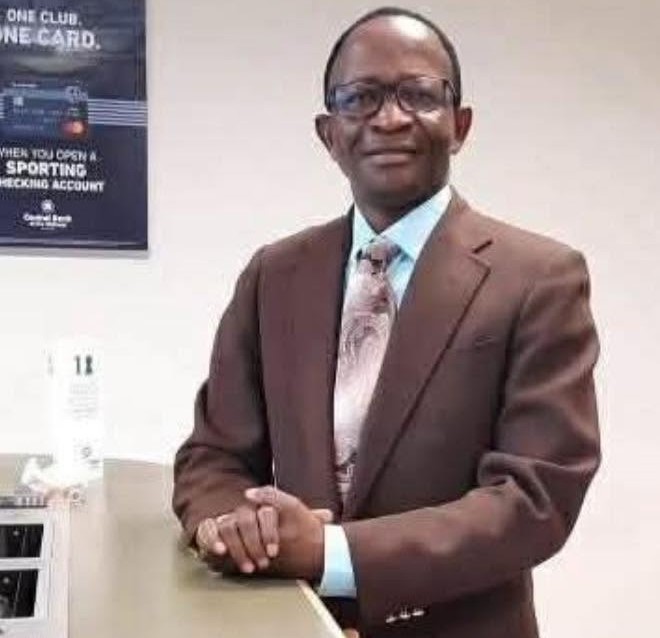
PHOTO: The Author
By Kokpar B. Wohwoh, Advocate, Public Affairs Commentator (APAC)
Liberian, Philadelphia, USA
A government that cannot control its message cannot defend its people.
In Liberia today, too many voices claim to speak for the state, and the result is not strength but confusion. So the question must be asked plainly: Who speaks for the Government of Liberia? Is it the Minister of Information, or his deputy? Is it the Minister of State for Presidential Affairs? Is it the head of the Liberia Broadcasting System? Or are those in government technical positions and street advocates now the ones to speak for the state?
The answer is simple in law, but complicated in practice. By structure, the President of the Republic is the chief voice of the nation. On matters of policy, crisis, and state direction, the President’s word is final. For day-to-day communication, the Constitution and administrative protocol vest that duty in the Ministry of Information, Cultural Affairs and Tourism.
The Information Minister, the Presidential Press Secretary, or a designated Deputy Minister for Public Affairs are the official channels through which government speaks. Line ministries and agencies may address technical issues in their sectors, but national positions must be cleared and delivered through MICAT. That is the chain. That is order.
Thomas Hobbes argued that the state exists because individuals surrender the right to speak and act unilaterally in exchange for order. That “Leviathan” can only protect if it speaks as one. When every official becomes a sovereign voice, the contract reverses the state dissolves back into the war of all against all, this time fought with microphones.
A government of many throats is not a government. It is a crowd wearing a flag. For Liberia to honor its social contract, it must restore the monopoly on legitimate speech, just as it claims a monopoly on legitimate force.
Plato warned that “when the mode of the music changes, the walls of the city shake.” Speech is not decoration; it is the architecture of the state. A nation is first imagined, then spoken, then governed. If the language of governance is fractured; if the water director speaks on war and the street advocate speaks on treaties; then the imagination of the state fractures with it. Citizens no longer share a common civic reality.
The philosopher Ludwig Wittgenstein put it sharper: “The limits of my language mean the limits of my world.” When government language has no limits, the world it governs becomes limitless chaos.
My view is that we have abandoned that order. Today, a deputy minister posts policy on Facebook before MICAT briefs the press. An agency director grants a radio interview on foreign relations. Political allies and “street advocates” issue threats and promises in the name of government, while the actual spokesperson is left to clean up the damage. When everyone speaks, no one is heard. And when no one is heard, the state loses its voice.
This disorder carries a price. I have watched it hurt us nationally and internationally. During COVID-19, citizens did not know which curfew was real because health officials, county superintendents, and party loyalists announced three different versions in one week. Investors walked away from concession talks because one minister said a deal was signed while another said negotiations were ongoing.
After protests in Monrovia, embassies issued travel warnings based on the harshest description of events, given not by MICAT but by a security aide freelancing on live radio. Each time, Liberia looked divided, and division is expensive.
Disorganized speaking has hurt international bodies too. The African Union and ECOWAS have both delayed joint actions because member states issued contradictory public positions, one minister backing intervention, another denying it the same day. At the United Nations, draft resolutions have stalled when delegates discover a country’s ambassador, foreign minister, and presidency all briefed the press differently.
When governments speak in factions, international partners cannot trust commitments, and collective security suffers.
A government is not a market stall where anyone can shout the price of goods. It is an institution that must speak with one throat. That does not mean censorship. It means discipline. If you are not the designated voice, your duty is to amplify the official message, not invent your own. If you have clearance to speak, speak clearly. If you do not, refer the microphone to those who do.
So who speaks for the Government of Liberia? The President. MICAT. The Press Secretary. Those to whom the state has given the microphone. Not the water and sewer director on foreign policy. Not a deputy minister on national security. Not a partisan blogger claiming to “defend the state” with rumors.
We need one spokesperson, not a crowd of confused power seekers. In this information age, a nation’s first border is its message. If we cannot guard what we say, we cannot defend what we stand for. The defense of Liberia begins with the discipline to say only what is cleared, only when authorized, and only through the proper channel.
That is my view. Until we return to one voice, we will remain a “typer of confused state power.” And states do not survive confusion.