
Monrovia – Liberian women leaders, government officials, and international partners have renewed calls for concrete political reforms and social norm change, warning that women’s representation in decision-making spaces is stagnating, despite decades of advocacy and policy commitments.
The call was made Tuesday during an intergenerational dialogue convened by the Organization for Women and Children (ORWOCH) in partnership with the African Women Leaders Network (AWLN) Liberia Chapter, as part of preparations toward the 2029 general elections.
Vice Chairperson of AWLN-Liberia, Dr. Evelyn Kandakai, said the network was established in 2019 to confront the persistent marginalization of women in governance and other key sectors.
“Nationally and internationally, we are not happy with women’s participation in political governance,” Kandakai said. “That is why intergenerational collaboration is critical—because transformation does not happen in isolation.”
Kandakai explained that AWLN-Liberia operates within a continental framework aligned with the African Union’s Agenda 2063 and the UN 2030 Sustainable Development Goals, with partnerships involving UN Women, the African Union, and bilateral partners including Germany, Ghana, and South Africa.
She noted that Liberia’s chapter is steered by former Foreign Minister Ambassador Marjane Kamara, with former President Ellen Johnson Sirleaf and former Vice President Jewel Howard-Taylor among its champions.
She said the dialogue marked AWLN-Liberia’s second intergenerational forum, following a November 2024 meeting that led to the formation of a Youth Caucus.
Representing the Ministry of Justice, Deputy Minister Cllr. Cora N. Hare-Konuwa said women’s underrepresentation in leadership is not the result of a lack of competence, but of deeply entrenched social norms passed down through generations.
“Leadership has long been viewed as a man’s role, while women were confined to supportive or domestic spaces,” Hare-Konuwa said. “These beliefs have quietly but powerfully shaped who speaks, who decides, and who leads.”
She stressed that transforming those norms must begin in homes, schools, and communities, and cannot be left to women alone.
“Men and boys are essential partners in this journey,” she said, adding that women must also be protected from violence and intimidation in political spaces and supported through fair party structures, mentorship, and access to resources.
Hare-Konuwa described women’s political participation as “not only a women’s issue, but a governance, development, and human rights issue,” pointing to Liberia’s history of female political leadership as evidence that progress is possible.
Delivering remarks on behalf of the Ministry of Gender, Children and Social Protection, Deputy Minister Laura Golakeh said Liberia does not suffer from a lack of gender-responsive policies, but from weak enforcement and internal divisions among women themselves.
“We are not lacking policies,” Golakeh said. “What we are lacking are individuals who are intentional about women’s participation—and women who believe in other women to lead.”
Golakeh acknowledged gains in the executive branch, noting that women now make up nearly 40 percent of executive positions, but described representation in the Legislature and at the community level as “very discouraging.”
She also criticized the tendency for women to undermine one another due to long-standing socialization.
“We have been socialized to compete against each other as women, and that has to stop,” she said. “If we are not honest with ourselves, we will not achieve the results we keep talking about.”
Golakeh called for greater investment in grassroots women leaders who may lack formal education but possess strong leadership skills and community credibility, urging stakeholders to move beyond dialogue to action.
“We have talked big talks before,” she said. “Now we need intentional action, resources, and enforcement.”
Earlier, European Union Ambassador to Liberia Nona Deprez warned that women’s political representation in Liberia is declining, despite international commitments and repeated recommendations from EU Election Observation Missions.
“This is not a question of ambition or capacity,” Deprez said. “It is about systems, incentives, and power structures—particularly political parties that control nominations and access to resources.”
Deprez said the EU is supporting electoral reforms, democracy schools for young leaders, and gender audits of political parties through programs implemented with UNDP and UN Women, but emphasized that the focus must now shift from diagnosis to delivery.
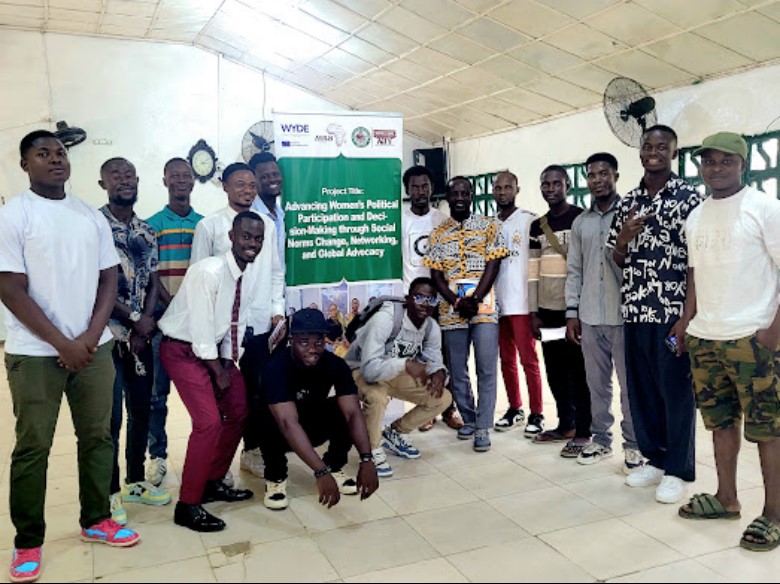
The dialogue brought together women legislators, youth leaders, civil society actors, and male allies to discuss electoral reform, temporary special measures such as gender quotas, political violence, and intergenerational mentorship.
Organizers say the outcome will include concrete recommendations and commitments aimed at strengthening women’s participation ahead of the 2029 elections.