
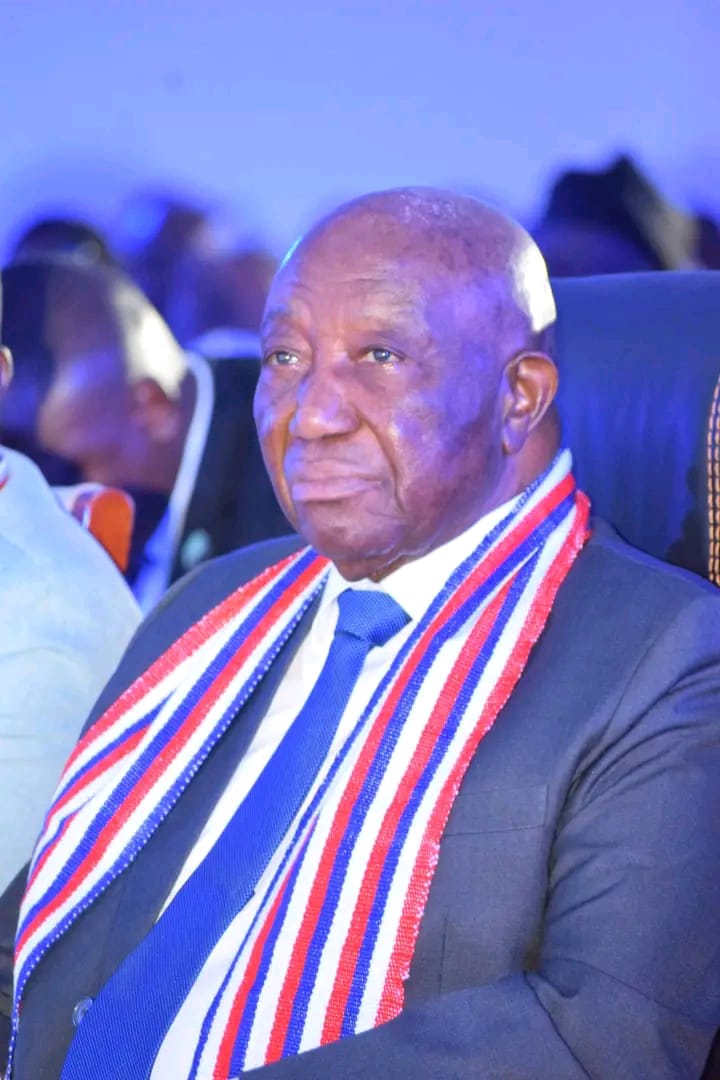
Margibi County, Liberia — March 30, 2026– President Joseph Nyuma Boakai on Monday officially opened the National Fisheries Investment Conference, known as “Kpongama,” with a strong call for regional cooperation and increased private investment to transform Liberia’s fisheries sector into a major driver of economic growth.
Speaking at the Farmington Hotel, President Boakai described the gathering—“Kpongama,” a Kpelle word meaning “the gathering”—as a turning point for the country’s underdeveloped but resource-rich fisheries industry.
“We are not merely holding a conference,” Boakai said.
“We are answering a call to awaken what international partners have rightly called our ‘sleeping giant.’”
The event brought together regional fisheries ministers, international development partners, private investors, and representatives from coastal communities across West Africa and beyond.
Delegations included officials from Morocco, Sierra Leone, Ghana, and Nigeria, alongside institutions such as the World Bank, the European Union, and the African Development Bank.
Sector Challenges and Opportunities
President Boakai acknowledged longstanding challenges facing Liberia’s fisheries sector, noting that despite the country’s 579-kilometer coastline and abundant marine resources, Liberia imports over 33,000 metric tons of fish annually.
He also highlighted the lack of key infrastructure, including a dedicated fishing harbor, which has forced valuable catches to be landed in foreign ports.
Artisanal fishers—who account for about 80 percent of domestic production—continue to operate with limited access to cold storage, financing, and modern technology, he said.
“This is not a situation we accept. It is a challenge we embrace,” the president declared.
Shift Toward Investment and Reform
Boakai outlined a policy shift away from reliance on industrial fishing license fees toward a private-sector-driven model supported by public-private partnerships. He emphasized efforts to retain more value within Liberia through improved supply chains and local processing.
Among recent initiatives, the government has secured a €25 million grant from the European Union to strengthen artisanal fisheries and partnered with Orange Liberia to introduce mobile payment systems and solar-powered cold storage.
He also announced plans to operationalize the long-dormant Robertsport fishing cluster and deploy Liberia’s first semi-industrial fiberglass vessel, signaling a move toward modernization.
Infrastructure and Future Plans
The president revealed that designs for a national fisheries harbor are nearing completion, with construction expected to begin soon, alongside a new fisheries complex to support management and private sector activity.
Additional projects include a fisheries laboratory to meet international export standards, a processing factory to add value to seafood products, and the establishment of Liberia’s first integrated commercial aquaculture farm.
“These are not abstract policies,” Boakai said. “They are tangible steps to ensure a fisherwoman in West Point or a canoe captain in Harper can earn more from their catch.”
Regional Cooperation and Anti-IUU Efforts
Boakai stressed the importance of regional collaboration in combating illegal, unreported, and unregulated (IUU) fishing.
He referenced the Monrovia Declaration on Regional Cooperation, adopted during a regional meeting hosted in Liberia in December, as a key framework for joint action.
“The fish do not recognize our borders, but our cooperation must,” he said.
Investment Appeal
Addressing investors, the president made it clear Liberia is open to business but committed to responsible and sustainable partnerships.
“We are open for business, but we are not open for exploitation,” he stated, emphasizing environmental protection, local capacity building, and equitable benefits for communities.
The conference also marks the launch of three major policy documents: a 10-year National Fisheries Strategic Plan, an Investment Plan, and a Public-Private Partnership Strategy aimed at guiding sector growth.
Vision for the Future
Boakai painted an ambitious vision of a modernized fisheries sector, with functional ports, thriving fish processing industries, and expanded aquaculture reducing pressure on wild fish stocks while creating jobs.
“Imagine a Liberia where our youth are trained as marine biologists and aquaculture technicians rather than seeking dangerous journeys abroad,” he said.
Declaring the conference officially open, the president expressed hope that the gathering would yield lasting partnerships and economic benefits for the country.
“Today, we cast our net wide—across continents, across sectors, across ideologies,” Boakai concluded.
“May this gathering yield a harvest that feeds our nation, employs our youth, and secures our prosperity.”