
And Erodes The United Nations’ Neutrality
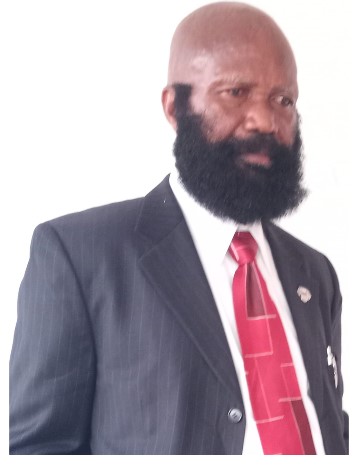
PHOTO: The Author
By Pero M. K. Kerkula
September 27, 2026
The denial of a visa to the State of Palestine, preventing its in-person participation at the 81st Session of the United Nations General Assembly, constitutes a deplorable abuse of host-country privilege and an exploitative act. While framed by Washington as an exercise of sovereign discretion, the decision raises three interlocking levels of legal and geopolitical questions.
*I. The Legal Framework: Host Country Obligation vs. Sovereign Discretion*
The United Nations is headquartered in New York pursuant to the 1947 Agreement Regarding the Headquarters of the United Nations. Article IV of that Agreement establishes a clear treaty obligation for the United States.
Section 11 provides: “The federal, state or local authorities of the United States shall not impose any impediments to transit to or from the headquarters district of: (1) representatives of Members or officials of the United Nations, or of specialized agencies as defined in Article 57, paragraph 2, of the Charter, or the families of such representatives or officials… (5) other persons invited to the headquarters district by the United Nations… on official business…”
Section 12 provides: “The provisions of Section 11 shall be applicable irrespective of the relations existing between the Governments of the persons referred to in that section and the Government of the United States.”
Section 13 provides: “Laws and regulations in force in the United States regarding the entry of aliens shall not be applied in such a manner as to interfere with the privileges referred to in Section 11. When visas are required for persons referred to in that section, they shall be granted without charge and as promptly as possible.”
*Fact and Law:* By virtue of General Assembly Resolution 67/19 (2012), Palestine holds Non-Member Observer State status, the same status as the Holy See. By established practice, confirmed by the Secretary-General in 1988 regarding the PLO Observer Mission, representatives invited to the UN on official business are covered by Sections 11, 12, and 13.
*Two competing legal interpretations emerge:*
The argument for Palestine and its supporters is that the denial violates both the letter and spirit of the Headquarters Agreement and undermines the principle of sovereign equality enshrined in Article 2(1) of the UN Charter. The General Assembly’s 152-3 vote to permit a video address by President Mahmoud Abbas was cited as institutional evidence that the membership views the denial as an obstruction of its work.
The argument for the United States is that visa issuance remains a sovereign prerogative under US immigration law, particularly where security or political designations concerning the Palestinian Authority are invoked, and that allowing virtual participation satisfies the requirement of being heard without requiring physical presence.
- The Political Rights of a State Dimension
This is the core of the precedent debate.
*a) The Right to be Heard:* In international law, the political rights of a state include _jus legationis_ — the right to send and receive representation. At the UNGA, that translates into the right to present one’s case directly to the community of nations, to engage in corridor diplomacy, negotiate texts, and hold bilateral meetings. A pre-recorded video is legally permitted under the rules of procedure, but diplomatically it reduces a delegation to a screen, stripping it of equal standing and presence.
*b) The Human Rights Framing:* For Palestinian advocates, the issue is not merely procedural. It is framed as silencing a population under occupation whose right to self-determination is itself on the UN agenda. The inability to be physically present is presented as a denial of political participation and representative rights.
*c) The Counter-Framing:* For US and Israeli officials, the participation of the Palestinian Authority is viewed through the lens of counter-terrorism policy and the absence of direct negotiations, arguing that the UNGA is not an unconditional platform and that national security interests justify restrictions.
*III. Geopolitical Implications*
*a) Credibility of the UN as a Neutral Forum:* Repeated visa denials — previously involving Russian, Iranian, and other delegations — fuel long-standing calls led by Russia, Iran, and others to move the General Assembly or other UN bodies to a more neutral host like Geneva or Vienna. It strengthens the narrative of US instrumentalization of its host-country role.
*b) Polarization over Statehood:* The incident occurred at the 81st Session, a session marked by momentum toward greater recognition of Palestine by several European states. The denial was interpreted by many Global South states as a political act intended to contain that momentum. The symbolic response — empty Israeli seats during Abbas’s video address and the overwhelming 152-3 vote to allow it — demonstrated that polarization.
*c) Precedent for Great Power Competition:* If host-country discretion becomes normalized as a tool of foreign policy, it could be invoked against any adversary. That erodes the foundational principle that the UN Headquarters must be accessible to all, regardless of bilateral disputes.
*d) US-Israel Alignment vs. Multilateralism:* For the United States, the decision reinforces alignment with Israel and the primacy of domestic policy priorities over multilateral expectations. For the UN system, it reinforces a perception of selective application of international law, where treaty obligations are enforced rigorously on small states but are set aside by the host state.
In sum, legally, the case represents a tension between a treaty obligation to host the world and an assertion of sovereign immigration power. Politically, it elevates the Palestinian question from a substantive debate about a two-state solution to a procedural debate about the right to access the very forum where that solution is supposed to be negotiated.
The United States must be reminded that while the Headquarters of the United Nations is situated in New York City, its location does not confer upon it the right to deny access to other nations on the basis of geopolitical differences and interests.
About the author: Pero M. K. Kerkula
The writer is an Instructor of Public Administration at the University of Liberia, Political and International Best Practice Advocate, and a Member of the Academy of Political Science, NYC, NY, USA.