
1.Question: Girls now account for about 50.3% of learners, yet nearly 42% of primary-school-aged girls do not complete Grade 6. Does the Ministry consider this genuine progress, and what is it doing to close the completion gap?
The President of Young professionals and Director of Girl’s Education st the Ministry of Education Miss. D. Eunice Williams Answered in the affirmative by stating that the Ministry considers the significant increase in girls’ enrollment and the achievement of near gender parity in participation an important national education achievement.
However, the Ministry also recognizes that getting girls into school is only the first step. The real measure of success is whether girls remain in school, learn, progress from one grade to another, transition successfully, and ultimately complete their education.
According to Miss Williams, For the reason mentioned above , the Ministry of Education is deliberately moving beyond an access-only approach and implementing a comprehensive girls’ education agenda focused on access, retention, learning, protection, health, progression and completion.
She stated that,the Ministry is addressing the completion gap through a combination of foundational learning, retention interventions, safe-school initiatives, WASH, menstrual health, counselling, gender-responsive education, re-entry support and girls’ empowerment.
“A major pillar of this effort is the Liberia EXCEL Project, a US$88.7 million investment supported by the World Bank and Global Partnership for Education and implemented across all 15 counties” She added. Director Williams revealed that the project is strengthening foundational learning and equitable access in public primary schools, reaching 2,337 public primary schools and approximately 350,000 learners with improved teaching and learning in foundational literacy and numeracy. Approximately 48% of direct project beneficiaries are expected to be female.
She indicated that, the Ministry is also strengthening the support systems around girls so that barriers outside the classroom do not force them out of school. Guidance and counselling services have been strengthened in public senior high schools, with counselling support extending to learners at lower basic levels. These services provide an important mechanism for addressing academic, psychosocial, protection, and other challenges that may affect girls’ attendance, retention, and progression.
Responding to inquiry on menstrual hygiene, she disclosed that, In school health and menstrual hygiene, the Ministry, in collaboration with UNFPA, launched pad dispensers in three counties covering approximately 120 schools. The Ministry has also recently launched a national hygiene-kit initiative targeting 10,000 learners—5,000 girls and 5,000 boys. These interventions are designed to ensure that learners have a healthier, safer, and more dignified school experience.
Director Williams further told this news outlet that, the Ministry has also strengthened health and life-skills education by incorporating Comprehensive Sexuality Education (CSE) into the national curriculum and revising School Health Clubs to provide stronger platforms for health education, life skills, prevention, and positive decision-making.
Through collaboration with the Ministry of Gender under the Liberian Women Empowerment Project, the Ministry of Education has supported the establishment of 40 Champions of Change girls’ clubs in 40 schools across Gbarpolu and Grand Gedeh Counties. These clubs provide girls with platforms for leadership, confidence-building, peer support, life skills and empowerment.
Importantly, the Ministry is not implementing the girls’ education agenda alone. The Ministry works closely with development partners, civil society organizations and other stakeholders to expand the reach, effectiveness and sustainability of its interventions.
The Girls’ Education Division works closely with the Educate HER Coalition to strengthen awareness, ownership and accountability around the National Policy on Girls’ Education (NPGE). Through this partnership, stakeholders and partners are continuously engaged to understand the NPGE and their respective roles in advancing its implementation.
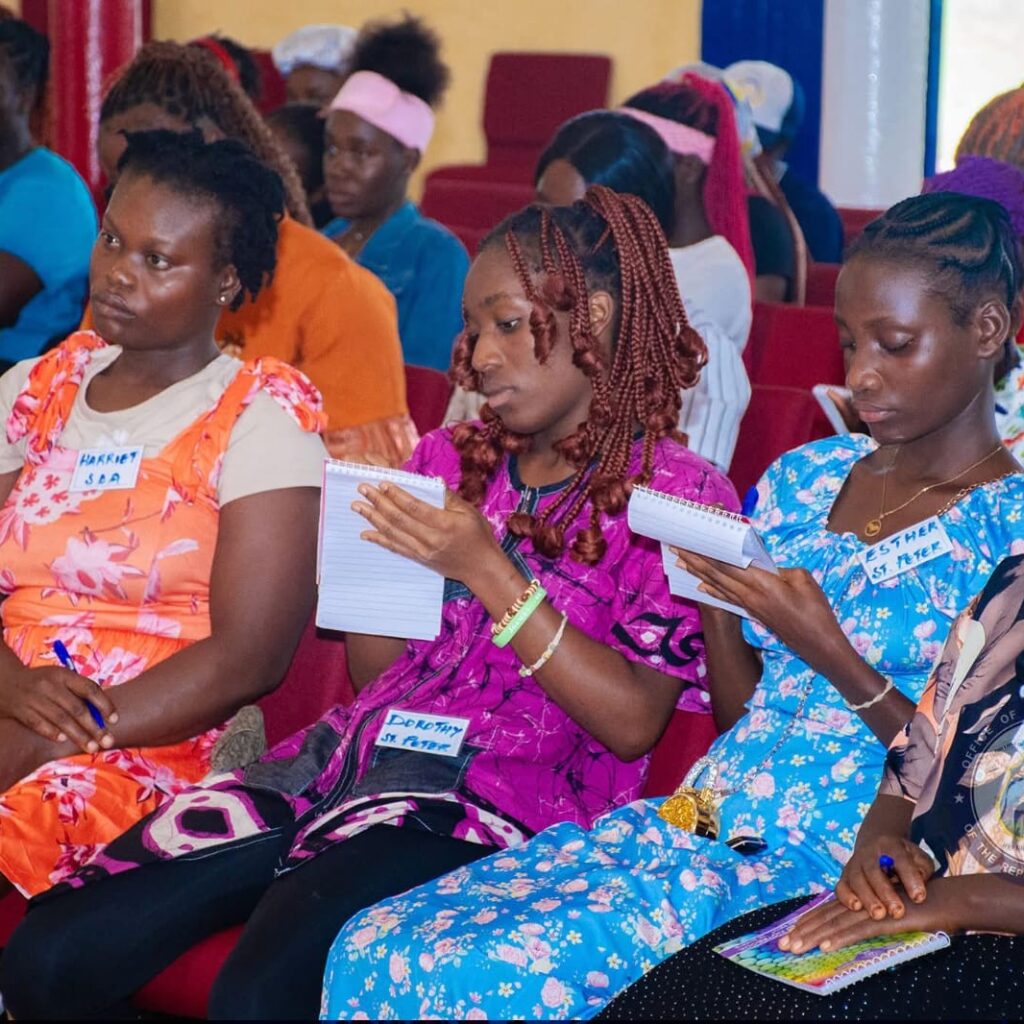
The partnership supports annual policy dialogues across all 15 counties, creating platforms for county authorities, education stakeholders, civil society organizations, development partners and communities to discuss the policy, implementation priorities and the specific challenges affecting girls. This helps ensure that the NPGE is not simply a national policy document, but a framework that is understood, owned and acted upon at county and community levels.
The Ministry is also deepening its partnership with BRAC Liberia. The Ministry recently signed an MOU with BRAC Liberia under the Accelerating Impact for Young Women (AIM) Project, specifically supporting the Education Pathway to help girls re-enroll in school and continue their education.
The BRAC Liberia AIM Education Pathway is designed to increase access to and completion of quality secondary education for Grades 7–12 from 2026 to 2033. In Liberia, the programme is intended to reach approximately 300 target schools in Montserrado, Grand Bassa, Grand Gedeh, Bong, Nimba, Lofa and Margibi Counties. The intervention includes financial support to address key barriers to education in selected schools.
The Ministry is therefore taking a comprehensive approach: strengthening the education system, addressing practical barriers, empowering girls, improving learning, strengthening protection, and working with development partners and civil society to ensure that national commitments translate into action at the school and community levels.
The Ministry’s ambition is clear: we do not want merely to count girls when they enroll; we want to see them remain in school, learn, progress,and complete.
- Dropout
Question: What are the Ministry’s latest statistics on girls dropping out due to poverty, teenage pregnancy, early marriage, distance, domestic responsibilities and unsafe schools, and what measurable interventions have reduced each of these problems?
Answer: The latest Annual School Census data indicate that the girls’ dropout rate in the Liberian school system stands at approximately 36.4%. The Ministry recognizes that dropout is influenced by multiple and interconnected socioeconomic, cultural, health, protection and school-related factors.
The Ministry’s response is therefore not limited to one programme. It is implementing a multi-sectoral and multi-level strategy designed to prevent dropout, support vulnerable girls and create pathways for girls who have already left school to return.
The Ministry has launched targeted initiatives such as the Back to My Classroom campaign, which supports efforts to identify and encourage children who have left school to return to the classroom. The Ministry is also providing practical support through sanitary materials and hygiene interventions to address barriers that affect girls’ regular attendance.
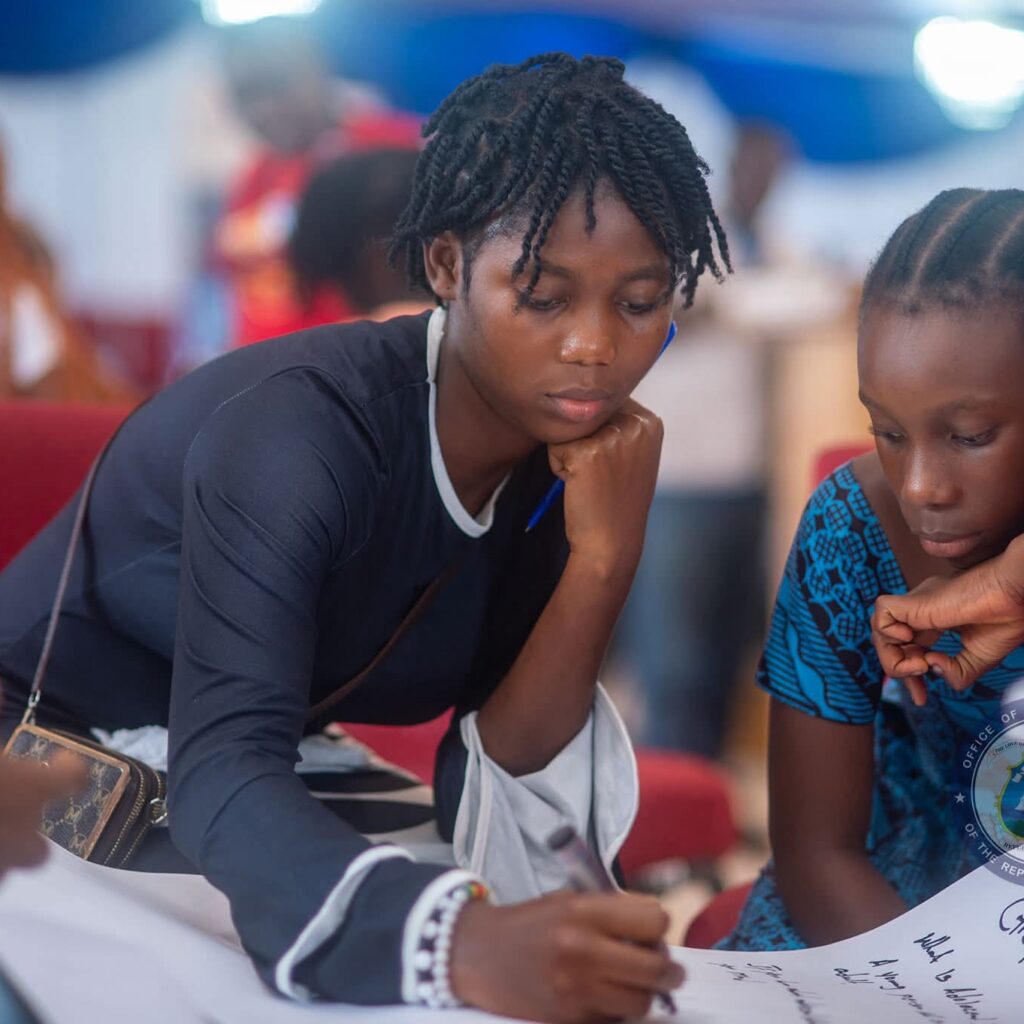
The Ministry is strengthening guidance and counselling services, school health programmes, WASH, menstrual-health support, SRGBV prevention, re-entry interventions and gender-responsive education.
The Ministry is also working with development partners, CSOs and other government institutions because the causes of dropout extend beyond the education sector. Poverty, teenage pregnancy, early marriage, domestic responsibilities and harmful social norms require coordinated interventions involving families, communities, government and partners.
The Ministry’s collaboration with BRAC Liberia under the AIM Education Pathway is particularly relevant. Through the partnership, the Ministry is supporting pathways for girls to re-enroll and continue their education, particularly at the secondary level.
The Ministry also continues to work with the Educate HER Coalition to strengthen awareness and implementation of the National Policy on Girls’ Education, while creating platforms for stakeholders at county and community levels to discuss barriers affecting girls and identify locally appropriate solutions.
The Ministry’s approach is increasingly focused on prevention, early identification, response and re-entry—ensuring that girls at risk are supported before temporary disengagement becomes permanent exclusion.
The Ministry is also strengthening monitoring so dropout can increasingly be understood by county, grade, sex, age, and documented reason, allowing interventions to be better targeted.
The Ministry’s position is clear: every girl who returns to school represents an opportunity recovered, and every girl retained through completion represents an investment in Liberia’s future.
- Programmes and Results
Question: Which girls’ education programmes have produced measurable improvements in enrollment, retention and completion, how many girls have benefited, and what evidence does the Ministry have that these programmes are working?
Answer: The Ministry of Education has made girls’ education a national and cross-cutting priority, recognizing that meaningful progress requires coordinated action across access, learning, retention, protection, health, empowerment and transition.
The Ministry has implemented and supported a broad range of initiatives, including the National Policy on Girls’ Education, Education Sector Plan, school WASH and menstrual-health interventions, counselling and psychosocial support, SRGBV prevention, re-entry support, alternative learning opportunities, School Health Clubs, Comprehensive Sexuality Education, girls’ empowerment programmes and foundational learning interventions.
One of the largest current investments is the Liberia EXCEL Project, a US$88.7 million investment supported by the World Bank and Global Partnership for Education and implemented across all 15 counties. The project is strengthening foundational learning and equitable access across 2,337 public primary schools and is expected to directly benefit approximately 362,000 students, teachers, and education staff, with approximately 48% of direct beneficiaries expected to be female.
Through collaboration with the Ministry of Gender under the Liberian Women Empowerment Project, the Ministry has supported 40 Champions of Change girls’ clubs in 40 schools across Gbarpolu and Grand Gedeh, creating platforms for girls’ leadership, empowerment, peer support and confidence-building.
Through collaboration with UNFPA, the Ministry launched pad dispensers in approximately 120 schools across three counties, while the national hygiene-kit initiative is targeting 10,000 learners—5,000 girls and 5,000 boys.
The Ministry is also strengthening school health and life-skills programming through Comprehensive Sexuality Education and revised School Health Clubs, ensuring that girls and boys receive age-appropriate information and support that contributes to healthier decision-making and safer learning environments.
A significant achievement through the Educate HER project has been the development of Liberia’s first Girls’ Education Scorecard. The Scorecard provides an important accountability and monitoring mechanism for tracking progress on girls’ education commitments and bringing greater visibility to implementation of the National Policy on Girls’ Education.
The Scorecard strengthens the Ministry’s ability to engage government institutions, development partners, civil society, and other stakeholders around evidence on girls’ education and identify areas requiring greater attention and investment. It also complements the annual county-level policy dialogues by providing a stronger evidence base for discussion and accountability.
Through the Educate HER collaboration, the Girls’ Education Division is strengthening a culture in which girls’ education is not only discussed, but measured, monitored, and collectively followed up.
The Ministry has also significantly strengthened its partnership with BRAC Liberia through the recently signed MOU under the Accelerating Impact for Young Women (AIM) Project.
The AIM Education Pathway is designed to increase access to and completion of quality secondary education for Grades 7–12 from 2026 to 2033. In Liberia, the programme is intended to reach approximately 300 target schools in Montserrado, Grand Bassa, Grand Gedeh, Bong, Nimba, Lofa and Margibi Counties.
A particularly important feature of this intervention is financial support to address key barriers to education in selected schools, while creating pathways for girls to re-enroll and continue their education.
The Ministry recognizes that the strongest evidence of success is not simply the number of activities conducted or beneficiaries reached. The real question is whether these investments are contributing to improved attendance, retention, progression, learning and completion.
The Ministry is therefore continuing to strengthen the connection between programme monitoring and the national education information system. This will allow programme interventions to increasingly be linked to measurable education outcomes.
At the same time, the Ministry is strengthening coordination, documentation and evidence generation across multiple programmes and partners.
The Ministry’s approach is increasingly one of partnership, coordination and results: government provides leadership and policy direction; development partners provide technical and financial support; civil society strengthens community engagement, advocacy and accountability; and county and school structures translate national commitments into action.
This coordinated approach ensures that girls’ education is not treated as an isolated programme, but as a national development priority requiring sustained action across the entire education system and society.
- Financing
Question: The National Policy on Girls’ Education commits the Ministry to allocating at least 5% of its budget to girls’ education, yet the FY2025 allocation was only about US$140,000. Why was the 5% commitment not met, how much money was actually released and spent, and where did it go?
Answer: The Ministry remains firmly committed to the objectives of the National Policy on Girls’ Education and to ensuring that girls’ education receives the resources necessary to produce meaningful and sustainable results.
For FY2025, the Girls’ Education Division received US$100,000, which was directed toward the provision of hygiene kits for learners in schools. This investment represents a direct contribution to creating healthier, safer, and more supportive learning environments for girls and boys.
It is also important to recognize that investment in girls’ education extends beyond the dedicated Girls’ Education Division budget line. A substantial portion of the Ministry’s broader education investments directly benefits girls through WASH, school infrastructure, school feeding, teacher deployment, learning materials, counselling, school health, SRGBV prevention, foundational learning and safe-school interventions.
The EXCEL Project, for example, represents a major national investment in foundational learning and equitable access across all 15 counties.
The Ministry therefore considers girls’ education financing from both perspectives: dedicated investments specifically targeted at girls and broader education-sector investments that remove barriers to girls’ participation, learning and completion.
At the same time, the Ministry recognizes the importance of strengthening the transparency and traceability of financing for girls’ education.
The ongoing review of the National Policy on Girls’ Education provides an important opportunity to strengthen the financing framework through clearer budget tagging, expenditure tracking, coordination, resource mobilization and results-based reporting.
The Ministry is committed to ensuring that resources for girls’ education are not only mobilized, but are strategically invested, properly tracked and connected to measurable improvements in girls’ educational outcomes.
The Ministry’s commitment is therefore broader than a single budget line. It is to build a system in which government financing, partner investments and programme resources work together to address the barriers preventing girls from accessing, remaining in and completing quality education.
- Rural Girls
Question: What specific support is being provided to girls in rural counties facing poverty, long distances, teenage pregnancy, inadequate toilets and lack of female teachers, and how many girls have benefited from these interventions?
Answer: The Ministry recognizes that girls in rural and underserved communities often face multiple and overlapping barriers. For this reason, the Ministry is implementing a comprehensive, equity-focused approach to ensure that a girl’s location does not determine her opportunity to access quality education.
Current interventions include WASH and menstrual-health support, counselling and psychosocial services, school health initiatives, SRGBV prevention, foundational learning, safe-school interventions, re-entry support and girls’ empowerment programmes.
The national reach of the EXCEL Project is particularly important in this regard. The project is being implemented across all 15 counties, including rural and underserved communities, and is strengthening foundational learning and equitable access in public primary schools.
The Ministry is also addressing practical barriers that disproportionately affect girls in underserved communities. Menstrual-health interventions, hygiene support, counselling and school safety initiatives are designed to help girls attend school consistently and participate with dignity.
The Ministry’s collaboration with BRAC Liberia under the AIM Education Pathway also creates an important opportunity to address barriers to secondary-school access and completion in seven counties: Montserrado, Grand Bassa, Grand Gedeh, Bong, Nimba, Lofa and Margibi. The programme’s planned reach of approximately 300 schools and its financial support to address key education barriers will complement government efforts to keep vulnerable girls on an education pathway.
The Ministry is also working closely with the Ministry of Gender through the Liberian Women Empowerment Project to strengthen girls’ empowerment at the community and school levels. Through this collaboration, 40 Champions of Change girls’ clubs have been established in 40 schools across Gbarpolu and Grand Gedeh Counties, providing girls with opportunities for leadership, confidence-building, peer support, life skills and empowerment.
Through the Educate HER project, the Girls’ Education Division is also strengthening local ownership and accountability for the National Policy on Girls’ Education. One of the key achievements has been the development of Liberia’s first Girls’ Education Scorecard, which provides an important tool for tracking progress, identifying implementation gaps, and strengthening accountability for girls’ education commitments.
The Scorecard, together with the annual NPGE dialogues conducted across all 15 counties, provides an important mechanism for bringing evidence and policy commitments closer to county and community stakeholders—particularly those working directly with girls in rural and underserved communities.
The Ministry recognizes that the availability of female teachers remains an important consideration for girls’ education, particularly at lower levels. Teacher deployment and equitable access to qualified teachers therefore remain important components of broader education-sector planning.
The Ministry is continuing to work with partners and county education structures to strengthen interventions while improving the availability of disaggregated data.
The objective is to increasingly report not only how many beneficiaries were reached, but where they are, who they are, what barriers they face, what support they received and whether that support contributed to improved attendance, retention, progression and completion.
The Ministry’s commitment is clear: national progress in girls’ education must reach the girl in the most remote community with the same determination as the girl in Monrovia.
- Targets and Accountability
Question: What are the Ministry’s specific targets for girls’ enrollment, retention and completion through 2027–2029, and which officials will be held accountable if those targets are not achieved?
Answer:
- Data and Accountability
Question: Why are critical indicators such as girls’ retention, repetition and school-related gender-based violence still missing or inconsistently reported in the Ministry’s education data, and when will the public have access to a comprehensive girls’ education dashboard?
Answer:
Ministry of Education | Girls’ Education Accountability Responses
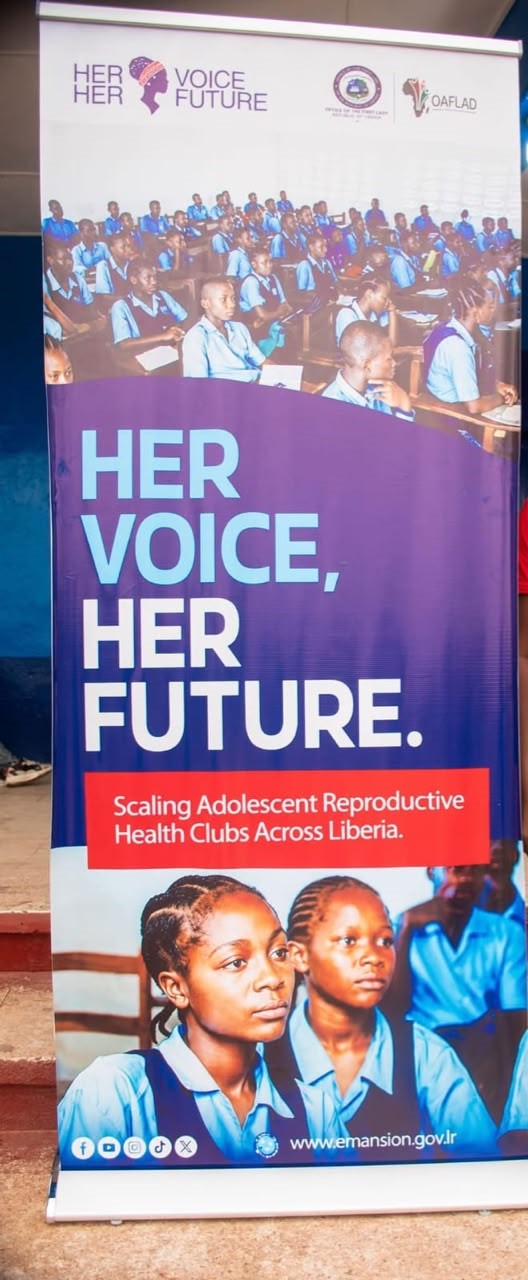
As a means of tackling some of those challenges in schools, Liberia’s First Lady Katumu Yatta Boakai in collaboration with Merck Foundation has launched Her Voice, Her Future for school going girls in separate countries with five counties being the beneficiaries.
According to the lead program officer from the office of First Lady Dr. Adam M. Kyne said, the launch of Her voice, Her Future is mostly focusing on sexual and reproductive health education for girls in schools. The project, funded by the Organization of African First Ladies for Development (OAFLAD), seeks to address various SRH challenges, including teenage pregnancy, personal and period hygiene, and leadership and life skills to enable girls to reach their dreams. It is to cover five counties, beginning with Grand Bassa.
The initiative was launched in Buchanan on August 19,2026 benefiting more than 50 adolescents girls from ten schools across Grand Bassa County.
The First Lady office also launched Her Voice, Her Future in Ganta City, Nimba County on September 18,2026 bringing together nearly 70 participants which include adolescent girls advisory panel, children parliament, youth representatives and alone side guidance counselor from schools across Nimba County.
The program focuses on scaling up health clubs in schools across five counties. The launch of this program has taken place in two counties with Bomi, Margibi and Montserrado counties remaining.