
Under EU-Funded Liberia Media Empowerment Project
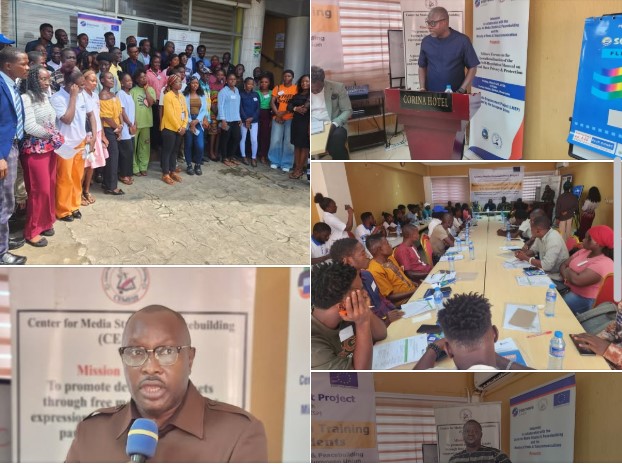
The Center for Media Studies and Peacebuilding (CEMESP) has ended a two-day intensive Investigative Journalism Training for students drawn from various universities and other institutions across Liberia in Monrovia over the weekend.
The training, which was formally opened last Friday by Liberia Information Minister Jerolimek Piah at a local hotel, was held under the Liberia Media Empowerment Project funded by the European Union (EU).And it brought together 40 Mass Communication and Media Studies students from the University of Liberia, AME University, Stazs University, Smythe University, Blue Crest University, J. W. Harris University, Peter Quaqua School of Journalism, and the Jonathan Paye-Layleh School of Journalism.
Several experienced and prominent Liberian media professionals served as facilitators for the just-ended training workshop. They are the President of the Press Union of Liberia (PUL), Julius Kanubah, the Managing Editor of the Liberia Investigator newspaper, Lennart Dodoo, Rita Jlogbe, Journalism Program Officer of internews, and Atty. Alpha Senkpani, Executive Director, Local Voices Liberia.
Their presentations focused on a number of areas in investigative Journalism such as Introduction to Investigative Journalism, Research Techniques and Source Development, Investigative Writing and Storytelling, Story Pitch Development, Ethics, Safety and Legal Considerations, Fact Checking and Verification, as well as Multimedia and Digital Tools for Investigative Journalism among others.
The initiative is aimed at strengthening the next generation of journalists with practical investigative reporting skills and techniques. Information Minister Jerolinmek Piah delivered the keynote address at the official opening ceremony of the workshop, stressing the need for Liberian Journalists to practice professional ethics and be responsible in their reportage.
Minister Piah restated that the government of President Joseph Boakai remains committed to promoting and protecting press freedom and free speech in Liberia.
At the end of the training, CEMESP announced story grants to participating students to enable them pursue in-depth investigative stories.
The students will receive academic credit for their work, while their completed investigative pieces will be published in local dailies with full credits given to the student journalists for their outstanding efforts and contributions to the media sector in Liberia.
Speaking during the close of the training, CEMESP Executive Director, Malcolm W. Joseph was upbeat about the intensiveness of the training workshop and the level of interaction by the students together with the close collaboration and cooperation the project has been receiving from the faculty and administrators of the various Journalism/communication schools.
Mr. Joseph thanked the EU for the funding of the project through CEMESP Internews partner.