
June 8, 2026
A constitution is more than words. It is the soul of a nation, a public declaration of beliefs about justice, dignity, and God. Liberia’s Governance Commission is holding a high-level dialogue to review the 1986 Constitution. Every thoughtful Liberian who cares about our nation’s future should pay attention.
The reasons for this constitutional review are clear. Liberia has endured civil war, economic collapse, and the Ebola crisis. Decades of leadership barely reached beyond the capital. The 1986 Constitution was written for a country unlike today’s Liberia. Land rights, environmental pressures, and the failure of centralized government remain. These demand legal solutions, not just prayer. A sound policy must follow.
But not all change is progress. Some change is simply movement in a new direction without a clear destination.
Liberia’s founding carried a moral and spiritual weight that went far deeper than politics. The national motto, “The Love of Liberty Brought Us Here,” was never just a phrase on a seal. It was a confession of faith. The founders who built this nation saw liberty as rooted in accountability before a sovereign God. Their founding documents pointed to divine providence, not as a ceremonial gesture, but as the moral foundation of the national project.
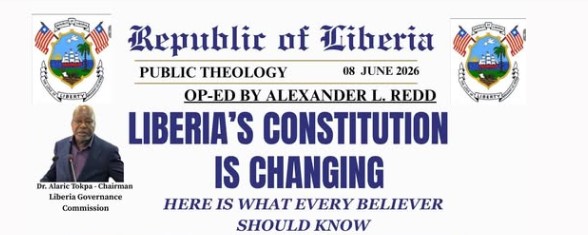
Acting Chairman of the Governance Commission, Dr. Alaric Tokpa, is right: no human document is beyond review. However, Liberians should understand that revising a document in line with those values is not just a legal matter. The consequences of getting it wrong reach far beyond any courtroom.
The proposed language on “climate change” and “social inclusion” merits careful attention. Caring for the earth and protecting vulnerable people are core biblical responsibilities. Creation care is present in the Book of Genesis. Justice for the poor and marginalized is evident throughout the Psalms, the Prophets, and the teachings of Jesus. These are settled convictions for the church.
At the same time, words often carry more weight than they seem. In many international policy frameworks, “social inclusion” serves as legal language for positions that directly conflict with historic Christian teaching on marriage, family, and the nature of the human person. Funding from international organizations often arrives with definitions and requirements written far from Monrovia, in places like Geneva, Brussels, or New York. Liberians should ask plainly and without embarrassment: Who drafts these new clauses? Whose values shape the language? What outside interests might benefit from how this revision turns out?
The reality is that rural Liberia has long been governed from a distance. The local church in the interior counties has served as a counselor, classroom, and moral compass through seasons of government absence. During war, the church stayed; when schools closed, its doors opened; when communities faltered, pastors and elders held them together. Any constitutional revision that fails to protect those communities, or that replaces their voice with that of internationally funded experts who have never lived there, has already broken faith with the people it claims to serve.
Constitutional reviews are almost always shaped by those who are most organized, most connected, and most generously funded. Ordinary Liberians, especially people of faith in rural areas, deserve more than a formal invitation in a government press release. They deserve leaders who will carry their convictions into that room for dialogue and stand firm when outside pressure, wrapped in the language of progress and modernization, arrives.
Revision is not betrayal. A living nation has every right to update its laws as the world changes. But those doing the revising must never forget what they are protecting and why it was ever worth protecting.
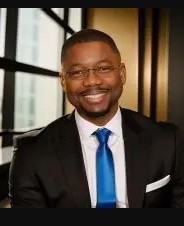
Alexander L. Redd is a theologian, counseling psychologist, publisher, and author whose work lies at the intersection of faith, culture, and public life. His book, “A Nation’s Soul:
Why Liberia’s Future Depends on Restoring Its Moral Center,” is among several titles he has written on Liberia’s history, identity, and spiritual heritage. All of his books are available at www.MarlexPublishing.com He is the founder and pastor of Gracious Hope Bible Fellowship www.GraciousHopeFellowship.com
.