
Passes $53M Supplementary Budget To Increase 2026 National Budget To US$1.3 Billion
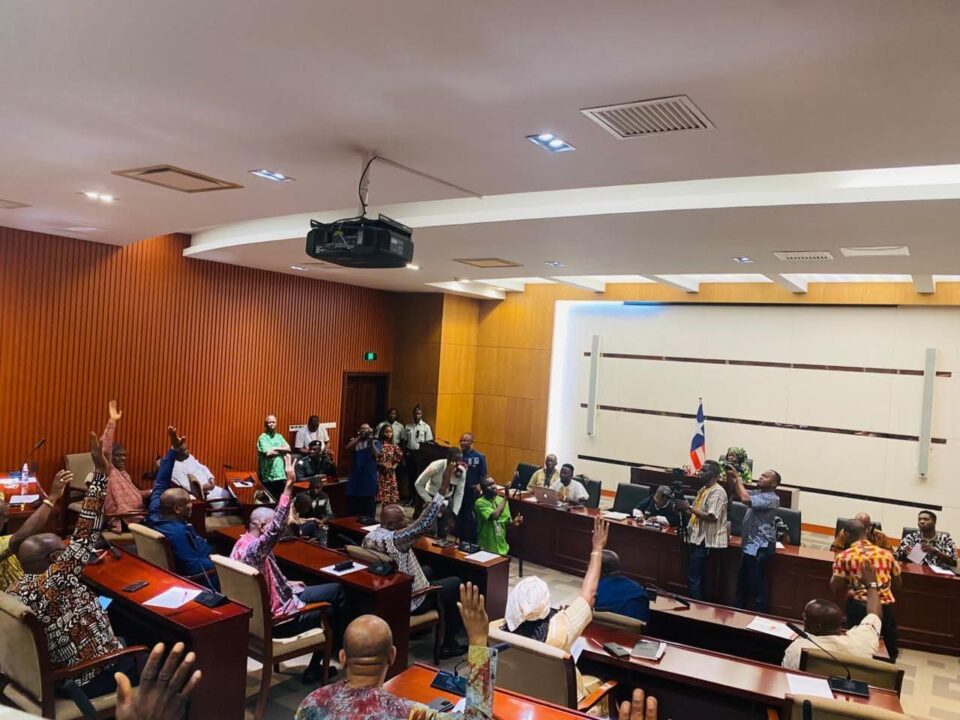
PHOTO: Representatives in special plenary session at the Capitol Building on Thursaday
By K. Ericson Sayee, Contributing Writer
CAPITOL HILL –The Liberian House of Representatives has approved the Executive’s recast supplementary budget of US$53 million, increasing the national budget from US$1.249 billion to US$1.302 billion.
Instead of the proposed US$45million supplementary budget sent to the Lawmakers for consideration by President Joseph Boakai during their ten-day special session, the House on Thursday, April 23, 2026 stepped up the supplementary budget to US$53 million.
The ten-day special session of the Legislature should have ended yesterday, Thursday, but it is not clear whether it is being extended, as the Senate will have to concur on the House’ passage of the supplementary budget before it is sent to the President for signature and become law.
Following an extensive review, the Joint Committees on Ways, Means, and Finance, along with Public Account, alerted the plenary that the proposal reflects a balanced fiscal adjustment within the existing resource envelope, with emphasis on sustaining stability and supporting priority interventions across sectors important to national development.
Breaking down the US$53 million increase, the report indicates that US$40 million comes from World Bank support captured in FY2025, with an additional US$8 million provided as a performance bonus tied to revenue gains, while the remaining US$5 million is drawn from domestic revenue surplus.
On the final day of the House of Representatives’ ten-day sitting on Thursday, April 23, 2026, which was convened on April 9 at the request of Pres. Joseph Nyuma Boakai Sr., the Committees emphasized that the supplementary appropriation is necessary to keep government operations running smoothly, close payroll and operational shortfalls in frontline sectors, and reinforce national security as well as institutional stability.
In terms of allocation, Public Administration takes the largest share at US$14.55 million, aimed at sustaining core government functions, fiscal operations, foreign affairs, and clearing outstanding obligations.
Other priority areas include Health, which is allotted US$8.52 million, Security and Rule of Law US$8.43 million, Education US$7.25 million, Social Development US$1.75 million, and Local Government US$1.30 million, along with support for transportation needs in public tertiary institutions, among other areas.
“We therefore respectfully urge plenary to consider and approve the recast supplementary budget to ensure uninterrupted service delivery and support sustained economic management”, the Ways, Means, and Finance and Public Account of the House of Representatives called on members of the House to act.
Following the reading of the essential report, Rep. Foday Fahnbullah of Bong County District #7 proceeded with the motion calling on plenary to endorse the report so as to pass the supplementary budget and forward it to the Senate for concurrence.
“Having listened to the well-read report from the Committee on Ways, Means, and Finance, I move if I can obtain a second that the said report be received, adopted, and sent to the Senate for concurrence; thereafter be sent to the President for it to pass into law”, Rep. Fahnbullah asserted in his motion.
After being seconded, the Plenary of the House of Representatives unanimously passed the recast supplementary budget, with 40 lawmakers voting for, zero against, and zero abstain, paving the way for the budget to be sent to the Liberian Senate for concurrence.
Meanwhile, after the passage of the additional budget, Rep. P. Mike Jurry, Chairman on Ways, Means, and Finance, told legislative reporters that during hearings tough questions were asked, as it was part of the vigorous exercise before coming to the passage of the supplementary budget.
He added that the said budget is as a result of over-performance in the revenue space, along with support from the World Bank. The chairman said the budget targeted pressing national needs, including security, health, and education.
According to him, the outlined sectors are significant to the people as it directly affect their lives and activities.