
CAB says the draft needs surgery before passage.
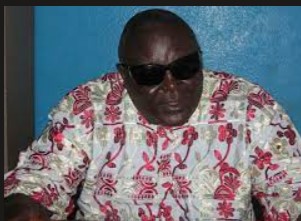
PHOTO: Beyan Kota, President of CAB
MONROVIA — The Christian Association of the Blind (CAB) has welcomed the draft bill now under validation, but warns that the 65-page Draft National Disability Rights, Inclusion and Support Act of 2026 would leave persons with disabilities with less protection than they have had for the past twenty years, said Elijah Manyon, Program Coordinator of CAB Liberia.
CAB says it fully supports President Joseph Nyuma Boakai’s agenda for persons with disabilities. Its findings come from a section-by-section reading of all 65 pages and 168 sections of the draft, and are offered as a contribution to strengthen the bill before it reaches the Legislature.
What the 2005 law gave
In 2005, Liberia passed the Act that created the National Commission on Disabilities. That law said the Commission’s officials must be “qualified disabled persons and/or specialists in the field of disabilities.” It also required that at least four percent of employees in covered institutions be persons with disabilities, and it set aside three seats in the National Legislature for persons with disabilities.
For twenty years, those were the floor. No one could take them away without changing the law.
What the new draft takes away
The new draft removes the 2005 safeguard. The explicit rule that the Commission be led by qualified disabled persons or disability specialists appears nowhere in the 65 pages. The draft gives no number, no percentage, and no guarantee of how many persons with disabilities will sit in the leadership of the institutions built for them.
The four percent employment rule is gone. The three legislative seats are gone. From four percent to zero — without a single line of explanation.
New problems the draft creates
- The draft names a “Minister responsible for disability affairs” as the lead coordinating authority, but never says which ministry that is.
- A new Oversight Body is given power to issue binding decisions enforceable as court orders — yet the draft never says who appoints its members.
Christian Association of the Blind (CAB), Liberia — program@cabrise.org
- The NCD itself is barred from enforcement or adjudicative powers, while the Oversight Body meant to take over central enforcement may take up to six months to become operational. Courts and sectoral regulators keep their enforcement roles, but for half a year no central authority would be clearly in charge of enforcing the law.
- No transition provisions protect current NCD staff or assets. (Existing programs continue under the draft’s transition clause.)
- Criminal penalties for violations are left to future regulations to define, and appeal rights name neither a court nor a deadline.
CAB also questions the process: the document is being circulated and validated as a “Draft Act” before it has ever been introduced in the Legislature.
The organization notes that on 6 May 2026 the United Nations Committee on the Rights of Persons with Disabilities published its concluding observations on Liberia’s initial report (CRPD/C/LBR/CO/1), calling for stronger protections — a standard the draft, in CAB’s assessment, does not yet meet.
“We are calling on the government, the Legislature, and all stakeholders to close the gaps before passage,” said Manyon. “A strengthened bill — one that keeps the protections of 2005 and fixes the new flaws — would stand as a landmark achievement of the Boakai administration’s inclusion agenda.”
“CAB will continue to engage the process in good faith, and we have invited further dialogue with the drafters,” the release concludes.
About CAB: The Christian Association of the Blind (CAB) is a Liberian institution of blind persons working for the rights, inclusion, and empowerment of persons with disabilities in Liberia.
For interview: Elijah Manyon, Program Coordinator, CAB Liberia — program@cabrise.org