
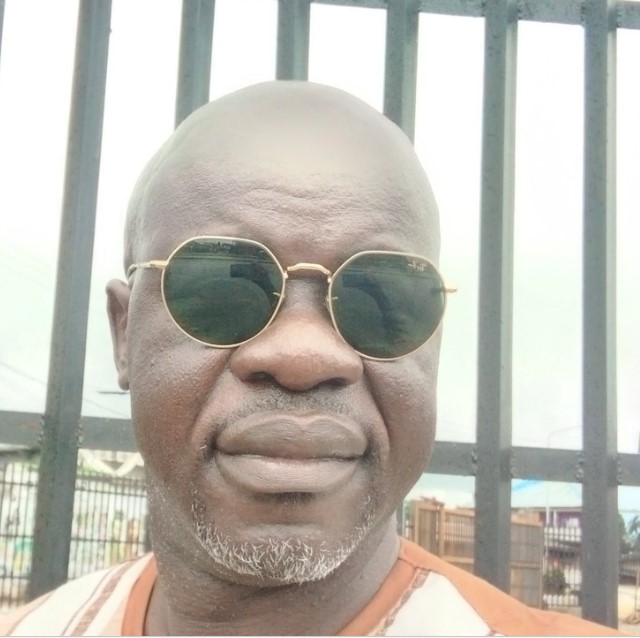
PHOTO: The Author
Written by: Patrick M. Yattoh, Jr.
The testimony of Col. Wilfred Clark raises questions about the April 12, 1980 coup in Liberia that deserve much more serious historical scrutiny.
Col. Clark was a former Director of the Special Security Service (SSS) under President William R. Tolbert Jr. and later served as Police Director under President Samuel K. Doe. One important clarification, however, is necessary: Clark was not the SSS Director when the coup occurred. Col. Edward Massaquoi held that position at the time.
That distinction matters. But it does not make Clark’s account irrelevant. On the contrary, his previous position within the Tolbert security establishment, his subsequent role under Doe, and his own description of what happened on the night of April 12 make his testimony potentially significant.
What is particularly striking is what Clark appears to suggest about the level of prior knowledge within Liberia’s national-security establishment.
According to his account, American officials had briefed him and other senior national-security officials before the events unfolded. He then made the extraordinary statement:
“We did a lot of things that night.”
That sentence demands context.
What did he mean by “we”?
Who exactly was included in that “we”?
What were the “things” they did?
Were these routine security measures, emergency responses to intelligence, attempts to protect the government, or something else?
And, perhaps most importantly, what information had American officials provided to Liberian security officials before the coup?
These questions cannot be answered simply by assuming that Clark was acknowledging participation in a conspiracy. His statement, standing alone, does not establish that. But neither should it be dismissed without further examination.
Then comes another revealing part of his account.
When asked about his whereabouts that night, Clark reportedly said:
“I was on the ground.”
When pressed further, he indicated that he was “around the booth.”
Those statements are tantalizingly vague.
What did “on the ground” mean in the context of the coup? Where exactly was he? What was the “booth” he referred to? Was this a security post, communications point, military location, or another site? Who else was present? What was he observing? With whom was he communicating?
And why does he appear reluctant to provide greater detail?
There is another potentially important thread: Clark’s reported communication with other senior security officials, including NBI Director Patrick Manikon.
If senior security officials were communicating with one another as the coup unfolded, reconstructing those communications could be essential to understanding what the government knew and when it knew it.
This leads to a much larger historical question:
Was the fall of the Tolbert government simply a surprise military uprising that caught the country’s security leadership completely off guard—or did elements within the security establishment have advance information that has never been fully explained?
The available testimony does not, by itself, provide a definitive answer.
But it does raise questions that historians should pursue.
If American officials had indeed briefed senior Liberian national-security officials before April 12, what exactly was communicated? Was the information about a possible coup, a general warning of instability, or something more specific?
If senior Liberian officials knew something was coming, what actions did they take?
If they did not know, why were they unable to respond effectively once the coup began?
If Clark was “on the ground,” what did he personally witness?
If he was “around the booth,” which booth, and what was happening there?
If he was communicating with other senior security officials, what was being discussed?
And if he now says, “We did a lot of things that night,” then the obvious historical question is: what were those things?
These questions become even more consequential when considered alongside the death of President Tolbert and the subsequent execution of members of his government.
There have long been competing interpretations of the events of April 12, 1980. The historical record establishes the broad sequence: Tolbert was overthrown and killed during the coup, and a group of enlisted soldiers subsequently seized power under Samuel Doe. But the precise extent of advance knowledge, internal security failures, communications among officials, and possible outside intelligence surrounding the coup remain subjects requiring careful documentation.
It is therefore important not to leap from suggestive testimony to a definitive conclusion.
Suspicion is not proof. A cryptic statement is not a confession. And an individual’s recollection decades later must be tested against contemporaneous records.
But the reverse is also true: unanswered questions should not simply disappear because they are uncomfortable.
Clark’s testimony provides a reason to ask those questions again.
The next step should be evidence.
Researchers should look for American diplomatic and intelligence records from the period; Liberian government and military communications; SSS, police, and NBI records; accounts from surviving officials and military personnel; eyewitness testimony concerning the night of April 12; and contemporaneous reports documenting communications among senior security officials.
Most importantly, individuals who were present should be asked precise questions—not broad political questions, but questions capable of being independently corroborated:
Who knew what? When did they know it? Who communicated the information? What orders were issued? Who received those orders? Where were the senior security officials located? What happened at the various security and communications posts that night? And what did they do once it became clear that the government was under attack?
Those are the questions that could move the discussion beyond speculation.
Col. Wilfred Clark may not have provided all the answers. In fact, his remarks appear to raise even more questions.
But perhaps that is precisely why his testimony deserves closer examination.
“We did a lot of things that night.”
That statement should not be treated as proof of a hidden conspiracy.
Neither should it be ignored.
It is an invitation to investigate what those words actually meant—and to determine, through evidence rather than assumption, what happened behind the scenes during one of the most consequential nights in Liberia’s history.