Monrovia, Liberia; October 1, 2026,: Effective democratic oversight depends not only on the work of elected representatives, but also on citizens and civil society organizations equipped with the skills and tools to monitor legislative performance, generate credible evidence, and promote accountability.
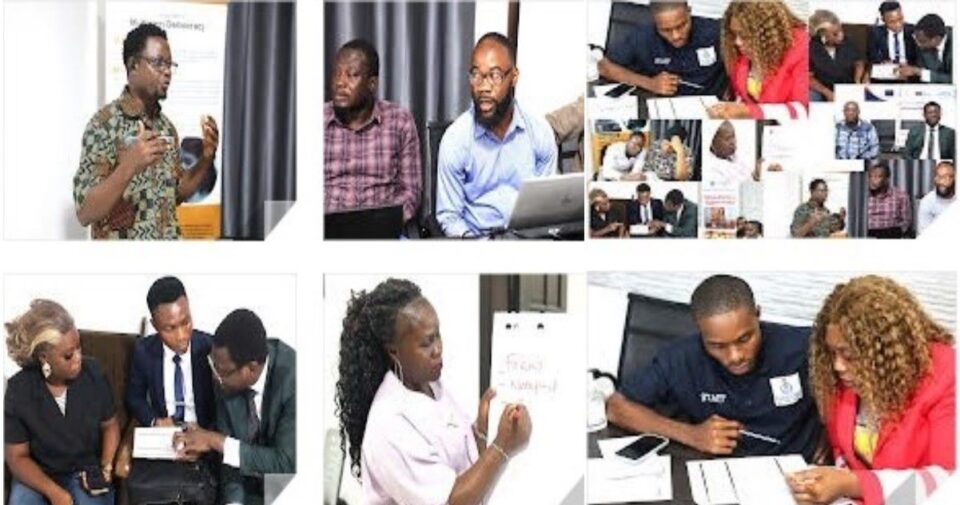
With Liberia’s Legislature preparing to resume its work, members of the Legislative Monitoring Coalition of Liberia (LEMCOL) gathered in Monrovia on Tuesday, 29 September for a one-day training to strengthen their monitoring methodologies, improve data quality, and enhance the use of digital tools that support evidence-based legislative oversight.
It brought together legislative monitors representing the coalition’s three thematic clusters responsible for tracking participation, inclusion, transparency and accountability in the Legislature.
The training was implemented by the Netherlands Institute for Multiparty Democracy (NIMD) under the Liberia Electoral Support Project, which is supported by the European Union, Irish Aid and Sweden.
The Project is managed by UNDP and implemented in partnership with UN Women and NIMD to strengthen democratic governance, inclusive political participation and accountable institutions in Liberia.
The workshop built on the coalition’s growing body of work, which has already produced three quarterly legislative monitoring reports that have attracted strong interest from national stakeholders and development partners.
Opening the training, Darren Domah, Programme Manager at NIMD, commended the coalition’s leadership and monitors for their commitment to producing credible legislative oversight reports that continue to inform governance discussions in Liberia.
“Our partners have expressed strong interest in the quarterly reports that you have been generating,” Domah told participants. “Your dedication and hard work have been instrumental in producing evidence that supports legislative oversight.”
He emphasized that while the coalition has made significant progress, continuous learning remains essential.
“As we prepare to resume legislative monitoring, this is an opportunity to review our strategies, examine the data we are collecting, identify what is working well and strengthen areas where improvements are needed,” he said.
The refresher training reviewed LEMCOL’s monitoring framework, legislative performance indicators, standardized checklists and digital data collection platform while providing hands-on exercises in data entry, quality assurance, visualization and troubleshooting.
The Legislative Monitoring Coalition of Liberia comprises 16 civil society and media organizations working collectively to monitor legislative governance and performance.
Through standardized scorecards and routine data collection, the coalition assesses how the Legislature performs across four key democratic principles—participation, inclusion, transparency and accountability.
Presenting the coalition’s monitoring framework, J. Sylvester Saye, Programme Manager at the Institute for Democratic Action and Development (IDAD), explained that the initiative seeks to promote openness within the Legislature while strengthening citizens’ ability to hold elected representatives accountable.
“The Legislature exercises oversight over the Executive and other public institutions,” Saye noted. “But an important question is: who monitors the Legislature?
Through LEMCOL, civil society is helping answer that question by generating evidence that informs the Liberian people about how their representatives are performing.”
He explained that the coalition tracks legislative attendance, participation in plenary proceedings, oversight activities and broader institutional performance rather than focusing on individual lawmakers.
The data also examines how legislative processes promote inclusion, particularly for women, young people and persons with disabilities, while strengthening citizens’ understanding of governance decisions that affect their daily lives.
Recognizing the growing importance of digital transformation in democratic governance, Evrard Kouadio, Senior ICT and Digital Transformation Advisor with the UNDP Liberia Electoral Support Project, reaffirmed UNDP’s commitment to strengthening institutions through technology and data.
“The Liberia Electoral Support Project has been supporting Liberia’s electoral institutions in digital transformation and institutional strengthening,” Kouadio said.
“Being part of this initiative demonstrates UNDP’s commitment to supporting Liberia’s democratic process. Strengthening legislative monitoring through better data systems will ultimately contribute to stronger democratic institutions.”
Throughout the day, participants worked through practical exercises on Google Forms, Google Sheets, account management, data validation, visualization techniques and quality assurance, ensuring that future monitoring reports continue to meet high standards of accuracy and credibility.
Speaking on behalf of the coalition, Malcolm Joseph, Executive Director of the Center for Media Studies and Peacebuilding, described the workshop as an opportunity for collective reflection and continuous improvement.
“The monitoring exercise has been very successful, but improving what we do is equally important,” he said. “The experiences our monitors have gained inside the Legislature are invaluable. Bringing those lessons together will strengthen our monitoring processes as we move forward.”
The Legislative Monitoring Coalition’s work has become an increasingly important mechanism for promoting transparency, accountability and citizen participation in Liberia’s democratic governance.
By generating credible, evidence-based analysis of legislative performance, the coalition provides lawmakers, citizens and development partners with objective information that supports institutional reform and informed public dialogue.
The refresher training reflects the Liberia Electoral Support Project’s broader commitment to strengthening democratic governance by enhancing collaboration between civil society and legislative institutions while building local capacity for advancing accountability and sustainable oversight.