By Amara Konneh
In Monrovia’s West Point community, where poverty, unemployment and overcrowding place daily pressure on families, women are learning trades and pooling savings to improve their livelihoods.
For many residents, financial hardship has interrupted education and limited opportunities to earn a stable income. The West Point Women for Health and Development Organization (WPWHDO) is working to help women and girls overcome these barriers through vocational training, savings groups, health education and advocacy against gender-based violence.
Human rights advocate Nelly Cooper helped establish the organization, which combines economic support with efforts to protect women’s rights and improve their access to services.
Building Skills and Access to Finance
WPWHDO provides practical training in tie-and-dye fabric production, country cloth weaving, soapmaking, tailoring, cosmetology and event decoration, alongside nutrition education.
For participants, the opportunity to learn a trade offers renewed hope of earning an income and supporting their families.
“I am happy for this training opportunity. It has given me hope that I can make a difference in life,” one beneficiary said.
West Point’s population was recorded at 30,847 in the 2022 census conducted by the Liberia Institute of Statistics and Geo-Information Services (LISGIS).
Access to finance remains another obstacle for women seeking to start or expand businesses. Many lack the collateral or reliable income records required to qualify for conventional bank loans.
WPWHDO’s Village Savings and Loan Associations (VSLAs) provide another way to save and borrow. Through these groups, petty traders, fishmongers and other participants pool their savings and access loans to support their businesses.
The approach is intended to help women manage immediate financial needs while planning for longer-term growth.
Linking Livelihoods With Protection
The organization’s work extends beyond income generation to address domestic violence, sexual abuse and other threats to women’s safety.
Through community workshops, safe spaces and legal education, WPWHDO helps survivors understand their rights and seek support. It also engages men and boys in discussions and training on preventing violence and resolving conflict.
The organization provides education on sexual and reproductive health and rights, while supporting vulnerable students to remain in school and reduce their exposure to exploitation.
Its community outreach has also extended to public health emergencies. During the Ebola outbreak, WPWHDO mobilized women to support health awareness and the community response adding that these activities reflect an approach that connects women’s livelihoods with their safety, health and education.
Barriers to Formal Employment
The challenges facing women in West Point reflect wider inequalities in Liberia’s economy. Women play an important role in agriculture, fish trading and small businesses, but access to formal employment remains limited.
According to the Ministry of Labour’s second-quarter 2026 report, 714 establishments surveyed employed a combined 34,789 workers. Women accounted for 6,512 of those employees, or 18.7 percent.
The figures show women’s limited representation among the employees covered by the survey. They describe the establishments surveyed rather than the entire national workforce.
Expanding Support Through LWEP
At the national level, the Liberia Women Empowerment Project (LWEP) is pursuing a broader programme of livelihood assistance and social services.
Lisa T. Diasay, the project’s communications consultant, described LWEP as a five-year Government of Liberia initiative financed by the World Bank and implemented through the Ministry of Gender, Children and Social Protection.
She said its objectives include improving livelihood opportunities and access to social services, addressing harmful gender and social norms, strengthening community structures and building government capacity to advance gender equality.
The project covers six counties: Bomi, Grand Cape Mount, Gbarpolu, Grand Gedeh, River Cess and rural areas of Montserrado.
It targets approximately 498 communities, with 36,000 people expected to receive direct grants and livelihood support through activities involving individual enterprises, farmer-based organizations and savings groups. Overall, the project aims to reach approximately 267,200 people through livelihood support and interventions in social norms, gender-based violence prevention, health and education.
One example of the support’s potential is Ma-Fatu Kolleh, whose business expansion was documented by the World Bank in December 2025. After receiving a US$1,250 LWEP grant,
she expanded her shop and increased her profits, according to the bank.
Her experience illustrates how access to capital, combined with business support, can help women develop enterprises that sustain their households.
The World Bank’s account also emphasizes that financial assistance works alongside measures addressing violence, restrictive social norms and women’s limited influence over household decisions.
Poverty, teenage pregnancy, school dropouts and limited access to finance continue to constrain opportunities. Community organizations and national programmes are seeking to address those pressures through a combination of skills, financial support and protection.
In West Point, the goal remains practical: helping women earn an income, protect their rights and keep their children in school.
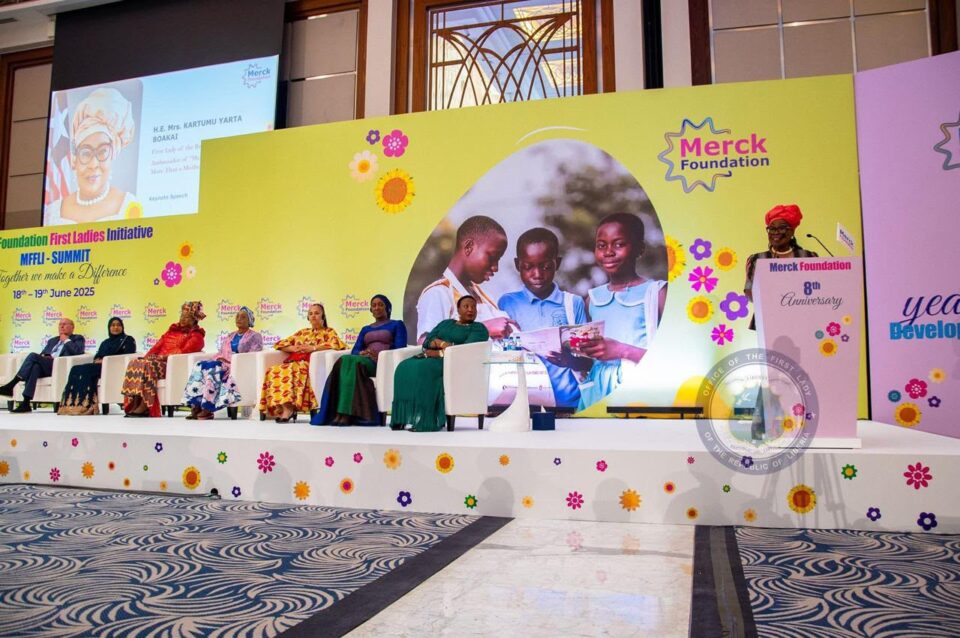
This story is in connection with Merck foundation highlighting women’s issues (such as breaking hardship and improving economic empowerment.
AK