
Residents Say Their Children Had Been Purchasing The Adulterated Sweets For Sometime Now
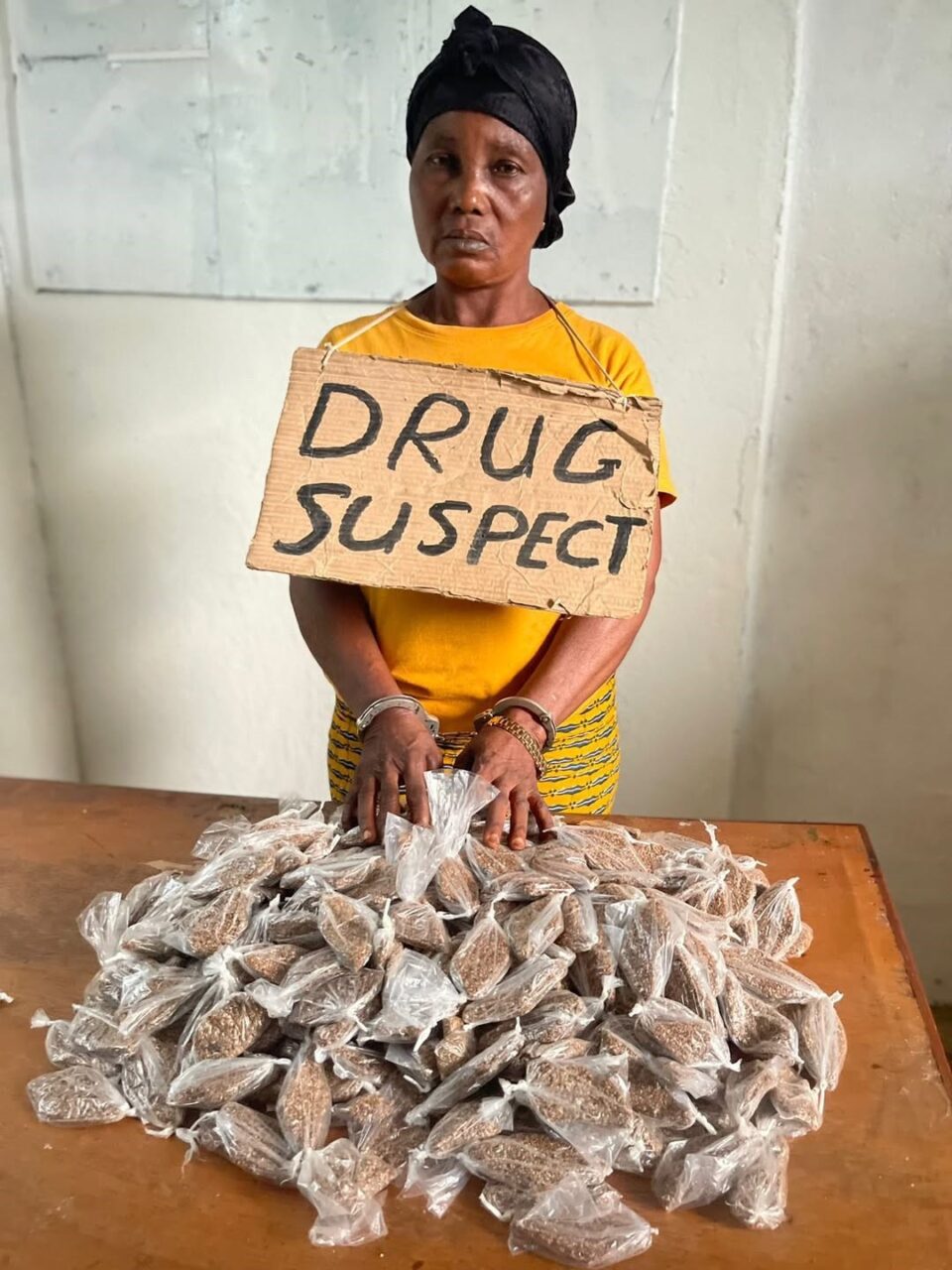
PHOTO: Drug Suspect Nyonblee George at the Liberia Drug Enforcement Agency in Grand Bassa County with the illicit substance on the table before her
By King Brown
GRAND BASSA COUNTY, Liberia –A 58-year-old woman has been arrested in the port city of Buchanan, after the Liberia Drug Enforcement Agency (LDEA) alleged she had been concealing marijuana in confectionery and selling it to children and students.
This is said to be one of the most disturbing cases to emerge from the country’s intensifying anti-narcotics campaign.
Nyonblee George was detained on Thursday evening at her home in the Open Bible Community following tip-offs from residents who told authorities they believed their children had been purchasing the adulterated sweets. LDEA officers from the Grand Bassa County Detachment said they recovered 355 pieces of bennesin candy, which preliminary testing indicated were laced with cannabis.
According to investigators, George told them she had been selling marijuana-mixed milk candy, bennesin candy, and egg nuts as a livelihood strategy, and that her primary customers were children and students from nearby schools. The seized substances were valued at approximately $187 US dollars, or roughly 35,500 Liberian dollars.
In a detail that drew particular attention, investigators said George’s 10-year-old grandson, Joseph Ballah, was detained during the operation after allegedly helping to sell the products. The child subsequently directed officers to his grandmother’s shop, which led to her formal arrest. The boy’s legal status was not immediately confirmed.
Grand Bassa LDEA Commander Sandouno Faya said the suspect was being prepared for possible court proceedings. He urged residents to continue providing information on illicit drug activity, describing public cooperation as essential to protecting the county’s youth.
A Pattern Across Liberia
Grand Bassa case is not isolated. In November 2025, LDEA officers in the same county arrested a 61-year-old taxi driver, Michael Wallace, after uncovering more than $55,000 worth of cocaine and marijuana concealed in his vehicle at the Owens Grove checkpoint in District one, following an intelligence-led operation.
Further north, officers in Nimba County arrested a 31-year-old Guinean national at the Ganta Checkpoint in March 2026 for alleged possession of compressed marijuana plates, with investigators noting the case underscored Nimba’s vulnerability as a smuggling corridor, where the Guinea border’s rugged terrain and informal trade routes facilitate cross-border drug flows.
In February 2026, LDEA officers at the Bo Waterside border crossing in Grand Cape Mount County seized 519 packs and 19 strips of Tramadol and Tapentadol, drugs frequently abused on the street, along with $150,000 in cash, leading to the arrest of five suspects including two Guinean nationals and two Liberians, all of whom were formally charged and remanded to the Monrovia Central Prison.
The breadth of the enforcement effort was made plain in March 2026, when LDEA Deputy Director General for Administration Ernest T. Tarpeh disclosed that in the preceding five months alone, the agency had detained more than 600 persons on drug-related charges and confiscated substances valued at over four million US dollars, with total drug seizures in agency custody surpassing 652 million Liberian dollars.
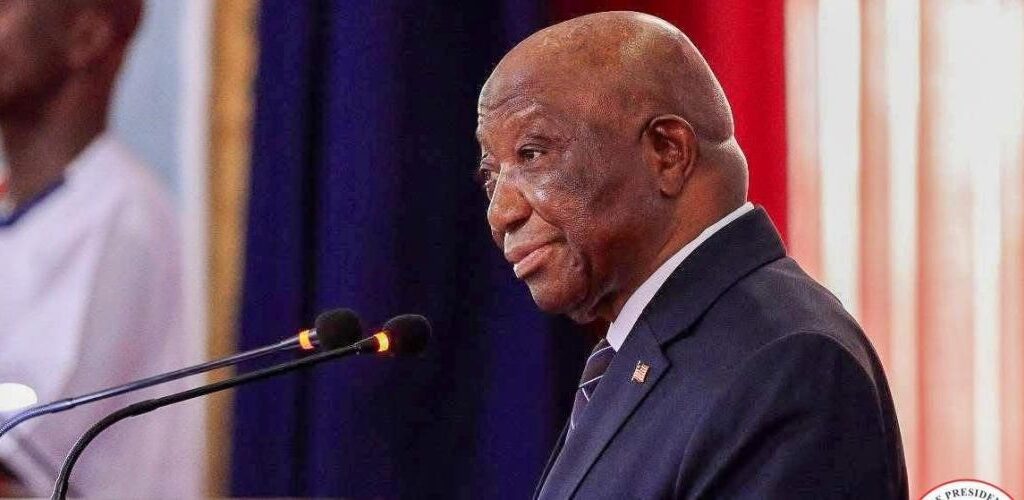
Liberia President Joseph Nyuma Boakai stands on the fight against illicit Drugs
Boakai’s national crackdown
The arrests reflect an increasingly aggressive posture by the government of President Joseph Nyuma Boakai. In August 2025, following receipt of a progress report from the Multisectoral Steering Committee on Drugs and Substance Abuse, President Boakai announced a multi-pronged National Anti-Drug Action Plan, describing the proliferation of drugs as “an attack on our future.”
The President declared the fight would be “non-selective and relentless,” warning that “no status, no title, no uniform, and no connection will protect anyone involved in drugs,” and directed financial authorities to prioritise funding for an anti-drug curriculum in schools, expanded LDEA capacity, border and port security technologies, and legal and judicial reinforcements.
The enforcement drive has not been without institutional turbulence. By August 2025, President Boakai dismissed the leadership of the LDEA in what observers described as the most decisive action yet in his war on narcotics. The dismissal came amid public pressure for greater accountability within the agency itself.
The announcement followed a mass civic demonstration in Monrovia, where hundreds of residents gathered in front of the Capitol Building to alert authorities to what they described as an alarming drug situation threatening their safety, after which communities in parts of Monrovia moved to demolish ghettos and drive out suspected drug dealers, actions the government backed while urging coordination with national security forces.
A Regional Emergency
The situation in Liberia sits within a broader and worsening West African drug crisis. The synthetic drug kush, a mixture containing potent opioids from the nitazenes group and synthetic cannabinoids, originated in Sierra Leone and has spread rapidly across the region, including into Liberia, The Gambia, Guinea, Guinea-Bissau, and Senegal, prompting declarations of national emergencies by the presidents of both Sierra Leone and Liberia.
A March 2026 report by the Global Initiative Against Transnational Organized Crime described the proliferation of synthetic drugs as a complex threat to public health and regional security, concluding that traditional plant-based drugs controlled by established criminal networks are giving way to a fragmented and decentralised market of synthetic psychoactive compounds.
According to the Global Organized Crime Index 2025, cocaine trafficking was the fastest-growing criminal market in West Africa between 2019 and 2025, with at least one third of Europe’s cocaine estimated to be transiting the region. Liberia’s extensive and largely unmonitored coastline and land borders have made it a point of vulnerability. The LDEA has acknowledged that approximately 106 border points across the country have no security personnel.
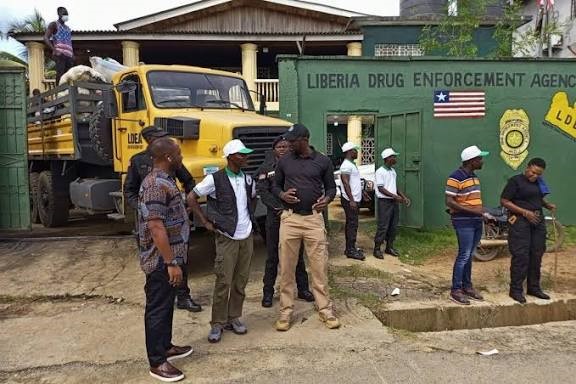
Liberia Drugs Enforcement Agency report last year on illicit Drug related activities
The LDEA’s 2025 annual report recorded seizures including 77,644 units of kush valued at nearly $747,000, and 189 units of Tramadol valued at over $37 million, figures that officials say illustrate both the scale of enforcement operations and the vast financial scope of the illicit drug market within Liberia.
Nyonblee George is expected to appear before the court in Grand Bassa County. No date for the hearing had been set at the time of publication.