
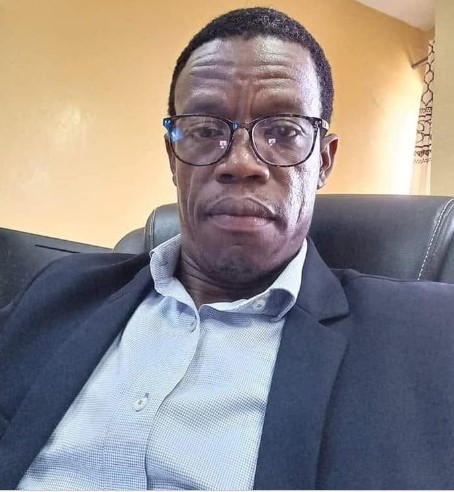
By Nicholas D. Nimley
An Opinion Inspired by the Address of Finance and Development Planning Minister Hon. Augustine Kpehe Ngafuan at the Liberian Diaspora Conference, Washington, D.C., September 26, 2026
There comes a time in the life of every nation when its people must decide whether they will continue to define themselves by the wounds of yesterday or summon the courage to build the possibilities of tomorrow.
For Liberia, that moment is now.
The question before Liberians at home and in the diaspora is no longer simply whether Liberia has problems. We all know that it does. The more important question is whether Liberia is capable of overcoming those problems, and the answer must be yes.
That is the deeper meaning of the call to “Bet on Liberia.” It is not merely a message to foreign investors looking for profitable opportunities. It is a challenge to Liberians themselves: believe in Liberia, think about Liberia, invest in Liberia, work for Liberia and dream better for Liberia.
Minister Augustine Kpehe Ngafuan’s address at the Liberian Diaspora Conference in Washington, D.C., makes an important argument: Liberia’s investment case cannot be understood by looking only at where the country has been. We must also look at where it is going.
We Cannot Drive Forward While Staring in the Rear-View Mirror
For many Liberians, the past remains painfully present.
The images of the civil war, the destruction, displacement, economic collapse, broken institutions and loss of lives are deeply embedded in our national consciousness. Anyone who looks exclusively through that rear-view mirror could understandably conclude that Liberia is too risky, too fragile or too difficult to build.
But no driver safely moves forward by staring continuously into the rear-view mirror.
Liberia must look through the windshield.
And what does that windshield reveal?
It reveals a country that has sustained peace for more than two decades, conducted competitive elections, transferred presidential power peacefully and rebuilt democratic institutions. It reveals a Liberia that today participates in global conversations on peace and security rather than being known primarily as a victim of conflict, and this transformation should not be taken for granted.
Peace is not merely the absence of war. It is an economic asset. Political stability is an investment asset. Democratic continuity is an investment asset. Institutional credibility is an investment asset.
These are foundations upon which a better Liberia can be built.
Betting on Liberia Begins with Liberians
It is easy to ask why foreign investors should believe in Liberia.
But perhaps the more fundamental question is:
Why should Liberians believe in Liberia?
Before we ask outsiders to bring their capital, expertise and technology, we must demonstrate that we are prepared to invest our own confidence in our country.
Liberia cannot be developed exclusively by foreigners.
Development must ultimately become a national project.
That means the Liberians in Monrovia, Gbarnga, Ganta, Buchanan, Zwedru, Voinjama or Harper have a stake in the country’s future. It means the Liberian professional in Washington, Atlanta, New York, London or Accra also has a stake.
The diaspora, in particular, should not be viewed simply as a source of remittances. It is a reservoir of capital, expertise, technology, networks and international experience. Minister Ngafuan rightly challenges the diaspora to move beyond supporting household consumption toward investment in productive enterprises and partnerships, because this is where patriotism and economics must meet.
Patriotism does not mean investing blindly. It means being sufficiently confident in Liberia to examine its opportunities seriously, demand accountability, insist on sound numbers and still conclude that the country is worth investing in.
The Billion-Dollar Question
Liberia recently crossed a historic threshold: domestic revenue collections exceeded US$1 billion in a single year.
That is significant.
But the real significance of the milestone is not that Liberia has suddenly become wealthy. It has not.
The significance is that Liberia is demonstrating an increasing capacity to mobilize resources internally.
Domestic revenue reportedly increased from approximately US$612 million in 2023 to US$699 million in 2024, then to about US$848 million in 2025, before exceeding the billion-dollar mark by mid-September 2026.
That achievement belongs to Liberians.
Every taxpayer, every business, every consumer and every citizen participating in the formal economy contributes to that national capacity.
But we must also understand what the billion-dollar milestone does not mean.
It does not mean every road has been paved. It does not mean every school has been renovated. It does not mean every hospital has everything it needs. It does not mean Liberia suddenly has unlimited cash.
Government revenue must finance salaries, healthcare, education, security, infrastructure, debt obligations, county development and numerous other national responsibilities.
The billion-dollar milestone is therefore not a finish line, it is evidence of capacity, and a summons to greater responsibility, and that distinction matters.
A Liberia That Produces, Not Merely Consumes
The strongest investment case for Liberia is not simply that the country possesses iron ore, gold, rubber, forests, agricultural land and an Atlantic coastline.
Natural resources alone do not make a country prosperous, as the real question remains is what we do with them.
For decades, Liberia has struggled with the paradox of exporting raw potential while importing finished prosperity, and that must change.
We need to process more of what we produce. We need agriculture that feeds Liberians while creating commercial opportunities. We need manufacturing. We need agro-processing. We need logistics. We need energy. We need digital infrastructure. We need tourism and a stronger blue economy.
The government’s ARREST Agenda for Inclusive Development provides a framework around Agriculture, Roads, Rule of Law, Education, Sanitation and Health, and Tourism. The objective, as presented in the minister’s address, is not merely to produce impressive economic statistics but to create jobs, improve infrastructure and ensure that growth reaches all fifteen counties.
This is important because development must eventually be felt beyond government reports.
A farmer must feel it.
A student must feel it.
A nurse must feel it.
A market woman must feel it.
A small-business owner must feel it.
A young person searching for employment must feel it.
That is when economic growth becomes meaningful.
Infrastructure Is More Than Concrete and Steel
Liberia’s development challenge has often been reduced to roads.
Roads matter enormously, but modern development requires more than roads.
It requires electricity.
It requires digital connectivity.
It requires efficient payment systems.
It requires predictable regulations.
It requires access to finance.
It requires institutions that work.
The expansion of electricity access, road construction, bridges, schools, hospitals and industrial platforms described in the minister’s address represents an attempt to connect Liberia’s economic potential with its people.
The same is true of Liberia’s emerging electronic payment infrastructure.
When mobile-money platforms and banks become interoperable, the benefit is not simply technological. It can mean faster transactions, greater transparency, improved tax collection and reduced opportunities for financial leakages. It can help transform Liberia from a predominantly cash-based economy into a more connected economy, because that is not merely an IT project, rather, it is economic infrastructure.
We Must Put Politics in Its Proper Place
There is another obstacle to betting on Liberia, and it is not always found in government policy.
Sometimes, it is found in ourselves.
Liberians have become deeply accustomed to viewing national issues through partisan lenses.
When one government succeeds, its opponents sometimes refuse to acknowledge it. When one government makes a mistake, its supporters sometimes refuse to admit it.
That culture must change.
Liberia is bigger than the CDC. Liberia is bigger than the UP. Liberia is bigger than every political party, politician and election cycle.
A road built today does not ask which party a citizen supports.
A hospital does not treat patients according to their political affiliation.
Electricity does not illuminate only the homes of supporters of one political party.
A functioning economy does not discriminate between government supporters and opposition supporters.
Therefore, Liberians must learn to separate political competition from national development.
We can disagree politically and still agree that Liberia must develop.
We can criticize the government and still support good policies.
We can demand accountability and still celebrate progress.
We can oppose a political party without opposing Liberia.
That is the maturity our democracy now requires.
Investment Requires Honesty, Not Propaganda
Betting on Liberia does not mean pretending that Liberia has arrived.
The minister’s address acknowledges serious challenges: high electricity costs, infrastructure deficits, limited access to finance, bureaucratic delays and the need for greater regulatory predictability.
The investment case becomes stronger not weaker when a country acknowledges its weaknesses and demonstrates a credible capacity to address them.
Liberia should not market itself as a perfect country.
Liberia should market itself as a country with enormous potential, improving institutions and significant room for growth.
That is a much more credible proposition.
The investor does not need a perfect country.
The investor needs a country where problems can be identified, risks can be managed, rules can be understood and opportunities can be captured.
The Diaspora: From Remittances to Investment
There is perhaps no group better positioned to help rewrite Liberia’s economic story than Liberians abroad.
For years, the diaspora has supported families, paid school fees, financed healthcare, built houses and responded during national crises, that contribution is enormous.
But Liberia now needs another level of diaspora engagement.
It needs diaspora capital for production.
Imagine Liberian professionals using their knowledge and networks to connect Liberian businesses to international markets.
Imagine diaspora investors partnering with local entrepreneurs in agriculture, healthcare, logistics, housing, tourism, energy, education and technology.
Imagine Liberian professionals returning periodically to transfer skills and knowledge.
Imagine Liberian-owned businesses becoming suppliers to major investment projects.
That is how the diaspora can help transform remittances into economic multipliers.
The Greatest Investment Liberia Needs Is Belief
Ultimately, the most important investment case for Liberia is not contained in a balance sheet, it is psychological.
It is the decision to believe that Liberia can become better than it is today.
For too long, many Liberians have become experts at explaining why Liberia cannot work.
We know the problems.
We know the corruption stories.
We know the political divisions.
We know the infrastructure deficits.
We know the disappointments.
But a nation cannot build a prosperous future by endlessly rehearsing the reasons for its failures.
At some point, somebody must say:
Enough. We have seen what went wrong. Now let us build what can go right.
That does not mean forgetting the past.
It means refusing to become prisoners of the past.
Let Us Dream Better for Liberia
To bet on Liberia is not to deny reality.
It is to recognize possibility.
It means believing that the peace secured over more than two decades is worth protecting.
It means believing that democratic institutions can become stronger.
It means believing that our roads can connect our people and markets.
It means believing that our electricity network can expand.
It means believing that our young people can become entrepreneurs, engineers, journalists, doctors, farmers, teachers, scientists and innovators.
It means believing that our natural resources can produce value beyond extraction.
It means believing that government, business, civil society and citizens can work together.
And perhaps most importantly, it means believing that Liberia belongs to all of us.
The responsibility for Liberia cannot be outsourced.
Not to Washington.
Not to Brussels.
Not to Beijing.
Not to the World Bank.
Not to the IMF.
Not to the African Development Bank.
Not to foreign investors.
Our international partners can support Liberia, but they cannot substitute for Liberian ownership. As Minister Ngafuan emphasized, the strongest partnerships occur when a country mobilizes its own resources, strengthens its own systems and invites international partners to reinforce not replace national effort.
The Bet Is Ours to Make
So, why should we bet on Liberia?
Because peace has endured.
Because democracy has survived.
Because institutions are being rebuilt.
Because domestic resource mobilization is growing.
Because the economy is expanding.
Because infrastructure is being developed.
Because digital and financial systems are changing.
Because the country has enormous natural and human resources.
Because Liberia has problems but also the growing capacity to solve them.
And because no one has a greater stake in Liberia’s future than Liberians themselves.
The choice before us is therefore bigger than investment.
It is a choice about national imagination.
Will we continue to tell the world that Liberia is too poor, too divided, too difficult and too broken?
Or will we begin telling a more courageous story?
A story of a country that survived war.
A country that preserved peace.
A country that rebuilt democracy.
A country that is learning to mobilize its own resources.
A country that is connecting its people.
A country that is attracting investment.
A country that still has enormous work to do but also enormous room to grow.
Liberia is not a finished product. It is an unfinished opportunity.
And perhaps that is precisely why it is worth betting on.
So let Liberians across the world put aside the political differences that prevent us from seeing our common destiny. Let us debate fiercely, when necessary, hold governments accountable when they fail, celebrate progress when it occurs, and demand better when more is possible.
But let us never confuse political disagreement with national hopelessness.
Let us believe in Liberia.
Let us think about Liberia.
Let us invest in Liberia.
Let us work for Liberia.
Let us dream better for Liberia.
Because the greatest investment case for Liberia may ultimately be Liberia itself.
Betting on Liberia matters not because the country has no risks, but because the country has something even more valuable: the capacity, the people and the opportunity to become better than it is today.
And if Liberians themselves do not believe in that possibility, why should anyone else?
About the Author:
Nicholas Dweh Nimley is a Liberian writer, journalist, and university lecturer. He’s also a socio-and development economist with degrees in economic development, journalism and communication and a doctoral researcher in global communications. He can be contacted using +231776-586-433/886-582-830, or email: nimleynicholasd@gmail.com