
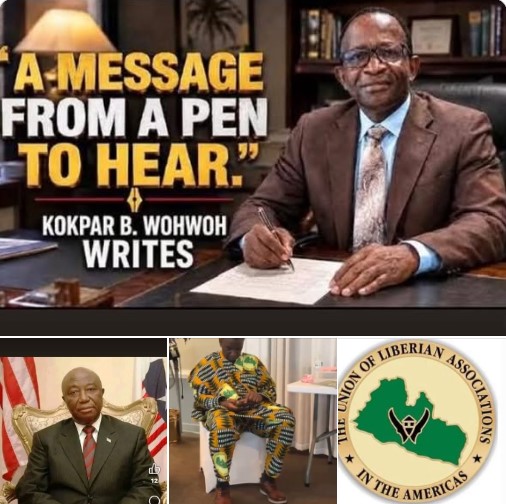
By Kokpar B. Wohwoh
Liberian
Member, ULAA Pennsylvania Chapter
Pennsylvania, USA
If these concerns are not addressed through dialogue, transparency, and inclusive decision-making, the current strain could fracture ULAA at a time when Liberians in the diaspora seek a unified voice.
ATLANTA, GA – The Union of Liberian Associations in the Americas (ULAA) has concluded its 53rd Annual Convention in Atlanta, Georgia, under a cloud of concerns that could weaken the oldest and largest Liberian diaspora advocacy group.
The convention recorded low turnout. Attendance fell far below the historic levels that have defined past gatherings of Liberians in the Americas, and enthusiasm among chapter members remained low.
Several senior officials were absent. The Vice President, the General Secretary, most Regional Vice Presidents, and many Board members did not attend. The announced guest speaker, Siahyonkron Nyanseor, was also absent.
Two other issues overshadowed the gathering. First, the Atlanta convention coincided with the Government of Liberia’s Second Diaspora Conference held on the same date. Second, allegations have emerged concerning financial mismanagement, convention planning, and infringement of election laws.
On the margins of the government-led conference, ULAA President Mohammed Keita stated that President Joseph Boakai did not provide ULAA a seat at the table, thereby denying the organization a voice and representation. The statement has prompted debate. Many Liberians questioned why the leader of the oldest diaspora institution chose to criticize a national Liberian conference rather than participate in it.
Some members attributed the poor attendance in Atlanta to a failure of strategic leadership. They argue that a call for the government to postpone its conference in favor of the ULAA convention may have divided the community and reduced participation at both events. They also contend that confusion surrounding the scheduling of the ULAA convention contributed to the outcome.
These developments raise a deeper question about institutional survival.
Two philosophical lenses are relevant here:
1. Edmund Burke on Institution as Partnership:* Burke argues that an institution is a partnership between those who are living, those who are dead, and those who are yet to be born. ULAA is not the property of its present leadership. Its leaders are custodians. When internal disagreements are managed without transparency, the partnership breaks, and the institution risks collapse.
2. Aristotle on the Whole and the Parts:* Aristotle teaches that the whole is greater than the sum of its parts. The diaspora is the whole; chapters and leaders are the parts. When a part elevates itself above the whole by demanding a position without collective consent, the whole is weakened. Unity requires that personal ambition submit to collective process.
If these concerns are not addressed through dialogue, transparency, and inclusive decision-making, the current strain could fracture ULAA at a time when Liberians in the diaspora seek a unified voice.