
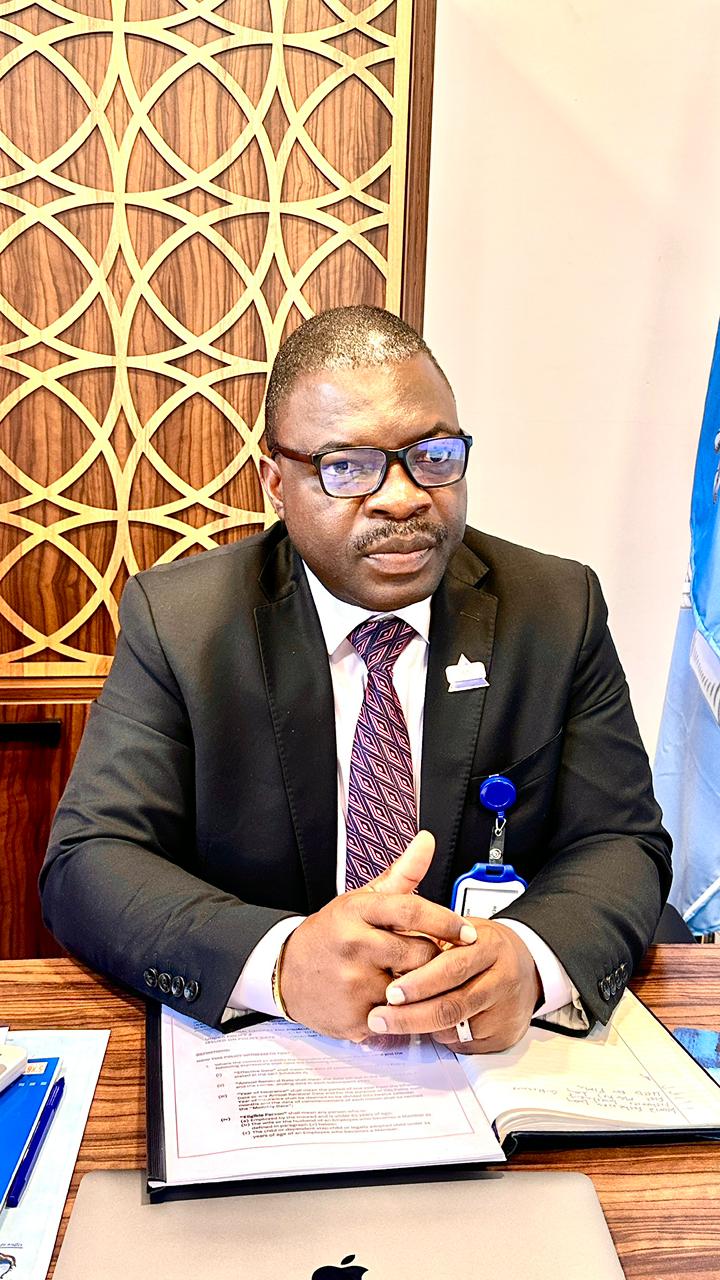
PHOTO: NaFAA Boss S. Cyrus Saygbe, Sr.
By contributing writer: Trokon A. Freeman +231777973957 trokonfreeman@gmail.com
The early morning sun glints off the Atlantic, but along Liberia’s vulnerable coastline, the sparkle is bittersweet. For small-scale fishers in communities like Popo Beach, West Point, and Timbo Beach. Each day begins with uncertainty. Canoes bob gently in the water, but beneath the calm surface lies a growing threat, coastal erosion that is steadily eating away homes and livelihoods.
“You see recently, six canoes got damaged when the sea got rough. When we are sleeping, we can be in fear thinking one day we will be in bed and the water will just swallow all of us with our canoes,” Sunnyboy Tayweah, a local fisherman of Popo Beach said.
The Liberian government embarked on the construction of coastal defense walls along New Kru Town in an effort to reduce the negative impact of sea erosion to residents along coastal communities. The project is yet to be completed. As shared by Thomas Nagbe of Popo Beach, once that is done, low scale fishers, who depend on fishing for livelihood, wouldn’t have anywhere to land their canoes.
“The rock they’re putting here to block the sea is good, even though the project stopped ever since, but image if they block this who area, where are we going to land our canoes, especial for us that have Kru canoes. So we’re calling on the government to do something for us the fishermen”.
Nagbe continued: “We need a place where we can land safely, where our work isn’t destroyed by the sea.”
The fishers are calling on the government, through the National Fisheries and Aquaculture Authority (NaFAA), to construct safe and durable landing sites along the coast. These structures, they argue, would protect not only their fishing equipment but also the communities that depend on the catch for food and income. Coastal erosion, intensified by climate change, has become a serious concern in Liberia. Rising sea levels and unpredictable tides now threaten the delicate balance between the ocean and the communities that have lived along it for generations. For small-scale fishers, the stakes are immediate. Canoes, fishing gear, and even homes are regularly swept away, leaving families struggling to recover.
“Some of our friends who get canoe do not live here. They live far from here. When the sea gets rough and taking our canoes and machines, some us who live near the water can go to fight for our canoes, but it’s a different thing for the fishermen them that live far away,” a Liberian fishermen in Timbo, River Cess County.
NaFAA has long worked to promote sustainable fisheries in Liberia, aiming to boost the sector’s economic potential. But fishers say more attention must be given to the everyday realities they face—the rising tides, the eroding beaches, and the precarious safety of their homes.
“To say the truth NaFAA has been doing well for us. They promised to build landing site for us, but since then we are not seeing anything. We just want them to build that for us. It will help us”, said Sambu Essien of West Point.
For these coastal communities, a safe landing site is more than concrete and wood—it’s a lifeline. It represents protection, stability, and hope that their children can grow up beside the sea without fear.
As Liberia navigates the twin challenges of climate change and economic development, the voices of these small-scale fishers are rising, calling for solutions that safeguard both livelihoods and lives along the ever-shifting shoreline.
“You see way there, there was a church and a school that I attended way back in 1983. The sea took all away. In few years from now,” Washington Elliot, resident of Popo Beach.
Under the Liberia Sustainable Management of Fisheries Project, the National Fisheries and Aquaculture Authority is expected to construct artisanal landing sites in Montserrado, Margibi, Maryland, Grand Bassa, Sinoe and Grand Kru Counties.