
By Taking Concrete Steps In Grand Kru County
By Emmanuel Koffa
BARCLAYVILLE, Liberia — Stakeholders in the southeastern Grand Kru County have been challenged to move beyond awareness and take concrete steps to remove discrimination and barriers confronting persons with disabilities in workplaces and communities.
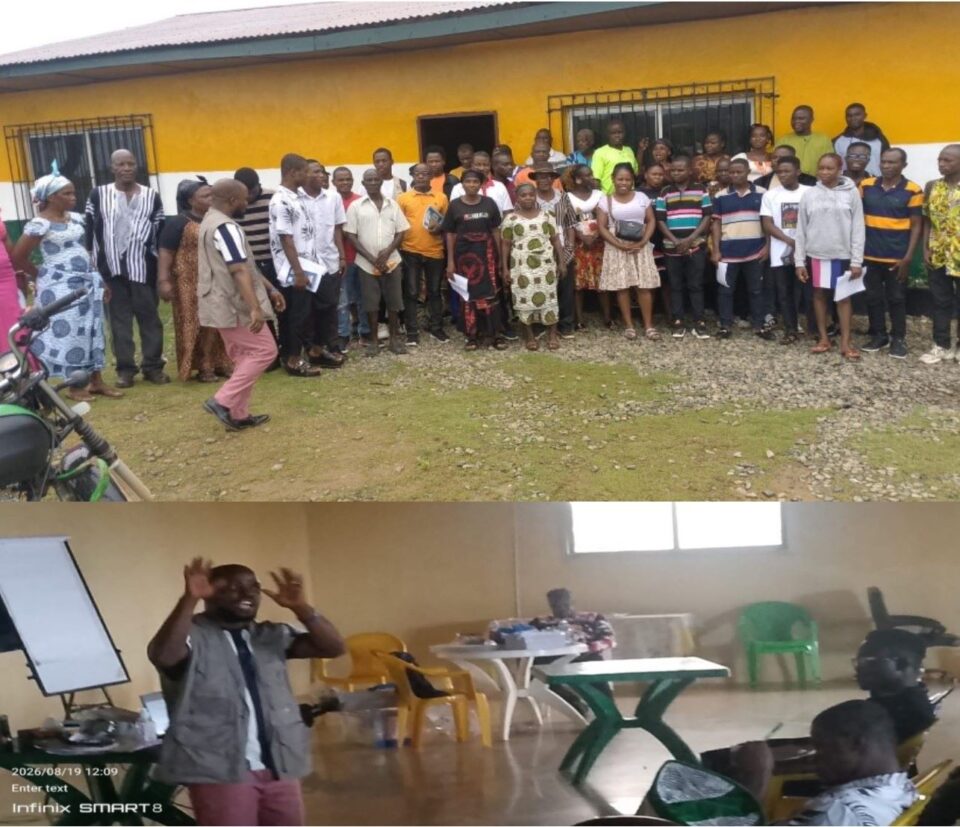
The call was made during a one-day disability awareness and workplace inclusion workshop organized by World Hope International in collaboration with the Office of Grand Kru County Electoral District #2 Representative Cllr. Jonathan Fonati Koffa.
Held at the Barclayville City Hall, the workshop brought together approximately 50 participants, including persons with disabilities, women, youth, traditional and religious leaders, local agency representatives, opinion leaders, and media practitioners.
The engagement sought to deepen stakeholders’ understanding of disability issues while encouraging communities and institutions to ensure that persons with disabilities are given equal opportunities to participate in social, economic, and public life.
Representing Rep. Jonathan Fonati Koffa at the program, his Home Media Officer, Emmanuel Koffa, expressed appreciation to World Hope International, its partners, and donors for supporting the initiative.
Koffa reaffirmed the District #2 lawmaker’s commitment to supporting initiatives that promote the welfare and inclusion of residents of Grand Kru County.
He also thanked stakeholders from across the county for responding positively to the invitation and participating in the daylong engagement.
Lead facilitator Jacob Doe challenged participants to reconsider how persons with disabilities are treated in their communities, workplaces, public spaces, and other social settings.
Doe stressed that persons with disabilities should not be viewed primarily through their limitations but should be recognized for their abilities and given the opportunity to contribute meaningfully to society.
He urged community leaders and institutions to discourage discrimination and instead promote environments where persons with disabilities can access opportunities, participate in decision-making, and enjoy their rights with dignity.
The facilitator further emphasized that disability inclusion requires collective action and cannot be achieved by persons with disabilities alone.
He called on government institutions, community leaders, civil society organizations, religious institutions, employers, and the media to play active roles in promoting inclusion.
Participants described the workshop as timely, saying it provided an important opportunity to discuss challenges affecting persons with disabilities and identify ways to strengthen their participation in community and workplace activities.
The organizers said the initiative is expected to contribute to greater public awareness and encourage stakeholders to translate the lessons from the workshop into practical actions within their respective communities and institutions.