
Linking This Lesson To Current Events, History Now Appears To Be Repeating Itself
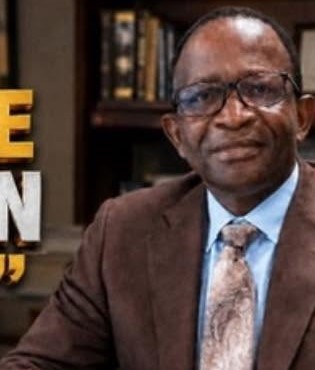
PHOTO: The Author
By Kokpar B. Wohwoh
Liberian
Advocate and Public Affairs
Defender (APUAD)
Philadephilia, USA
Since the return to multiparty democracy in Liberia in 2005, no single political party has been able to win a presidential election alone. This is due to two factors: a strong ethno-regional voting pattern in which no single tribe or county can deliver a national majority, and the constitutional requirement of 50 percent plus one vote to win the presidency.
With over 30 registered parties, every election has been forced into a second round where coalition building becomes compulsory.
Building on this reality, this pattern explains how all recent governments came to power. The Unity Party (UP) built coalitions to win in 2005 and 2011. The Coalition for Democratic Change (CDC) built a broad coalition to win in 2017. And the Rescue Mission, led by the UP, built another coalition to win in 2023.
Following this trend, the opposition attempted to replicate the same strategy to challenge the ruling CDC in the 2023 elections by forming the CPP. The full name is CPP – Collaborating Political Parties*. It was a coalition of four parties – the Unity Party (UP) of Joseph Boakai, the Alternative National Congress (ANC) of Alexander Cummings, the Liberty Party (LP) of the late Charles Brumskine and later Musa Bility, and the All Liberian Party (ALP) of Benoni Urey.
At its formation, the CPP looked quiet, hopeful, and encouraging. It presented a united voice with one goal: to remove the ruling party. However, as is often the case in Liberia, what starts with unity tends to break in the middle.
Consequently, the CPP collapsed before it could achieve its objective. The collapse was caused by the fight over who would be the Standard Bearer. The dispute among Boakai, Cummings, Urey, and Senator Nyonblee Karnga-Lawrence turned allies into rivals and shattered the entire structure.
From my readings and observation of this history, this collapse teaches a clear lesson: coalitions are easy to form but hard to manage. The struggle for leadership is often more destructive than the struggle against the ruling party. This is why many coalitions fail not during the campaign, but in the process of deciding who will lead them.
Linking this lesson to current events, history now appears to be repeating itself in reverse. There is a strong expectation of a new coalition call by the CDC and former President George Weah ahead of the 2029 Presidential and General Elections. Having lost in 2023, Weah understands that he cannot return alone and is reaching out to other opposition parties.
In light of the above, this early move should be understood as an attempt to gain political capital for 2029. It is meant to show his supporters that the CDC is still strong and ready to correct past mistakes, and to prevent his base from defecting to the ruling Unity Party.
Therefore, if Weah and the CDC do not learn the central lesson of the CPP – that you must manage a coalition better than you campaign to build it – any new coalition they form will also collapse, either before winning or after winning.