
Eric Wowoh Cleared Of Allegations In Land After Arrest Order Over Claim He Was Never “On The Run”
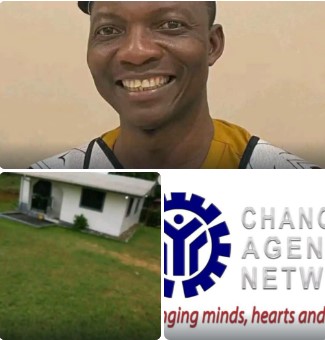
PHOTO: Eric Wilise Wowoh, founder and Executive Director of the Change Agent Network (CAN)
By Abraham K. Kollie, kollieabraham23@gmail.com
KAKATA, Liberia–Margibi County Attorney Cllr. H. Deddeh Jomah Wilson has issued a letter of clearance to Eric Wilise Wowoh, founder and Executive Director of the Change Agent Network (CAN), formally clearing him of criminal allegations tied to a 2.03-acre land dispute in the county.
The development comes weeks after the County Attorney on August 27, 2026 issued a restraining order, stop order, and a writ of arrest directing law enforcement in Margibi to take Mr. Wowoh and other individuals named in the complaint into custody.
The allegations
The complaint was filed by John and Rebekah Acquah through their attorney, Cllr. Stephen BigBoy Lavalah.
The Acquahs accused Wowoh of criminal conveyance of land, criminal trespass, criminal mischief, criminal conspiracy, criminal facilitation, and theft of property.
According to the complaint, the Acquahs alleged that they acquired the disputed property from Wowoh but later discovered that the same property was allegedly being offered or prepared for sale to other individuals.
The Liberia National Police, through Units 102 and 105, reportedly moved to enforce the arrest-related directive. Law-enforcement officers attempted to locate Wowoh but were unable to take him into custody at the time.
County Attorney issues Clearance
Following further developments in the matter, the Margibi County Attorney’s Office has issued Wowoh a formal letter of clearance.
According to the account provided, the County Attorney also clarified that Wowoh was not “on the run,” contrary to insinuations contained in earlier reports.
Wowoh welcomed the clarification that he was not fleeing from the law but said the clearance does not resolve what he considers serious procedural questions surrounding the initial attempt to have him arrested.
He strongly rejected any suggestion that he deliberately refused to appear before the County Attorney’s Office.
“I WAS NEVER SERVED WITH ANY WRIT OF ARREST”
Wowoh said he was never personally served with a writ of arrest and therefore could not have refused to comply with a document he says he never received.
He further maintained that, to his knowledge, no conference or hearing was held with him before law-enforcement officers were reportedly directed to locate and arrest him.
“I was never served with any writ of arrest. I never refused to appear before the County Attorney’s Office, because no such writ was ever served on me. No one contacted me first to hear my side of the matter, and there was no conference or hearing involving me before law-enforcement officers were reportedly sent to look for me.”
Wowoh said these circumstances have caused him to question whether appropriate due-process safeguards were followed before the arrest action was initiated.
“My concern goes beyond my personal situation. I was never served with the alleged writ of arrest, I never refused to appear before the County Attorney’s Office, and, to my knowledge, no conference was held with me before law-enforcement officers were reportedly directed to arrest me. I believe these circumstances raise serious questions about due process and the proper exercise of prosecutorial authority.”
Wowoh questions handling of land dispute
Wowoh also questioned whether a dispute fundamentally involving ownership, conveyance, title, and competing interests in land should have resulted in an arrest process before the underlying property questions were properly examined through the appropriate legal institutions.
He said questions involving land ownership, deeds, title records, boundaries, conveyances, and competing property claims should be addressed through the legally competent land-administration and judicial processes, including, where applicable, the Liberia Land Authority, the National Archives, Probate Court, and other courts of competent jurisdiction.
Wowoh acknowledged that allegations of genuinely criminal conduct arising from a land transaction may be investigated under Liberian law, but maintained that criminal allegations should not be used as a substitute for properly determining an underlying dispute over property rights.
He said he is particularly concerned about the legal authority and procedure under which the arrest action against him was initiated.
“I did not know that a County Attorney could cause an arrest process to be initiated in connection with what is fundamentally a disputed land transaction without first hearing from the accused person or allowing the underlying property issues to be properly examined. I am asking my lawyers to carefully review what happened, the authority under which these actions were taken, and whether my legal and constitutional rights were respected.”
Allegations of abuse of authority
Wowoh characterized the handling of the matter as an abuse of governmental authority, while emphasizing that this represents his position regarding the process and that his legal team is reviewing the circumstances.
He said the fact that he has now received a clearance does not, in his view, erase questions about how the arrest action originated or how law-enforcement officers came to be searching for him.
“The clearance is important, but it does not erase the questions surrounding how we got here. When the power of the state is used against a citizen, there must be accountability, transparency, and respect for due process. No public official should exercise governmental authority in a manner that deprives any citizen of the protections guaranteed by law.”
Wowoh said he believes public officials entrusted with enforcing the law should themselves be held to the highest standards of legality, fairness, and accountability.
“WE MUST FIX OUR LEGAL SYSTEM”
Beyond his individual case, Wowoh said the experience raises a much larger question about access to justice for ordinary Liberians, particularly people who may lack lawyers, financial resources, influential contacts, or knowledge of their legal rights.
“We must fix our legal system so that the authority entrusted to public officials is exercised fairly, lawfully, and with respect for due process. If someone like me can find himself in this situation, imagine what happens every day to ordinary citizens who do not have the resources, contacts, lawyers, or knowledge of their legal rights to defend themselves.”
He added that property ownership represents years, and sometimes generations, of investment and sacrifice for Liberian families and should therefore be protected through transparent and lawful processes.
“This is how ordinary citizens can lose properties they have worked for all their lives. Government institutions should protect the rights of everyone equally. No Liberian should be presumed guilty, publicly embarrassed, or subjected to arrest without the protections provided by law.”
Considering legal options
Wowoh said he is consulting with his legal team and considering what legal remedies may be available regarding the circumstances surrounding the arrest action and handling of the complaint.
He stressed that the issuance of the clearance should not prevent legitimate questions from being asked about the process that preceded it.
“My lawyers are reviewing this matter, and I reserve all rights and legal remedies available to me under Liberian law. I am considering my legal options as we move to the next level of this case.”
Wowoh said his decision on whether to pursue additional legal action will be guided by his lawyers and the applicable laws of Liberia.
“This is bigger than Eric Wowoh. It is about due process, accountability, property rights, and making sure the law protects every Liberian equally, regardless of his or her financial resources, connections, social standing, or position.”
Opportunity for response
Because Wowoh’s statements raise serious questions regarding the actions and authority of the Margibi County Attorney’s Office, Cllr. H. Deddeh Jomah Wilson yet to responded to this paper as investigation continues.
Background
Land disputes remain a significant source of litigation and conflict in Liberia. The controversy surrounding the disputed property highlights the importance of proper documentation, verification of title, lawful conveyance, and adherence to established legal procedures when disagreements arise over ownership.
Wowoh maintains that the underlying property dispute should ultimately be determined through the appropriate land-administration and judicial processes based on documentary evidence and applicable Liberian law.
The issuance of the clearance does not itself determine the merits of the underlying property dispute or establish whether any earlier official action was lawful or unlawful. Those questions, where contested, remain matters for the appropriate legal processes.
With the clearance now issued, attention is expected to shift toward the underlying property dispute, the documentary evidence surrounding the transaction, and any further legal proceedings that may follow.
This story will be updated as more details emerge.